
A "thank you" that's scripted is just noise. A "thank you" you didn't expect is true communication.
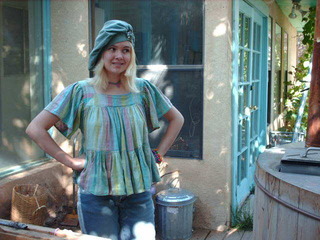
photo by Rippy Dusseldorp (or someone with her camera)
A "thank you" that's scripted is just noise. A "thank you" you didn't expect is true communication.

Kids learn because they are observant. I don't only mean modelling, I mean the human brain is designed to notice patterns and there are patterns everywhere - in speech, in social interactions, in shapes of things, in the relationships between physical characteristics. Some sets of related patterns we call "language" some we call "mathematics" some we call "music" etc. Kids can't help but notice those patterns and think about them because that's what our big convoluted brains do best.

In some ways parents need to be actively demonstrating how much BETTER staying home is to being in school. Make sure you are busy doing fun things. Give her experiences that she could never have if she was in school.

Sylvia's right—DO things. Point out in the midst of a fun activity that it's cool that she doesn't need to... get up early the next day, or wear special clothes/uniform/dress code every day, or...And you, the mom, see other things that are lucky and fortunate about it.

There are three types of boredom, all of which involve problems of engagement of attention. These include times when we are prevented from engaging in some wanted activity, when we are forced to engage in some unwanted activity, or when we are simply unable, for no apparent reason, to maintain engagement in any activity or spectacle.If that list is to be accepted, then unschooling parents can avoid boredom by finding ways to help children engage in wanted activities, not pressing them to engage in unwanted activities, and provide options to any activity or spectacle. (I'm thinking having quiet toys, a book, a Gameboy, smart phone or iPad on hand.

Boredom and unschooling
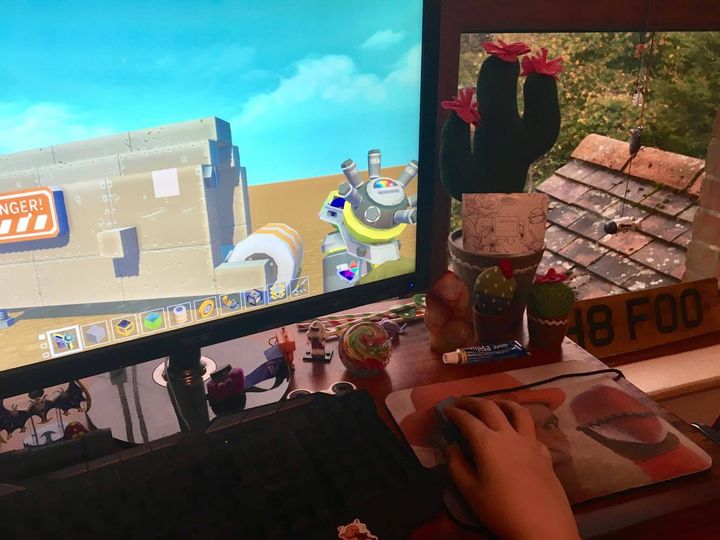
photo by Sandra Dodd
If you don't decide, or if you don't think of it many times a day when you make small choices, and decide how to act and react, then things won't get better.
Not every step will be forward, but if most of them are, then you'll make progress.



Live in hope and joy, not in fear and avoidance.


Today you will make choices. Those choices will affect more lives than your own.

I've used this quote before, but used better titles:
2017: Travel interesting paths
2018: "Why do we do this?" (with the same photo, even)


| We don't always see things clearly and directly. Two people, in the same place, will have different perceptions and reactions. You probably know that, but a reminder might be helpful. When you can, be patient and accepting. |  |


Unschooling can make life better. Really, fully unschooling becomes more philosophical and spiritual than people expect it to.


My kids grew up being able to do a lot more things than other kids they knew because their parents allowed for it to be so. We didn't have to, we chose to do that because we saw the benefit in doing that.

You'll be glad you did.
As we had been talking about natural learning, naturally I responded:
"The power to decide what to learn" makes a pretzel of the straight line between experience and knowing.
My children don't "decide what to learn, how to learn, and when to
learn it."
They learn all the time. They learn from dreams, from
eating, from walking, from singing, from conversations, from watching plants grow and storms roll.

 |


The main idea is about seeing everything we do as a choice.
What locks people in "have to" thinking is they close the doors of choices they will not for various reasons take. They often end up with only one door open and it feels like they have to take it. And they feel trapped.

Caren Knox wrote:
I've come to realize that my kids need ME—not just in the same room, not just nearby, but by my attention and interaction—my full self.. . . . Awareness that you're making these choices is very powerful.—Caren Knox
(dharmamama)


You could tell him that he will help himself heal and feel better by being the kind of person he would like for his brother to become. (Nicer than the kids at school.)


