Showing posts sorted by date for query force. Sort by relevance Show all posts

Wednesday, May 13, 2026

Playing as a game

I'm living without a piano these days, but this was true for years, mostly with Clementi, or Bach:

I have said that I play the piano like playing a video game. But what that means for me is that sometimes when I'm passing by the piano, I'll sit down with a piece of music I know fairly well and play it "until I die," which is the third mistake, just to see how far I can get. Or I'll play something harder and go until I'm just stuck, maybe go through that hard passage a few times, take a running leap at it, see how it goes, and then go back to doing whatever I was doing before. Laundry or whatever it was.

When I do that it feels like a timer, and a challenge, and a goof. It's an investment in keeping my fingers operational without "an hour of practice" or any of those thoughts. It's playing with the piano, more than playing the piano. It's a game. I don't have to.
—Sandra Dodd

SandraDodd.com/force
Image is the cover of a thin music book, published by Schirmer, 1967.

Tuesday, February 10, 2026

Stop, breathe, and change


Caren Knox wrote:

Trust is a vital foundation to building an unschooling home. If kids can't trust that what their parents are saying is true, their foundation is shaky, perilous. That affects their ability to learn, and harms the relationship they have with the world (and their parents).

Why bring a negative force into the home?

If you're used to sarcasm and other lying, it might take practice to learn to speak honestly. It can feel vulnerable and risky. It is worth it. You'll soon be able to feel if what you are about to say is true — really true — and you'll develop the ability to stop, breathe, and change what you're saying if needed.
—Caren Knox


Deposit the good stuff.
photo by Cathy Koetsier

Saturday, March 22, 2025

Another casual part of life


To call some food "junk" is an artificial division. When food is given the status of a religion (the place where sacrifices are made to ensure a positive outcome and long/eternal life), then there IS the necessity of a devil/Satan/"the dark side."

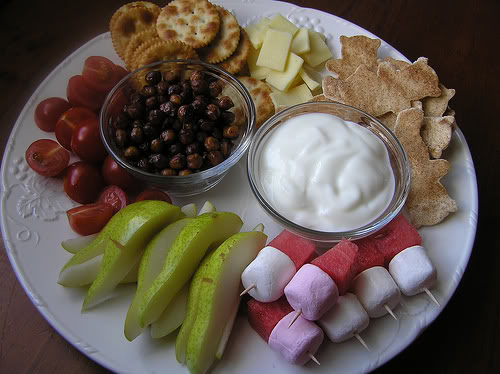
When food is just another casual part of life, kids will choose melons over biscuits/cookies and chocolate eggs sometimes.

When a child is loudly, ceremoniously and with a big happy-face NOT ALLOWED to be in the presence of the devil/sweets, then if and when he is lured by that satanic force, he will either resist out of fright instilled by his loving mother, or he will succumb, indulge, and be one giant step away from his mother—morally, emotionally and dietarily.

SandraDodd.com/eating/junk
photo by Tammy

Sunday, April 14, 2024

The urge to control

If the "control force" is great with you, maybe use it to control your own clutter or organize your papers or rearrange your books or clothing. File your photos and negatives. Scan some stuff. Don't turn that awful control beam on people you love.

SandraDodd.com/control
photo by Sandra Dodd

Friday, June 23, 2023

Candy, TV, books and broccoli

Jo Isaac wrote:

While Kai and I were watching Inside Out yesterday, they had a part where broccoli is in the 'disgust' part of Riley's emotions. Kai loves broccoli - it's one of his favourite foods and the first thing he eats if it's on a plate. He said that parents make broccoli disgusting in kids heads because they force them (the kids) to eat it.

In the same way we can make broccoli seem 'disgusting' by forcing it down our kids throats, we can make TV seem more 'attractive' by setting it up as a limited resource with apparently magical powers of 'distraction'.

By giving broccoli the same status as candy, and TV the same status as books and board games, children are free to make the choices that are best for them, and learn the way they learn best.
SandraDodd.com/joisaac
photo by Sarah S.

Thursday, September 29, 2022

Playing, hanging out, listening


Schuyler Waynforth wrote:

You start by learning about your children. You start by playing with them. By hanging out and listening to them. By starting with them. The more you know about them, the more you know about what interests them, the more you see them and hang out with them, the easier it will be for you to find things that interest them. Don't start by looking at the wider world and trying to force it upon your children. Start with them.
—Schuyler Waynforth

SandraDodd.com/howto
photo by Cátia Maciel

Monday, August 29, 2022

Twirling, swirling

Through playing, children learn physics and dance and balance and color theory, but you don't need to use any of those terms. They will be discovering what their body can do, and how. They will feel the effects of wind, gravity, speed, and force, gradually through everyday experiences. They will see how colors mix or clash or complement. They will play with patterns, without needing any of those words.

All learning is connected, and everything counts.

Play around.
photo by Cátia Maciel

Wednesday, August 10, 2022

Share, invite, encourage

Jennifer McGrail, in response to someone who wrote that it was worth the fight to make kids go outside:

Hiking in the desert is one of my all time favorite things to do. But no one ever found peace in being forced to do something. No one ever found joy in a choice that was foisted on them by someone else. Going outside is one option of many. As with any activity that I enjoy, I might share, invite, and even encourage my kids to join me. But I would never force.
—Jennifer McGrail

8 Battles I Won’t Pick With My Kids
photo by Lisa Jonick

Tuesday, June 14, 2022

Patient and loving


Radical unschooling works the same way for every child. Pay attention to what he's interested in. Don't force things. Find interesting items and situations, be patient and loving, and learning will happen. The more it happens, the more it will continue to happen.

Learning will happen
photo by Karen James

Sunday, November 28, 2021

Opportunities for expansion

Joyce Fetteroll wrote:

Make sure your child has opportunities to expand her interests. Have books, videos, kits, games, puzzles, music tapes, puppets, nature collections, and other cool things available for her to pick up when she chooses. (Think library, yard sales, and attic treasures.) Take her places as a way to spark an interest. Wander about museums and just look at the cool stuff that interests either of you. (And resist the urge to force an interest in the things you think would be good for her.) Read a book or do a kit even if you're certain it won't lead anywhere. Let her say no thanks if she's not interested in pursuing something right now, or in pursuing something to the degree you think she "should."
—Joyce Fetteroll

From the second of Five Steps to Unschooling
photo by Sandra Dodd

Thursday, February 27, 2020

Learning what's important

In 1997, someone asked how unschooling moms stayed patient.

Other moms have told me they think I'm patient. It makes me feel guilty because I have the internal list of all the times I've blown it, but a few things have helped me.

The biggest was Adult Children of Alcoholics, an al-Anon group. I went to meetings for four years and learned a lot of calming and encouraging things. One of those is to remember what I wanted and needed as a child. Then I try to give those things to my children. I don't mean toys or books. I mean listening, and smiling, and joking, and letting them climb on stuff even if it made me nervous, and not making such strictly-to-the-minute rules like "be back at 5:45 or else" and other arbitrary control-junk. One of the quotes/sayings from that learning-time is "How Important Is It?" and thinking that little mantra can help a ton all by itself. If we waste our energy and our relationship with our children on how they wear their socks and where they keep their toothbrush between times, there's nothing left for important things. I try to save it for important things, and I try not to be the defining judge of what's important. There are things the kids consider very important, and I force myself (at first, until I calm myself and remind myself to give) to pay attention to their stuff too. No "That's nice dear" while I ignore them. When it happens, occasionally, that I've done that, I feel bad and I sometimes go back and say, "Tell me again about that game. I'm sorry. I wasn't really listening."

Next biggest influence was La Leche League. There I learned that children have within them what they need to know, and that the parent and child are a team, not adversaries. It reinforced the idea that if you are loving and gentle and patient that children want to do what you ask them to do, and that they will come to weaning, potty training, separation from mom, and all those milestones without stress and without fear if you don't scare them or stress them! Seems kind of obvious, but our culture has 1,000 roadblocks.


From having studied meditation and Eastern religion, I learned the value of breathing. I think what it does is dissipate adrenaline. I remember in the 1960's and early 1970's it was Big News that yogis could *actually* slow their heart rates at will! WELL duh. People had been doing it in church (those who cared to actually "be still and know") for hundreds of years, but nobody thought to wire up contemplative Christians.

When people (parents or kids) are agitated and are thinking for a moment that something has to happen JUST THIS WAY and RIGHT NOW, breathing helps. Deep breathing, slow, and full-as-possible exhalation. This is, in Western terms, "count to ten." Calm down and let the adrenaline go. Some people have biochemistry that's not easy to control, and some people count too fast.

SandraDodd.com/parentingpeacefully
(read aloud as an intro, in the recording at the bottom of the page)

photo by Sandra Dodd of the neighbor's tree seen through an inch-thick piece of ice from a bucket of water on a cold day

Tuesday, August 13, 2019

Set the stage


Radical unschooling works the same way for every child. Pay attention to what he's interested in. Don't force things. Provide interesting items and situations, be patient and loving, and learning will happen. The more it happens, the more it will continue to happen.

Kids want to learn
photo by Roya Dedeaux

Thursday, February 15, 2018

What do you hope for?


Deb Lewis wrote:

A principle internally motivates you to do the things that seem good and right. People develop principles by living with people with principles and seeing the real benefits of such a life.

A rule externally compels you, through force, threat or punishment, to do the things someone else has deemed good or right.

People follow or break rules.

Which is the hope most parents have for their kids? Do they hope their kids will comply with and follow rules, or do they hope their kids will live their lives making choices that are good and right?
—Deb Lewis

SandraDodd.com/rules
photo by Janine Davies

Saturday, February 10, 2018

Trust; it's true


Caren Knox wrote:

Trust is a vital foundation to building an unschooling home. If kids can't trust that what their parents are saying is true, their foundation is shaky, perilous. That affects their ability to learn, and harms the relationship they have with the world (and their parents).

Why bring a negative force into the home?

If you're used to sarcasm and other lying, it might take practice to learn to speak honestly. It can feel vulnerable and risky. It is worth it. You'll soon be able to feel if what you are about to say is true — really true — and you'll develop the ability to stop, breathe, and change what you're saying if needed.
—Caren Knox


Deposit the good stuff.
photo by Cathy Koetsier

Sunday, December 3, 2017

Learning everywhere


Kids want to learn. When people unschool their kids, the relationship with the kids becomes the driving force, and it becomes the environment for more learning and more happiness, which primes the pump and you can’t stop it. Try not to learn. You can’t do it.

SandraDodd.com/interviews/stlouis2011
photo by Sandra Dodd

Friday, September 15, 2017

"What's that?"


In reviews or analysis of...projects, new words certainly came up. The great thing was we were naming things they had already mastered or begun to understand, in discussing why something worked well, or didn't, or why a ball thrown fast against the wall could come back and hit you really hard. And so we came to words about physics, and force, and vectors, pulleys, gears, and materials. Anatomy lessons came free with sprains, scrapes and bruises. Biology just bubbled up when stickers or insects or rusty nails punctured skin. In the course of answering questions and trying to explain what went wrong or what might work better, we used new words. Science lessons for their own sake, or vocabulary lists, would have done little good (and some harm) but naming what they had already done, felt, tried and accomplished was just a bigger-kid's "What's that?"

SandraDodd.com/words/words
photo by Sandra Dodd

Friday, February 6, 2015

No pressure

There was a question once about a resistant child.

Model trains, WWII, Japan—any obsession or "limited" interest touches on geography, history, materials, technology, cause and effect, human actors, religion, engineering, art, languages, all kinds of stuff.

The best thing an unschooled child can have is a parent who realizes there is learning in everything. As to "resist," it can only happen in response to force or pressure, right? Parents should resist pressuring their kids, I think.

SandraDodd.com/panel
photo by Sandra Dodd

Sunday, September 14, 2014

Good and right


Deb Lewis wrote:

A principle internally motivates you to do the things that seem good and right. People develop principles by living with people with principles and seeing the real benefits of such a life.

A rule externally compels you, through force, threat or punishment, to do the things someone else has deemed good or right. People follow or break rules.

Which is the hope most parents have for their kids? Do they hope their kids will comply with and follow rules, or do they hope their kids will live their lives making choices that are good and right?

—Deb Lewis

SandraDodd.com/rules
photo by Rippy Dusseldorp

Monday, March 31, 2014

To have with you throughout your life

Ben Lovejoy wrote:

I split hairs about rules and principles because I see and have lived with the differences, and I believe they represent two opposing forces in a home and school environment. Principles are internal; rules, external. We enforce principles for ourselves, while others force rules upon us. Principles are something people stand for and seem to have with them throughout their lives. Rules are something people tend to follow and just as soon cast aside once the situation that warranted the rules in the 1st place is over and done with. Principles represent a standard of conduct that people uphold because the standard stands for something important to them. Principles come from observation, reflection, and active discussions with others. Rules are more like borders that contain someone and can only be crossed with specific permission. They’re usually cut and pasted from another generation’s set of rules, and figuratively hung from the homes and offices of the plagiarists with the same reverence as a diploma. The problem is there is absolutely nothing original or reasonable about rules. They’re hollow and senseless.
—Ben Lovejoy

Part of an analysis of rules, commands, choices and change:
"No Rules-Sir, Yes Sir"
photo by Sandra Dodd

Saturday, February 16, 2013

Start with them.


Schuyler Waynforth wrote:

You start by learning about your children. You start by playing with them. By hanging out and listening to them. By starting with them. The more you know about them, the more you know about what interests them, the more you see them and hang out with them, the easier it will be for you to find things that interest them. Don't start by looking at the wider world and trying to force it upon your children. Start with them.
—Schuyler Waynforth

SandraDodd.com/howto
photo by Sandra Dodd
__