Monday, April 13, 2026

Comfort and support

I was planning to borrow an older post for today's post. Intending to see whether I had already repeated it, I accidentally put it into Google instead of Just Add Light and Stir's search bar.

The quote was this:
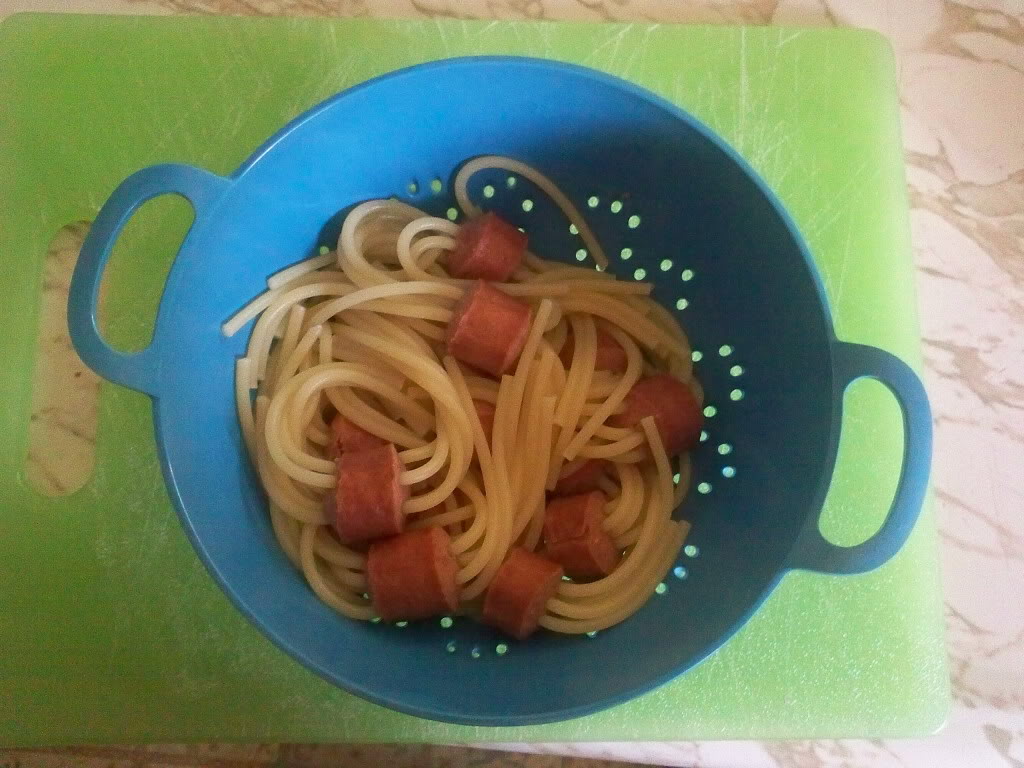
Taking food to someone who is reading or playing a game or watching a movie and just putting it where he or she can reach it without any instructions, warnings or reminders is a great gift. It is a simple gesture, and a profound service.
Those were my words, and they went with this photo, by Hinano:


The mistake triggered Google's AI to expand on the quote for me, and it was quite good:

This statement highlights a profound act of service: offering sustenance without disrupting someone's flow. By delivering food silently and without demands, you show care, respect their focus, and nurture them, turning a simple, quiet gesture into a meaningful gift of comfort and support.

Key Aspects of This Gesture:

  • Respects Autonomy: It allows the person to consume the food at their own pace without interruption.

  • Reduces Cognitive Load: It eliminates the need for conversation, instructions, or decisions.

  • Provides Comfort: It demonstrates thoughtfulness and care for their physical well-being while they are engaged in an activity.

  • Simple yet Profound: It shows that serving someone doesn't need to be elaborate to be deeply appreciated.


Original, 2016:
Small things are big
photo by Hinano

Sunday, April 12, 2026

Slightly new is new

Change one thing: timing, route, store, choices, order, station, dishes...

One change affects other perceptions and connections.

Normal or exotic?
photo by Sandra Dodd

Saturday, April 11, 2026

Ideas, pulled in


Joyce Fetteroll wrote:

Teaching is pouring knowledge over a child. Whether a child takes it in is not in the teacher's power. Which is why teachers punish and reward to make not taking in an idea less pleasant.

Learning is a child pulling in ideas. Those ideas are most full of life when those ideas connect to other ideas the child is fascinated by. It makes no difference if those ideas connect along a particular path. Which is why natural learning looks so chaotic and meandering compared to school.

It makes it hard to create an environment for a child to explore freely and pull in what fascinates them when someone is unschooling through a fog of TEACH.
—Joyce Fetteroll

SandraDodd.com/teaching/problem
photo by Amber Ivey

Friday, April 10, 2026

Learning and loving it

Can they go to college/university?

I've never heard of anyone being turned away from higher education because they were homeschooled in any manner. If tests are required, the kids can take the test cold and then prepare if they didn't do as well as they had wanted to, or they could study in advance of taking the test. Some universities will let people in on a trial basis, and if they do well they're in. Some will accept a portfolio in place of a school transcript.

There are dozens of stories from professors saying they love having unschoolers in their classes, and tales of unschoolers who enjoyed classes, and excelled.

SandraDodd.com/faq
(Answers to the Most Repeated Unschooling Questions of All Time)
photo by Nina Haley,
inside The Globe Theatre

Thursday, April 9, 2026

Pleasant and happy

Deb Lewis wrote:

People talk about modeling behaviors for their children here and I really believe we have to model good cleaning up behavior too. We have to either find a way to do our work happily, as a gift to our families, in which case the likelihood of them helping us out from time to time is greater, because it's a pleasant experience, or we have to pay someone who's happy to have the job.

And remember, you don't get another chance to be the mom to these kids right now, today. When they are grown and gone from you you can have the cleanest house in the neighborhood. But what is the most important thing today? What will you be happier remembering in your old age; that your house always looked nice or that your kids were happy? What will your children be happy to remember about their time with you? Dirty houses always wait for you to get around to them. Children don't, and shouldn't have to.
—Deb Lewis

SandraDodd.com/chores/joy
photo by Sandra Dodd

Wednesday, April 8, 2026

Do it well

If you want to unschool well, do it deeply, solidly, thoughtfully, determinedly. Don't do it lightly or accidentally, and don't think there's nothing to it.

SandraDodd.com/doitwell
photo by Cally Brown

Tuesday, April 7, 2026

Clarity and understanding

Deb Lewis wrote:

Sometimes people who come to unschooling think they have it. They think they get it. When their child shows an interest in insects, they run right out and buy that unit study. They let their kid play all day except for those two hours he has to sit down with the math text book. That is not unschooling, and if a person wants to understand I don't think it's helpful to let them go on thinking it is.

I wouldn't know how to define unschooling so clearly and precisely that everyone would have real understanding. But it only seems reasonable to try to make it clearer for those who are trying to understand.
Deb Lewis

SandraDodd.com/gettingit
photo by Jennifer Fletcher

Monday, April 6, 2026

Quiet antiques


Look around you for simple bits of older art, technology and history. See and appreciate these quiet antiques.

SandraDodd.com/curiosity
photo by Holly Dodd
of a wrought-iron gate
in India

Sunday, April 5, 2026

Knowing, instead of being told

SandraDodd:
I remember when I was a kid being told repeatedly in school that humans had no instincts left. So why would it even have occurred to me that I would "know" anything like that I was full? Seriously...

But my kids won't eat a single nut more than they actually want. It's stunning, really. It still surprises me.

SandraDodd.com/chats/food

Easier to read: SandraDodd.com/instinct
photo by Cátia Maciel (in Morocco, that day)

Saturday, April 4, 2026

Wiser and more patient


Deep breaths change everything, for a few moments.
...
When a parent learns to calm herself, or himself, many things happen. The home becomes safer. The parent becomes more reliable and more trustworthy. The children can make more choices without fear.

When a parent can learn to take one deep, calming breath while deciding what to do, the parent becomes wiser and more patient.

When a person knows how to calm herself, she can help others.

When children learn how to calm themselves, because the parents have helped them, because the parents understood how to do it, the children have more personal range and power, because they will be more reliable and trustworthy and able to maintain their calm, thoughtful, rational minds.

SandraDodd.com/breathing
photo by Gail Higgins


P.S. It doesn't work every time, but without practice, it won't work any time.

Friday, April 3, 2026

Even more relaxed

Ren wrote:

The part that is missing with the relaxed/eclectic approach is still trust. It's just being more creative with how you get information into children, that's all. Better....but not quite the complete trust that unschoolers have in the human ability to learn.

We may still raise butterflies or garden or go to museums, so to an outsider we're doing some of the same activities. The difference is my kids can show zero interest and that is just fine. The difference is that I'm not trying to check of some subject box or define their learning experiences for them. The difference is that we do these things to have fun and trust that learning happens when we're alive and breathing. 🙂
—Ren Allen

SandraDodd.com/unschool/vsRelaxedHomeschooling
photo by Nicole Kenyon

Thursday, April 2, 2026

Eating food

Gwen Montoya, Easter 2014

This morning my kids woke up to Easter baskets with a DVD they have been wanting and lots of their favorite chocolate (different kids, different tastes).

So far, my oldest has eaten two waffles with peanut butter and two ham & cheese sandwiches. And two pieces of candy from her basket.
. . . .
They are excited about the DVD's, but have been hiding eggs, playing with Matchbox cars, and performing science experiments on Peeps. Not watching the movies.
—Gwen Montoya

There's more:
SandraDodd.com/eating/sweets#gwen
photo by Amy Milstein

Wednesday, April 1, 2026

Sewers in games, literature, art...

In April 2013, Stephanie Meloche wrote:
My son is interested in underground sewers. He's building a large network of sewers in Minecraft right now. Do you have any ideas for links, books, resources for us? We thought of movies like Turtle Ninja and Les Misérables but what else? He's 11. Thank you very much!
There were six pages of responses. You'll be impressed, I think.

SandraDodd.com/sewer
image from a short video by "Duddrz",
"How to build super easy Sewers in Minecraft! tutorial"

Tuesday, March 31, 2026

Patience, acceptance and food

Here's the link that didn't work yesterday (working now):
The 1st biggie for me was the food issue. I read 'let them eat what they want' & thought people had lost their minds. So, I tried it!
...and the rest of it


I noticed one morning I was really patient with my irritating cat. That was cool, and I announced to one of the discussion lists that I was going to work it into my talk about things that surprised me.

We've long been sweeter with our current dog than we ever were with a dog before, and somewhat the cats too, but usually I hiss at the cat to get away from me when he gets in my face early in the morning. This morning I told myself that the cat can't open a can, and he's excited that I'm awake, and the dog probably ate their canned food, so I just very calmly followed him in there and fed him and he was very happy.

I doubt it's my last frontier, it's just my current frontier.

SandraDodd.com/pets
photo by Sandra Dodd, of someone else's cat

Monday, March 30, 2026

What "everybody knows"

A mom named Lorraine wrote, years ago:

The 1st biggie for me was the food issue. I read 'let them eat what they want' & thought people had lost their minds. So, I tried it! Dakota wanted a cookie before breakfast and I said okay, but I'm cooking breakfast. She ate it, and turned to me and asked if she could have another one? Sure, I say (knowing good and well she wasn't gonna eat any breakfast afterwards). So she eats it, then breakfast was ready and she ate what she always eats (two pieces of sausage & a piece of toast). "Well that is a fluke," I say to myself, because everybody knows sweets BEFORE A MEAL ruin your appetite. So I am more determined with my experiment (to prove you all wrong) LOL. Do you want me to embarrass myself here? 🙂 Ya'll were right. Ya'll's experiences and your willingness to share them made Dakota and Shelby's life brighter.
—Lorraine

SandraDodd.com/list
photo by Cátia Maciel

Sunday, March 29, 2026

Trusting and seeing

Joyce Fetteroll wrote:

Unschooling is trusting in a child's natural curiosity to teach them what they need to know. The parent is there to answer questions, talk, infect the kids by their own curiosity about life! (though curious about what you're interested rather in what you think would be good for the kids to be interested in!), bring in cool resources (that the kids can feel free to ignore if it just isn't the right moment for their interest to ignite).

The hard parts are:
trusting natural curiosity to draw your child to what they need to learn when. (Math is fascinating. Kids only get turned off to it by the boring way school approaches it.)

trusting a child's natural schedule rather than the school imposed one (eg, that the child will read eventually even if they aren't doing so at 7 because reading is always a pleasurable activity not an imposed tedious one, they will multiply even if they aren't doing it at 9)

trusting that it's okay for kids to learn things out of order! It doesn't bother kids at all to pick up interesting tidbits about Thomas Jefferson, knightly armor, Egyptian mummies, WW2 combat planes. They make their own connections as they get more and more things in place. (Later, an orderly approach will be fascinating to them as they can make even more connections.)

seeing real learning that is right there all around you, for example, the things that need sorted, the cookies to divide, the planning for a party that are all real live math. And it's especially tough to trust that those few minutes of real engaged figuring are worth 20 pages of worksheet practice.
—Joyce Fetteroll

SandraDodd.com/unschool/moredefinitions
photo by Sandra Dodd, in Liverpool


Joyce and I got to visit Liverpool in 2013, thanks to Julie and Adam Daniel.

Saturday, March 28, 2026

Live in the now!

Cathy Koetsier wrote:

In horsemanship, one of the key principles in connecting with a horse is this one: live in the now! Horses do not live in the past or in the future, they live in this moment. The moment we live in the past or the future (in our thoughts), we lose the connection and they feel it. It is amazing seeing that this is really true! I have learned so much from this principle. And it makes absolute sense with children, because they do live most of their time in the now... we adults concern ourselves with so many different things, and later we wonder why we lost the moment.
—Cathy Koetsier,
in a comment here

SandraDodd.com/moments.html
photo by Cathy Koetsier


Heart to Hand
(more about horses, by Cathy and her associates)

Friday, March 27, 2026

The magic of following passions

Ben Lovejoy wrote:

Although I don’t presume to know what magic occurs when one follows a life filled with passions, I know that magic does happen—with deep wells of reserve. And when we examine our respective histories with our children, we understand how much things change while seeing how much they stay the same.

Singing a song before saying “Mom” or “Dad” or watching our first live musical performance at the same age are two examples of things that Cameron and I have in common. The simplicity of those examples should not be misunderstood. Each small way we’re tied to our children adds to the tapestry that our respective lives weave. And when the story is shared with grandkids and their grandkids, it has the opportunity to become part of lives yet to be. The stories of our lives are the songs that we sing now so they can be shared later with those who intend to hear them—a truth that Bonnaroo embodies.

Bonnaroo was not the crossroad where Cameron’s and my shared love of music intersected, but it is where I realized how much music meant to us both. Our respective tastes in music have come full circle because now Cameron gives me advice on what music will make a difference to me just as I had done for him seven years ago. I am now the richer for that connection.

Following Our Passions to Bonnaroo
SandraDodd.com/lovejoy/bonnaroo

photo by Karen James

Thursday, March 26, 2026

Change the lighting

Unschooling involves making many small choices every day, and providing opportunities for kids to make choices.

One important part of this choicemaking, for unschooling parents, is to become the sort of person you want your child to be.

You probably don't want your child to suffer or to struggle.

Someone I know and love wrote to me recently about suffering this thing, and struggling with that thing. Re-cast, re-phrase, re-arrange, change the lighting. Same you, same life, less negativity.

SandraDodd.com/being/positive
photo by Janine Davies

Wednesday, March 25, 2026

Becoming, and being


Becoming the sort of person you hope your child will be, or that your child will respect, is more valuable than years of therapy. And it’s cheaper.

SandraDodd.com/being
photo by Rippy Dusseldorp

Tuesday, March 24, 2026

The turning point of unschooling

Recovering from school is only part of a parent's deschooling process. Trust is involved, but it's an evolving trust. First one might read about or even meet some older unschooled kids and see that they're doing well. But it seems they can distance their own families a bit by thinking "Well that's fine for her kids—but mine might not be as [insert one:
    special
      bright
         gifted
            open
               calm
                  creative
                     sociable] as hers are."

The turning point comes when one sees the natural learning start to shine from her own child. Then she goes beyond trusting other unschoolers, and starts trusting natural learning.

"Of your own certain knowledge…"
or
Seeing the light with your own eyes

photo by Erika Ellis

Monday, March 23, 2026

Calm acceptance

Sometimes the smallest thing can make a child extremely happy. Sometimes parents can find joy in relaxing around fears and pressures. Without dress codes and early-morning school bells, or other kids to ask "Why are you wearing that?!", there can be leisurely days of choices and creativity, while parents practice saying "yes" and children play without worries.

Jenny Cyphers once wrote:
"The big upside of unschooling, in my opinion, was that it also created an unexpected peacefulness, fulfillment, and happiness for all of us."

SandraDodd.com/unexpected
photo by Julie Markovitz

Sunday, March 22, 2026

Resting


If you get to sleep for a long time, be glad. If your sleep is interrupted, try to be like a cat, and just accept it. Measuring sleep and being angry about the clock will lead to neither peace nor rest.

Children will wake you up. Breathe in love and remain restful.

SandraDodd.com/peace/
photo by Ve Lacerda

Saturday, March 21, 2026

Positive, abundant gratitude

Finding the positive, finding abundance, finding gratitude, will take a person in an entirely new direction, and many of the other problems fall away effortlessly.

SandraDodd.com/understanding
photo by Chrissy Florence

Friday, March 20, 2026

Bit by bit

Joyce Fetteroll wrote:
We all have issues about something. They go deep and are tangled up around other stuff but working at them bit by bit can make them better.
—Joyce Fetteroll
SandraDodd.com/issues
photo by Cátia Maciel

Thursday, March 19, 2026

Facilitator and companion

I’ve been credited with the description below, but it was written by Joyce Fetteroll and tweaked by Pam Sorooshian and me before it was published at the UnschoolingDiscussion site, on googlegroups:

Although unschooling is often described as a homeschooling style, it is, in fact, much more than just another homeschool teaching method. Unschooling is both a philosophy of natural learning and the lifestyle that results from living according to the principles of that philosophy.

The most basic principle of unschooling is that children are born with an intrinsic urge to explore — for a moment or a lifetime – what intrigues them, as they seek to join the adult world in a personally satisfying way. Because of that urge, an unschooling child is free to choose the what, when, where and how of his/her own learning from mud puddles to video games and SpongeBob Squarepants to Shakespeare! And an unschooling parent sees his/her role, not as a teacher, but as a facilitator and companion in a child’s exploration of the world.

Unschooling is a mindful lifestyle which encompasses, at its core, an atmosphere of trust, freedom, joy and deep respect for who the child is. This cannot be lived on a part-time basis. Unschooling sometimes seems so intuitive that people feel they’ve been doing it all along, not realizing it has a name. Unschooling sometimes seems so counterintuitive that people struggle to understand it, and it can take years to fully accept its worth.
—Joyce Fetteroll, aided by
Pam Sorooshian
and Sandra Dodd

SandraDodd.com/unschooling
photo by Clare Kirkpatrick

Wednesday, March 18, 2026

Not just for kids!

The way adults tend to learn things is the way people best learn—by asking questions, looking things up, trying things out, and getting help when it's needed. That's the way pre-school kids learn too (maybe minus the looking things up), and it is the way "school-age" kids can/should learn as well. Learning is internal. Teachers are lovely assistants at best, and detrimental at worst. "Teaching" is just presentation of material. It doesn't create learning. Artificial divisions of what is "educational" from what is considered NOT educational, and things which are "for kids" from things which are NOT for kids don't benefit kids or adults. Finding learning in play is like the sun coming out on a dank, dark day.

SandraDodd.com/unschooling
photo (and words) by Sandra Dodd

Tuesday, March 17, 2026

Point of view

Joyce Fetteroll wrote:

Being mindful won't prevent kids from getting frustrated but it will be a huge step in the right direction. Seeing the world from kids' point of view will help you understand why they are reacting to the world as they are."


SandraDodd.com/mindfulparenting
photo by Nancy Machaj

Monday, March 16, 2026

Open portals

When books are an obsession, it's considered a virtue. When mathematics is an obsession it's considered genius. When history is an obsession, that's scholarly.

When rock and roll is an obsession or folk art, or dance… maybe not as easily impressive to the outside world. But as all things are connected, let your child see the world from the portals that open to him, and don't press him to get in line at an entryway that doesn't sparkle and beckon.


from page 189 (or 218) of The Big Book, which links to SandraDodd.com/obsessions/feedpassions
photo by Lynda Raina

Sunday, March 15, 2026

All those people

To my children, I'm someone who's getting old who could hold them back (in a way). To me, though, I have all the stages my children have ever been. I still remember the babies, toddlers, "big kids" who could put their own shoes on. Big kids who learned to read and visited places without me, and big kids who went to jobs, and moved away.

The house is empty, but my heart is full of all those people.

A Series of Selves
photo by Isabelle Lent

Saturday, March 14, 2026

Access to information


Little by little, years ago, I started to see that each little idea that had changed my own family had the potential, if I could explain it clearly enough, to change another family. Just a little was enough. As more and more families shared their successes and joys, the world changed. As more information was gathered and put where others could find it, the rate of change increased.

When I was first unschooling, we waited two months for a new issues of Growing Without Schooling. There was no internet discussion at all. When that began, a few years later, it was user groups, not even e-mail or webpages yet. Today someone can get more information about unschooling in one day than existed in the whole world when my oldest was five. I'm glad to have been part of honing, polishing, clarifying and gathering those ideas, stories and examples, and keeping them where others have quick access to them.

Interview with Sandra Dodd, Natural Parenting, 2010 (Section #5)
photo by Sandra Dodd


in French

Friday, March 13, 2026

Casually more attentive

Pam Sorooshian wrote:

You can casually be more attentive without forcing yourself on him. Do it in a thousand different ways by thinking of him throughout the day and doing some little thing for him. I just went to my daughter's room and got a pillow off her bed and put it under her head (she's on the couch nearby). She smiled sleepily at me and said, "I love you, Mommy." She's 18.

Maybe just take him a soda into his room - or a monkey platter of little things he likes. Show him by your little actions throughout the day that you love him.
—Pam Sorooshian

SandraDodd.com/peace/becoming
photo by Cátia Maciel

Thursday, March 12, 2026

What is liked and appreciated

A child is older every moment, and moments cannot be reclaimed and polished up and made happy later.

Don't be apathetic. Don't be negative. See what your kids like and appreciate that you have live, curious, able children. Many people would like to, but don't. Many people would like another opportunity to be gentle, supportive parents, but the chance was wasted long ago.

SandraDodd.com/look
photo by Cátia Maciel

Wednesday, March 11, 2026

Passing through the space between

Sandy Lubert wrote:

This place between schooling and unschooling, this place that we often refer to as deschooling, it really is a wonderful place to grow and learn. It’s the place where change occurs, where we unburden ourselves. It’s where we look at old definitions with new eyes and say, perhaps for the first time, “That definition just doesn’t work for me and my family.” ....

...I was privileged enough to watch my son, who is an artist, rediscover his passion. He had become seriously depressed at school and had completely stopped drawing, something he had previously done for hours at a time. As he grew more and more accustomed to the unfettered feeling of NOT being at school, NOT being told what should be important to him…as he began to heal, he started to draw again. His art had been gone from our lives for nearly a year, and I had no idea how badly I’d missed it, until it came back. So, in that place between schooling and unschooling, one of the many gifts I received was the return of my son’s imagination.
—Sandy Lubert

from "Unschooling and deschooling, and changes"
SandraDodd.com/sandylubert.html
photo by Karen James

Tuesday, March 10, 2026

Late stage, looking back

Kelly Lovejoy wrote, in "The Three Stages of Unschooling," 2004:

My son Cameron (16) and I recently started sitting in on a college Sociology class. He asked for and received electric guitar lessons for his birthday. Mondays he goes to a nearby school and takes African drumming lessons. He's taking a weekly film class starting in March, and we'll be sending him to a weeklong film school in Maine in May. Duncan (almost 8) just started karate lessons. Ben (my husband) has just finished a class (with tests and all) that's required before he can put on Lt Col (Air National Guard) and is now in NJ for three weeks of "rah-rah" and classroom training and tests for the two new drugs he will be selling. I'm going to a one-day intensive "Bee School" to learn to take care of my Christmas present: two beehives.

Cameron said the other day, "For Unschoolers, we sure are taking a lot of schooly classes!"

That got me thinking...especially since we are one of those families that discovered unschooling after years and years of schooling.

I think that there are three "Stages of Unschooling."

continued here:
SandraDodd.com/kellylovejoy/stages

SandraDodd.com/stages
photo of Cameron and Kelly Lovejoy, the year after the article
(photographer credit lost; sorry)

Monday, March 9, 2026

Normal reactions

It turns out that much of what is considered "normal teen behavior" is a normal reaction to many years of school, and to being controlled and treated as children and school kids and students rather than as full, thoughtful human beings.


I wrote that, but the source is missing.
I also wrote what's below, and its parent page is linked.


I didn’t know that our relationships could stay so good even when they were teenagers.

My original expectation was that when they were teens they would be frustrated and rebellious and wild, because I thought that was hormonally inevitable.

A side benefit of having been partners rather than adversaries was that the “normal teen behavior” turned out not to have been “natural,” and in contrast to what I was seeing in unschooled teens, it started to look like very sensible reactions to a barrage of arbitrary rules and limitations. The communications and trust continued to build within our family, rather than to erode over the years.

Unexpected Benefits of Unschooling
SandraDodd.com/unexpectedarticle
photo by Sandra Dodd
of Marty, Holly and Kirby
when they were still at home

Sunday, March 8, 2026

Attention, more and less

The mother of a four year old can't do as much as a childless mother; that can't be avoided. Every year he'll need less direct attention. The more you give him now, though, the less he'll probably need later. There's a graph here that's a bit of humor, but also entirely true.
SandraDodd.com/musicroom
graph by Sandra Dodd, with a pencil, ruler, and Sharpie
from Precisely How to Unschool

Saturday, March 7, 2026

Questions

Why does...?
           Because...

Who will...?
          I think...

When did...?
          Let's ask...

Where are...?
          We can look...

What is...?
          As far as I know...

Do you...?
          Sometimes.

Can I...?
          Yes.

Treasure your child's questions and offer loving answers.
Relationships are built of these things.

SandraDodd.com/conversation
photo by Zann Carter