Saturday, February 5, 2011

Patience

In 1997, someone asked how unschooling moms stayed patient.

Other moms have told me they think I'm patient. It makes me feel guilty because I have the internal list of all the times I've blown it, but a few things have helped me.

The biggest was Adult Children of Alcoholics, an al-Anon group. I went to meetings for four years and learned a lot of calming and encouraging things. One of those is to remember what I wanted and needed as a child. Then I try to give those things to my children. I don't mean toys or books. I mean listening, and smiling, and joking, and letting them climb on stuff even if it made me nervous, and not making such strictly-to-the-minute rules like "be back at 5:45 or else" and other arbitrary control-junk. One of the quotes/sayings from that learning-time is "How Important Is It?" and thinking that little mantra can help a ton all by itself. If we waste our energy and our relationship with our children on how they wear their socks and where they keep their toothbrush between times, there's nothing left for important things. I try to save it for important things, and I try not to be the defining judge of what's important. There are things the kids consider very important, and I force myself (at first, until I calm myself and remind myself to give) to pay attention to their stuff too. No "That's nice dear" while I ignore them. When it happens, occasionally, that I've done that, I feel bad and I sometimes go back and say, "Tell me again about that game. I'm sorry. I wasn't really listening."

Next biggest influence was La Leche League. There I learned that children have within them what they need to know, and that the parent and child are a team, not adversaries. It reinforced the idea that if you are loving and gentle and patient that children want to do what you ask them to do, and that they will come to weaning, potty training, separation from mom, and all those milestones without stress and without fear if you don't scare them or stress them! Seems kind of obvious, but our culture has 1,000 roadblocks.


From having studied meditation and Eastern religion, I learned the value of breathing. I think what it does is dissipate adrenaline. I remember in the 1960's and early 1970's it was Big News that yogis could *actually* slow their heart rates at will! WELL duh. People had been doing it in church (those who cared to actually "be still and know") for hundreds of years, but nobody thought to wire up contemplative Christians.

When people (parents or kids) are agitated and are thinking for a moment that something has to happen JUST THIS WAY and RIGHT NOW, breathing helps. Deep breathing, slow, and full-as-possible exhalation. This is, in Western terms, "count to ten." Calm down and let the adrenaline go. Some people have biochemistry that's not easy to control, and some people count too fast.

SandraDodd.com/parentingpeacefully
(read aloud as an intro, in the recording at the bottom of the page)

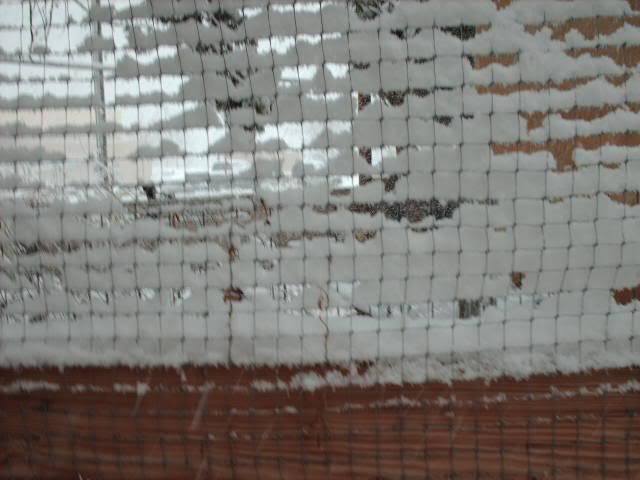
photo by Sandra Dodd of the neighbor's tree seen through an inch-thick piece of ice from a bucket of water on a cold day

Friday, February 4, 2011

a hook to hang it on


Everything counts, and every connection made increases the depth and breadth of the map of the universe each person is building. It makes it easier to learn the next few things, because there are more places to hook the knowledge.

SandraDodd.com/strew/how
photo by Sandra Dodd

Thursday, February 3, 2011

There *will* be longterm effects...

We can mess them up early (which our culture applauds) or we can learn to let them grow whole and healthy and strong and free, not crippled in mind and spirit.
SandraDodd.com/eating/longterm
photo by Sandra Dodd
__

Wednesday, February 2, 2011

Big Deals


I found a note on my desk, in my handwriting, that says "How long do you think it will be before it's not a big deal?"

At first I couldn't remember why I had written it, but it was an idea for an interview I'm planning.

It's a good question for many occasions, though. How long before our school successes or hurts aren't a big deal? In hindsight, you might have personal worries or stories that once obscured the entire horizon, and now they're not the big deals they once were.

Click here and the photo for two sources of examples of once-big excitement.
photo by Sandra Dodd

Tuesday, February 1, 2011

Running in the fog

Once there was heavy fog at our house. Kirby was four or five. He had never seen it at all, and this was as thick as I have ever seen fog. He wanted to go and touch it. I yelled "Let's go!" and we ran up the road, and ran, and ran. About seven houses up we got tired, and I said "Look" and pointed back toward our house, which was gone in the fog.

I did not say "See? You can't touch it, really, it's touching us, it's all around us."
I didn't say "Let's don't bother, it's just the same wherever in there you are."

I let him experience the fog. He learned by running in fog and smelling it, and losing his house in it.


Learning to See Differently
photo by Sandra Dodd

Monday, January 31, 2011

Science

The fundamental core of science is learning, and by definition it should involve discovery! Learning directly and indirectly about what people know and how they know it and what they do with it that has been helpful and harmful to themselves and the planet is much more than just science. It's history, geography and ethics.


SandraDodd.com/science
photo by Sandra Dodd
(click to enlarge)

Sunday, January 30, 2011

When everything is new

What do babies want? They want to learn. They learn by touching and tasting and watching and listening. They learn to be gentle by people being gentle with them, and showing them how to touch hair nicely, and to touch cats and dogs gently. They want to learn which foods taste good. They want to learn how to walk, but you don't need to teach them. They'll want to know how to go up and down stairs at some point. They will eventually want to know how to get things off shelves and out of boxes. They will want to see what else is in the house, and in the yard, and you can help them do that safely.


A baby doesn't want to look at and touch the very same things day after day after day any more than you would want to watch the same movie every day for a year, or sit in the same place in your house all the time. Sing different songs with him. Play different finger games. Change what he can see in the bedroom sometimes.

The quote is from page 59 (or 64) of The Big Book of Unschooling
photo by Sandra Dodd