Showing posts sorted by date for query SandraDodd.com/history. Sort by relevance Show all posts

Monday, May 25, 2026

Easy because...

Teresa/Treesock wrote:

I thought, wow, what a perfect expression of humanity in this day and age unschooling is! We can get our hands on so much information, we can get to so many places, we can access so many people because of this very cool moment in history of the Internet, fairly easy transportation, and enough leisure time (versus time spent focused on surviving) to explore ideas and try skills and make friends and connections.

People have a lot of resources these days, and they are mostly very accessible; of course it makes sense that some of them would seek to use what's available to them when they want it, not just what the schools offer between 8 and 3. It possibly has never been easier to learn about as many different things from so many different sources as it is right now.
—Teresa/Treesock

SandraDodd.com/context
photo by Cátia Maciel

Thursday, April 16, 2026

Crazy-large vocabulary

Some languages are simpler than English in that the letters and sounds match pretty consistently. French and Spanish come to mind. German. But because of something that happened in 1066, and because of the history of The British Isles, and because of the isolation of some English speakers and the migration of many others, English has complexities and a crazy-large vocabulary. Our basic grammar and language are Germanic. The majority of our vocabulary is from French (look up 1066 if you don't remember what happened) and Latin, though the everyday words we use are from Anglo Saxon, which had borrowings from half a dozen Germanic dialects.

If that was a painful paragraph to read, never mind it. If that paragraph was fun for you, then you can help your children spell by looking up what language a word is from and figuring out why it looks the way it does in written English.

SandraDodd.com/phonics
(Phonics, thoughts, trivia)
photo by Roya Dedeaux

Monday, April 6, 2026

Quiet antiques


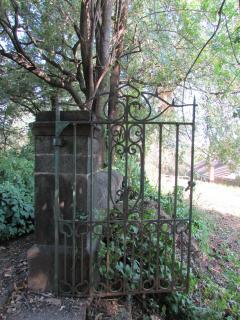
Look around you for simple bits of older art, technology and history. See and appreciate these quiet antiques.

SandraDodd.com/curiosity
photo by Holly Dodd
of a wrought-iron gate
in India

Monday, March 16, 2026

Open portals

When books are an obsession, it's considered a virtue. When mathematics is an obsession it's considered genius. When history is an obsession, that's scholarly.

When rock and roll is an obsession or folk art, or dance… maybe not as easily impressive to the outside world. But as all things are connected, let your child see the world from the portals that open to him, and don't press him to get in line at an entryway that doesn't sparkle and beckon.


from page 189 (or 218) of The Big Book, which links to SandraDodd.com/obsessions/feedpassions
photo by Lynda Raina

Friday, January 2, 2026

Games


Games can be family history, and art. Games can be culture and togetherness.

It's okay if games are old and made of wood, and seeds or stones. Some use cards, dice, markers. Don't worry about it if they involve computers, or smart phones and long walks.

SandraDodd.com/games
photo by Pushpa Ramachandran

Monday, December 1, 2025

Sparkly, happy, random thoughts

Humor is a great warm-up for any thinking. If one's mind can jump to get a joke, it will be easier for it to jump to synthesize any ideas, to make a complex plan, to use a tool in an unexpected way, to understand history and the complexities of politics. If a child can connect something about a food with a place name or an article of clothing, parents shouldn't worry that he hasn't memorized political boundaries or the multiplication table.

The more that fun, divergent thought is discouraged, the more quiet and dark those minds will be. The more that sparkly, happy, random thoughts are encouraged, the brighter that home will be.

SandraDodd.com/connections/jokes
photo, sign, found uncredited, "out there"

Friday, September 19, 2025

Depth and breadth


Sink-Like-a-Stone Method:

Instead of skimming the surface of a subject or interest, drop anchor there for a while. If someone is interested in chess, mess with chess. Not just the game, but the structure and history of tournaments. How do chess clocks work? What is the history of the names and shapes of the playing pieces? What other board games are also traditional and which are older than chess? If you're near a games shop or a fancy gift shop, wander by and look at different chess sets on display. It will be like a teeny chess museum. The interest will either increase or burn out—don't push it past the child's interest.

When someone understands the depth and breadth of one subject, he will know that any other subject has breadth and depth.

From "Disposable Checklists for Unschoolers"
SandraDodd.com/checklists
scanner image by Sandra Dodd

Friday, July 18, 2025

History


Museums and historical markers can be fun, but most of the history around us is unmarked and undocumented.

Every little bit of trivia gives you a hook to hang more history on.

SandraDodd.com/history
photo by Sandra Dodd

Monday, May 19, 2025

History, music and enthusiasm

This was written about the Dodd kids and their questions about U.S. Presidents, in 2003. Click the link at the bottom for what came before and after this passage:


Holly (11) got the book to see if it could be a simple truth that some presidents had only been half-page presidents.

"FDR. Is he the guy in Annie?"

"Yes." (Holly's favorite historical period is the Great Depression. She likes the music, the clothes, and the stories of hardship and social change.)

"This guy looks like he's from Texas."

"Lyndon Johnson was the only one really from Texas," I said, and then muttered a bit about George Bush Sr. and trailed off saying I guess maybe George W. might be an actual Texan. Holly wasn't listening anymore. She was looking at a cartoon illustration of Theodore Roosevelt. He's the one she had thought looked like a Texan, from the picture. I checked the fine print for her.

"Oh! Born in New York City, but he was into horses and such."

... and it continues at SandraDodd.com/day/presidents
(standard publicity still from 1982 "Annie")

Wednesday, March 26, 2025

Mixtures, swirls and solutions

"Yesterday" in 2004:

I still see "subject areas" everywhere, but I haven't taught those categories and prejudices to my children. Science has much more to do with history than geology has to do with microbiology, but in school geology, biology, astronomy and physics are all "the same thing," and history is different altogether. Yet the best parts of history involve the knowledge cultures had and how they put it to use, whether in shipbuilding or iron tool use, medicine or communications.

Holly asked yesterday about when people discovered the world wasn't flat. I told her there was no one date or century because people discovered different things at different times, and some were shushed up when they said the world was round, or that the sun didn't orbit around the earth. I also told her, "Ask your dad, because he's really interested in the history of science."

I noticed when I said it that I had "named subject areas," but I didn't feel too bad. She's twelve, and reading, and after all "the history of science" was never part of my schooling. A science teacher wasn't certified to teach me history, and vice versa. Only outside of school did I figure out that scientific discoveries were history, and that music was science, and that art was history.

SandraDodd.com/schoolinmyhead
photo by Kelly Halldorson

Friday, February 21, 2025

Learning let loose

Joyce Fetteroll wrote:

Don't worry if you don't know the answers. Anyone can look up the answers. Few can ask the questions.

As a real-life example, by watching Xena and reading Little Town on the Prairie, my daughter was exposed to three references to Julius Caesar, Brutus, and Marc Antony. She doesn't "know" Roman history now, but she's got a hook or point of reference to build from tomorrow, next week, three years from now: "You remember Julius Caesar. The guy Xena hates."

Unfortunately we learned in school that learning is locked up in books and reading is the only way to get to it. It's not. It's free. We're surrounded by it. We just need to relearn how to recognize it in its wild state.
—Joyce Fetteroll

Five Steps to Unschooling
https://sandradodd.com/joyce/steps

photo by Roya Dedeaux

Sunday, February 16, 2025

Stages, and stars

The first stage is all the fear and uncertainty and angst.

Then comes deschooling and noticing how much of one's thoughts might be school-based and how easy it is for adults to belittle and discount children. That will take a year or so.


After school starts to recede it will be like the stars showing on a clear dark night in the country. They were always there, but you couldn’t see them for the glare of the sun or the city lights. So now you'll start to see that they're not all the same, and there are patterns, and a history, and there's science, mythology, art, and then the moon comes out! And then you hear coyotes and owls and water moving somewhere… what water?

It might be like that, or it might be exactly that. But until you stop doing what you were doing before, you will not see those stars.

After a few years of reveling in natural learning and the richness of the universe, if you or your children decide to take a class it will be an entirely different experience than you would have had when school loomed so large in your vision of the world.

That's all of page 37 (or 40) of The Big Book of Unschooling,
which leads to SandraDodd.com/stages
photo by Sandra Dodd

This is repeated from a July 2012 post, to which someone responded "Beautiful. This is one of my all-time favorite pieces of writing on unschooling."

Friday, February 7, 2025

History around us

Question:
But suppose I have a block about, say, world history; if I let my child lead, and she never thinks to think about world history, and I never bring it up because it bores me to tears, might she not be missing out on something she might like?
My response:
Movies, historical novels, biographies, costumes, historical recipes, museums—it couldn't be that ALL those things would bore a parent to tears. Textbooks bore nearly EVERYONE to tears.

SandraDodd.com/barrageQ&A
photo by Hema Bharadwaj

Sunday, December 8, 2024

Odd combos


The connection between humor and learning is well known. Unexpected juxtaposition is the basis of a lot of humor, and even more learning.

It can be physical, musical, verbal, mathematical, but basically what it means is that unexpected combinations or outcomes can be funny. There are funny chemistry experiments, plays on words, math tricks, embarrassingly amusing stories from history, and there are parodies of famous pieces or styles of art and music.

SandraDodd.com/playing
photo by Sandra Dodd, one day at Goodwill

Monday, December 2, 2024

Finding and using tools

Joyce Fetteroll wrote:

The basic idea of unschooling is that we learn what we need by using it. And that's exactly how kids learn to speak English. Toddlers aren't trying to learn English. They're using a tool (English) to get what they want: which might be juice or a hug or picked up to see better. The English tool is more efficient than other tools they've been using: pointing or crying or wishing. And because English is more efficient, they use it more. And because they use it more, the get better at it. Kids learn English (and everything else) as a *side effect* of living and pursuing what they enjoy.

The theory of school is that someone can't be an engineer until they know everything an engineer needs to know.

But that's not now people learn best. Someone who loves to build things learns how to build things by doing what they love: building things! And since they love to build, they'll be fascinated by things that connect to building. They may be fascinated by history of building or artistic design in building or how structures built with different materials behave or the physics of balance and load distribution and so on and so on.
—Joyce Fetteroll

SandraDodd.com/joyce/products
photo by Roya Dedeaux

Saturday, November 9, 2024

Reading odyssey


Though Holly wasn't reading, her vocabulary was sophisticated and she was fascinated by the history of and connectedness of words. When she did start to read, she had no reason to use easy books. She was still eleven when she did her first real reading, a Judy Blume novel. She read two of those, and moved on to Stephen King's novella The Body.

When she had only been reading a couple of months, we were sitting down to watch "The Twilight Zone,” Holly reached over to move the Tank Girl comic books she had been reading. One was called "The Odyssey." Then the DVD menu came up, and one of the episodes was "The Odyssey of Flight 33." She commented on it, and I said "You saw the word 'odyssey' twice in an hour? Cool!"

She said, "I saw the word 'odyssey' twice in one minute!"
. . . .
Reading will happen, and if it takes longer for your children than you think it will, keep them happy and distracted in the meantime. As their experience and vocabulary grow, their reading will be that much more effortless the day they're fully equipped to understand the written word.

SandraDodd.com/r/threereaders
photo by Sandra Dodd (click it)

Wednesday, October 16, 2024

"Knowing nothing" is impossible

Q: What if your child (like mine) has an interest in one area (Civil War), yet hardly reads about it and never shows an interest in other historical periods (mine does, luckily)?

A: Videos. Novels. Ignore the periods he doesn't care about. He'll care later, or he won't, and the world will still turn, and he can learn what he wants WHEN he wants. History is NEVER all learned. It's all relative. "Knowing nothing" is impossible in this culture.


I answered that question when the internet was new. Now, period photos, recordings of music, maps, and videos of battleground tours are available without leaving home. Web searches will bring explanations of gatling guns and cannons, medical advancements (nursing, sanitation), pensions for veterans and other innovations of those days.

SandraDodd.com/reassurance
photo by Holly Dodd

Saturday, August 17, 2024

A frame and a portal


Any subjects leads to every other subject, and every other connection of any sort. Rather than sorting things out with your children, try to keep blending and mixing.

Religion leads to history, to geography, to clothing, to fashion, to business and imports to transportation to law. Law leads to ethics to medicine to religion. Any of those "leads to" points could lead to a dozen OTHER destinations, so even with a list that short, it starts to blanket time and space. Don't resist those weird tangents; jump on them and ride.

SandraDodd.com/subjects
photo by Sandra Dodd

Friday, June 21, 2024

Connecting and learning

Kelly Schultz, at the end of a longer account of learning from Barbie

Everywhere we go, we meet women who have loved their Barbies, young babysitting-age girls, grandmas with collector editions, women at the toy store commenting how they still love to get their Barbies out. Barbie-lovers are everywhere! Who knows when this shared interest will help them connect with someone down the road?

Who would have imagined - design, construction, dramatic narrative, social skills, a little bit of history mixed in - it's really a wonderful learning experience!
—Kelly Shultz

SandraDodd.com/barbielearning
photo by Karen James
___

Sunday, May 19, 2024

Holly and the Hippie Shirt


The article's real name is "Art, Aging and Spirituality— Connections between Things and Ideas." I wrote it in early 2001, when Holly was nine years old.

I will quote the end, and usher you toward the full article:
We all are preparing for our unseen futures, and I was prepared to homeschool. I am prepared to discuss the social history of the 70's musicals Holly is frolicking with now, in a shirt I made when a brand new India print bedspread could be bought by a barefooted hippie for $4. She is surprisingly prepared, at the age of nine, to understand it.
That was written for a local homeschooling newsletter, so I apologize for the neighborhood particulars. Those from Albuquerque, or who attended the University of New Mexico, might've perked up. ***

SandraDodd.com/HippieShirt
photo by Sandra Dodd