photo by Sandra Dodd, of a picture in a charity shop in Surrey
Found the quote in 2025 on Always Learning
There are all kinds of descriptors each of us could use for our kids. Choose the good ones, the ones that make them twinkle in our eyes.—Jenny Cyphers


I just really wish I could be confident that I'm making the right choices for my children.I responded:
Nobody can be confident that she's making "the right choices."
The best you can do is to gain courage in your own judgment and in making good choices given what you knew and what was available to you at the time. There aren't single "right" answers to life situations. There are ranges of options, and better and worse answers.
It helps to always consider an option or two when you make any decision. It's not a choice if you didn't consider two or more paths and then choose the one that seemed best. Gradually as you do gain strength of conviction and the ease of experience, the choices will come more easily and be of higher level considerations.
You guys do it your way, let your kids run wild, let them curse, let them do every little thing they want to do.arcarpenter/Amy responded:
That's really not how my house looks or feels—not wild, not out-of-control. There is something in-between the extremes of demanding obedience and having children feel and act out-of-control all the time. The something in-between is giving feedback about how a behavior is affecting me and others, while also being understanding that the behavior is coming from a valid need. The something in-between often takes more time and attention than either of the extremes, but it is worth it, because my children get a chance to problem-solve and to grow in their own emotional awareness now, when they're young, instead of trying to figure it all out on their own when they're older.

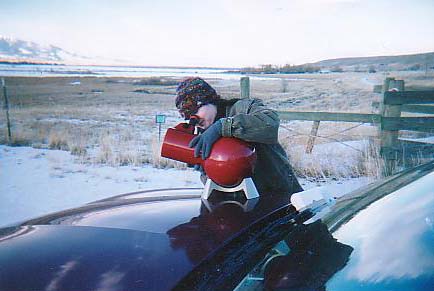
At a park day, we were having a discussion about the usefulness of praise and sincerity. The unschoolers in the group were trying to point out the fallacy of over and insincere praise, and indirectly about treating your children as people first. After much talk getting nowhere, one of the other unschooling parents turned to me and in the French poodle voice started thanking me for all the things I had done for the group that day. Something like,"Oh Dan, thank you for bringing the stove for hot cocoa. You did such a good job setting it up and heating the water! You're so strong carrying that big jug of water all by yourself!" Everyone had a good laugh and the point was succinctly made."Treating them as people first." That's it. See them as people, who hear you and are thinking, and treat that respectfully. In her book Whole Child/Whole Parent, Polly Berrien Berends, uses the term "Seeing Beings."
You've been communicating closely with all kinds of homeschoolers, not just unschoolers, for a long time now. Thinking back to the best of them and the families in which things were strong and good, what traits in the parents or families do you think helped most?Pam Sorooshian:
Hmmm - the best of them.... I think it is that they aren't treating their kids the way they think they are "supposed to," but are looking clear-eyed at their own real children and treating them as the individuals they are. I mean - they aren't following a script. They are authentic. They don't punish a kid because they have some idea that "kids need to be punished" - they think about what their own real standing-in-front-of-them kid is probably feeling and thinking and they respond to that reality. How many times have we seen a parent yell or be harsh with a kid that was already upset? Without regard to what was upsetting them.
Parents who get really in touch with their kids - who let themselves think what their kids are thinking - who aren't afraid to imagine what their kids are REALLY feeling and thinking...... those are the good ones.
Sometimes I'm amazed at what parents tell themselves that their own kids are thinking or feeling. The really awful ones make all kinds of terrible assumptions about kids' intentions.—Pam Sorooshian
2009
Grateful for not having needed to help kids with homework all those years.Jen Keefe
We were out to dinner last night and the family seated behind us were trying to collectively complete the older daughter's algebra homework. It seemed stressful, but the dad was trying to make it better by ordering bottomless rootbeer floats and fries (which I thought was so nice). Still, I looked at my husband and said "November gratitude: no homework!"Sandra Kardaras-Flick
Until now, I hadn’t considered the whole homework thing. Wow, something else to be grateful for. So cool!
How did you know they could ride a bike?
How do parents know when a baby can walk? Talk?


It sounds like it takes an enormous amount of trust in everything to allow this process to happen.I responded:
It takes a little trust, and desire, and willingness, to take one step. It gets easier as you go. No one can take all of the steps at once.


How might a parent act on a really busy day?
If the mom learns and then demonstrates that giving can make a person feel happy, *then* she might have children who are also generous and kind. If the mom acts pouty and whiney and martyrly, she will have children who are confused and needy and resentful.
from a page on how much, if any, political angst/indignation a parent should collect and share—part of my response to a question, but there are others there:If the parent can't solve the problem, it doesn't seem productive to me for "the problem" to be brought into the unschooling nest, as it were. Because negative emotions (fear, guilt, sorrow, helplessness) can prevent or hamper learning. Unschooling works best in an atmosphere of contentment and hopefulness.
Think about what you think you "have to" do.
Choose to do something good, for sensible reasons.