Saturday, April 11, 2020

Quitters sometimes win!


Schuyler Waynforth wrote:

Maybe you can see how quitting what you don't want to do is a good thing.

I've quit lots of things, jobs, relationships, books, drugs, cigarettes, lots of things that weren't helpful, that weren't good for my life. Quitting them made room for other things. It also helped me to think about what I wanted to do. Some of the things I quit I went back to like photography or knitting, I quit knitting regularly. Others I've not yet returned to like smoking or working at a plastics factory.
Thoughts about finishing what you start
photo by Gail Higgins

Friday, April 10, 2020

No exceptions


Parents should not think that unschoolers are exempt from any expectations of courtesy or etiquette.

The original is from "Food Rules", but this matches, too:
SandraDodd.com/etiquette
photo by Jen Keefe

Thursday, April 9, 2020

Dignity


Be dignified, if you want your children to respect you and to grow up to be dignified themselves. You cannot maintain your dignity and also embrace INdignity. Breathe and think of your children's need for peace so that unschooling can thrive in your home.
Indignation is not a virtue.


SandraDodd.com/indignation
photo by Vlad Gurdiga

Wednesday, April 8, 2020

Change a little


Without leaving your house, you can change the way you look at the world. You can change your relationship with your child and it will make both of your lives new. Sounds fruity, I'm guessing, but it's true.

The original quote said "daughter"
and linked to the original of
SandraDodd.com/morning
photo by Lori Taylor

Tuesday, April 7, 2020

Mysteries

"Don't borrow trouble," my granny used to say. Lately that comes to mind, in a good way.

There are things we can't control. There are things that are none of our business! About some things, sometimes, it's okay not to care. Let there be mysteries.

Parents with the ability to smile and to see the sky and to be grateful for local, familiar water and air are better for children than parents who are angry and complaining. Be a peaceful place for your children.

"How important is it?"
I took the photo, of a mystery unrelated to me in every possible way.
People in New Mexico neither need to be for nor against cane cartage.

Monday, April 6, 2020

Wide view and close-up


A closer photo of this gate might look more limiting than this distant view. There's no fence attached, past the low places on each side of the road. It will keep vehicles out, but not animals.

If you're feeling limited by something that doesn't really have a fence, it might be illuminating to look more closely at some of the construction, at the details. Things are different different places, and interesting.

To young children, things can be new even if they're the same old hardware, or view, or tree, or sky, to the adults. If you can see through a child's eyes, things might seem new again.

Seeing as a visitor or a tourist, in your imagination, will reveal another layer to your same-old, too. Even when you don't have visitors, you can think of what might be interesting to someone from another side of the world.


Your House as a Museum
photos by Sandra Dodd, visiting Queensland in 2014
__

Sunday, April 5, 2020

Shady shadows

Light makes art, by projections, reflections, animated shades, and shadows! It's beautiful, temporary and only costs the time it takes to remember to look for it.


SandraDodd.com/light
photo by Karen James

Saturday, April 4, 2020

Getting it

When people say "I read [whichever] webpage last year, but..." and I say "Read it again," I think they might think I'm accusing them of not having read it, but it's that after using the ideas a while, the description makes lots more sense.


Whatever it is we're learning—crochet patterns, musical notation, using crutches, building a fire, making cookies—hearing instructions (or reading them) makes VERY little sense at first. Later it makes more sense. But after trying it and figuring out some things for ourselves, and then going back and looking at the directions, they come to life, in color, and they make 3-D sense.

SandraDodd.com/gettingit

Read a little, try a little; wait a while, watch
art and photo by Roya Dedeaux

Friday, April 3, 2020

Just play

I've decided it's not so much the "what" that we do, but the attitude in which we do it. The whole wide world is open, just play and enjoy it.
"What (if anything) should I be doing to help..."
photo by Linda Malcor

Thursday, April 2, 2020

Being inside


If you can't go outside, look at the beauty inside. There are things you might have missed, if you didn't have time to sit and see.

Creating history
photo by Tara Joe Farrell
__

Wednesday, April 1, 2020

Finding a social spot

Humans are social animals, and learn in mixed-age groups, when they learn naturally. A family can create that natural learning environment, or can fail to create it. :-/ Being around other people, though, IF AND WHEN a child wants to learn and is encouraged by parents to learn how to be considerate and sociable, can be a good place to learn "manners"—ways to behave politely.

In school, children are still social animals with the need to identify who might help them, and what their role is within the social structure. The social structure being unnaturally 20+ kids the same age, they figure out who are the leaders and the "young" and they act in accordance with their instincts in an unnatural setting. More adults to—teens, and young adults, and middle-aged, and elderly, behaving in natural real-world ways. TV is better for that than school is. Ideally, a rich unschooled life *IN* the real world is better than either.


photo by Julie D

I can't find where I wrote that, up there, but three people shared it in 2012,
and I still think it's true. —Sandra

Tuesday, March 31, 2020

Be curious about life


Get interested in things yourself. Not interested in your child getting educated, but in learning for yourself. Pursue an interest you've always wanted to but never had time for. Be curious about life around you. Look things up to satisfy your own curiosity. Or just ponder the wonder of it all. Ask questions you don't know the answers to. "Why are there beautiful colors beneath the green in leaves?" "Why did they build the bridge here rather than over there?" "Why is there suddenly more traffic on my road than there used to be?"

Let your child know that all the questions haven't been answered yet and it's not her job to just keep absorbing answers until she's got them all.
—Joyce Fetteroll

Five Steps to Unschooling
photo by Pushpa Ramachandran

Monday, March 30, 2020

Nearly natural limits

Kelly Lovejoy wrote:

The world is FULL of natural limits. Our lives are FULL of natural limits. It's the way we deal with those limits that matters. Finding solutions and dealing with obstacles and knowing what limits are real.
—Kelly Lovejoy


From a discussion of Boundaries, at Unschooling Basics
photo by Ester Siroky

Sunday, March 29, 2020

A little peace

It doesn't take much to create a little peace, and then some more.


SandraDodd.com/peace/
photo by Ester Siroky

Saturday, March 28, 2020

Priceless and profound


One of the greatest benefits of unschooling is the relationship with the child, and the changing attitudes of those in the family toward learning and being. Being a parent one is proud to be is priceless and profound.

The healing of one's own childhood wounds and the recovery from school are like little bonus miracles.

How Robbie saw unschooling in swans
photo by Nicole Kenyon
__

Friday, March 27, 2020

Laughter helps


Deb Lewis wrote:

Unschoolers sometimes talk about having tools in their toolbox. No, unschoolers are not all plumbers. They're referring to a store of good ideas to shop around in to help in this business of living. I have one tool I use more than any other. A pipe wrench! No, it's humor.
. . . .
Laughter has helped my own family through hard times. Sure we would have come through the hard times anyway, but we came through them with less stress, fewer lasting scars, and lots of great one-liners.
—Deb Lewis

Unschooler's Pipe Wrench, by Deb Lewis
photo by Jo Isaac
__

Thursday, March 26, 2020

Visions and knowledge


I didn't know how much children could learn without reading, until I immersed myself in unschooling and my children's lives.

As their reading ability unfolded and grew, I learned things I never knew as a teacher, and that I wouldn't have learned as an unschooling mom had they happened to have read “early.” Reading isn't a prerequisite for learning. Maps can be read without knowing many words. Movies, music, museums and TV can fill a person with visions, knowledge, experiences and connections regardless of whether the person reads. Animals respond to people the same way whether the person can read or not. People can draw and paint whether they can read or not. Non-readers can recite poetry, act in plays, learn lyrics, rhyme, play with words, and talk about any topic in the world at length.

SandraDodd.com/unexpected
photo by Holly Dodd, from inside an auto-rickshaw

Wednesday, March 25, 2020

Music lives in the air

Music doesn't live in notes on paper, it lives in the air.

People can be VERY musical without knowing how to read or write music, just as people can be very verbal, tell stories, be poetic and dramatic without reading and writing.

SandraDodd.com/music
photo by Sandra Dodd

Tuesday, March 24, 2020

Keys to knowledge

One of a child's best tools is to learn to ask "What's that?" It's one of a baby's keys to knowledge. "Sa-sat?" said one of my kids. Hundreds of times, pointing. "Sa-sat?" Another said, "Aht-dat?"

With names for things, categories form. Some small furry animals ARE "dog" and others are not. "Not" needs another name.

On naming, a researcher named J. Doug McGlothlin wrote, "A child possesses a natural desire to call an object by its name, and he uses that natural desire to help him learn the language. He receives real joy from just pointing out something and calling it by name. He never thinks it is stupid or silly to say something that others might consider obvious. For him, it is delightful."

SandraDodd.com/words/words
photo by Cass Kotrba

Monday, March 23, 2020

Contentment

Peace can be just contentment—to be happy where you are, to like your life.


SandraDodd.com/peace/noisy
(the quote is from the sound file at the bottom)
photo by Sandra Dodd

Sunday, March 22, 2020

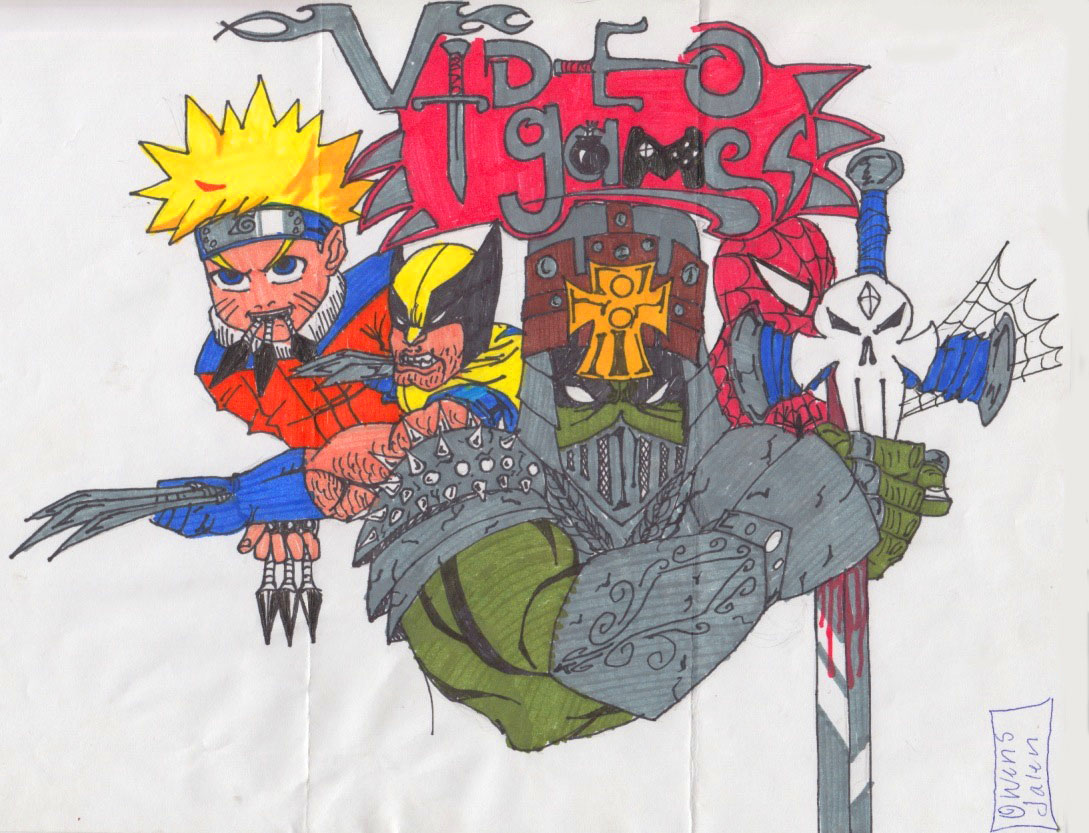
Wouldn't change a moment


"A good chunk of our days are filled with gaming, and I wouldn't change a moment of it. My son is learning so much, is healthy both physically and emotionally, and truly loves his life. What more could I hope for?!"
—Karen James

SandraDodd.com/videogames
art by Jalen Owens

Saturday, March 21, 2020

Make the next moment better.


Moments, not days.

Don't think of "bad days." One terrible moment doesn't condemn the rest of the day. One bad moment? Recover. Apologize, smile, be sweet, and make the next moment better.

SandraDodd.com/betterpartner

SandraDodd.com/moment
photo by Karen James
__

Friday, March 20, 2020

Living Sweetly by Choice


It seems to me the best you can do for your family is to choose to be with them as long and as well as you can be, mindfully aware that you have chosen to do this.

Live sweetly by choice.


From my handwritten notes for a 2004 presentation that was pre-empted for a last-minute speaker.
photo by Sandra Dodd of the cloth from the article here
__

Thursday, March 19, 2020

First aid for scary, sad days of doubt

I wrote this on March 10, 2000:

Sometimes it's kids, sometimes it's parents.

Let's list ideas for cheering up, and de-funkifying.

I love "breathe."
Whether it's jogging or breath-holding, or laughing, or spinning or meditation—whatever causes a sudden more concentrated and less thought-laden intake of oxygen is relaxing.

I like happy music or funny, familiar movies—the stuff you already know and can put on as background, which reminds you subliminally of more peaceful and carefree days.

I like comfort food, playing with ice cubes, going to the store just to buy something cold (lettuce, apples, ice cream, a small soda for all to share, special juice or fancy tea in a bottle—something cold and soothing, and no doubt this works better in the desert than it might in Minnesota this morning).

Painting—not fancy elaborate painting, but big brush strokes on big scrap paper, or a sign for the dog, or painting on a playhouse outside or something that doesn't involve stress (if it's quickly available).

Mix it up: Wear something you haven't worn for a long time. To assist a kid to do this, get out the off-season clothes and see what's not fitting, or find some funky old thing of yours and see if the kid wants it, or stop at a garage sale and get a t-shirt for a quarter or something. A new color, a new picture, some soft cotton or silk. Marty got a silk shirt at a thrift store the other day for $3. He's thrilled. Wears it like a jacket over t-shirts. Touches the sleeves a lot.

While this stuff is being done/discussed/reviewed, the depressing problem is being dispersed, forgotten, avoided. Next time the depression comes (if it does, if it's a long-term thing) the kid or parent will approach it with a more relaxed mind and calmer body.

More ideas??
. . . .
What works at your house?

Read responses with other ideas here: Conversations with Sandra Dodd


photo by Alex Polikowsky

Wednesday, March 18, 2020

Plus or minus

Every little thing a parent does goes into the plus column or the minus column. Each parent is gaining credit or losing credit.

Everything counts—words, tone, patience, generosity, interest, kindnesses and thoughts. It takes more to build your credit back up than it does to waste it, so be careful.

Credit
photo by Sandra Dodd

Tuesday, March 17, 2020

Too good to be true?

"It sounds too good to be true, but it isn’t. Being connected is better than being controlling. Being interested is better than being bored. Being fun is more fun than not being fun!"

—Melissa Wiley

SandraDodd.com/quotes
photo by Sandra Dodd, of bowls I bought in India

Sunday, March 15, 2020

Peace is primary


Tara Joe Farrell wrote:

Peace is THE priority in unschooling. It's primary. No amount of dropping bedtimes or food/media restrictions, no finding the yeses, no rich environment can get a family to unschooling well until someone (the at-home parent, the keeper of the nest, usually the mom) understands how to scan for peace, see where it's missing, and then find a way to let peace grow in that space. That could mean simply planting peace, but it can also mean clearing obstacles (including ourselves). Learning only, ever, thrives where there is peace.
—Tara Joe Farrell

Becoming the Parent You Want to Be
photo by Gail Higgins—rainbow on a waterfall
(click to enlarge)

__

Saturday, March 14, 2020

At peace, at home

Today is different.

Well every day is different, but this week the world is trying to figure out how to pause and wait. This affects us all. Some people got quiet. Some ran around.


Two important jobs have fallen on parents. Distract children who might be afraid, or sick or restless. Needy children.


Find and share beauty and joy in familiar things—in things you can touch, hear, see, smell, taste, drink from, eat from, sit on, sleep on, tell stories about.

The links below go to previous posts that might help you be at peace, at home.

Live lightly with patience
Arts and sciences
History at your house

photos by Sandra Dodd


(Note added in January 2022: The post above was written as the Covid-19 pandemic was being announced, in many places, and lockdowns were beginning.)

Friday, March 13, 2020

Mushy happy everything

I've come to ask for a roll call on who's seeing, reading, caring. If you have this by e-mail, please respond, with at least a ping, if not a note.

The mailer-report says nobody saw this one: Constant flow of thoughts, which is too bad because there was a cool photo by Karen James of beautiful little plants growing in a crack in a lava flow. If you didn't receive that, I don't know why not, and I hope you'll take a look.

Some people object to "Mushy happy" anything, but I'm pretty sure it's better than dried-up cranky whatever, so if you want happy encouragement, stick around! If not, see if one of these guys has a daily blog for you, and best of luck.


Wednesday, March 11, 2020

Learning curve

The learning curve of unschoolers has a plateau in the middle, it seems. Don't worry.


SandraDodd.com/learningcurve
photo by Belinda Dutch
__

Tuesday, March 10, 2020

Control

If you think of controlling yourself, and of your children controlling themselves, it's still about control. If people live by principles their choices come easily.


SandraDodd.com/self-regulation
photo by Holly Dodd

Monday, March 9, 2020

Even though it's natural...


There is a natural need in people to know the "us" and the "them." Those who want an inclusive, multicultural, liberal, accepting life will still have a "them." It's easy to revile "the enemy." It might be impossible NOT to have the idea of "other." But creating a "culture" or nation that is created of a combination of others won't save any individual from their own instincts.

Accept and try to accept what is a natural part of human nature. Then figure out ways to live peacefully, and kindly, and gently, for the sake of your children, and of others.

SandraDodd.com/antagonism (the first part is from there)
photo by Whitney DiFalco

Sunday, March 8, 2020

Constant flow of thoughts

Rebellion for the sake of rebellion is as bad as conformity for the sake of conformity.


SandraDodd.com/issues
photo by Karen James

Saturday, March 7, 2020

Lucky Kirby!


Kirby, my oldest, was born in 1986. I went to La Leche League (LLL). There I learned a crucial concept: my child and I were partners, not adversaries. What was good for him was good for me. At that time I had been going to Adult Children of Alcoholics meetings for a little over a year, and there I learned that we need to avoid repeating our parents' parenting mistakes, and that by raising our own children gently and respectfully, that we would heal our own hurts.

Lucky Kirby!

SandraDodd.com/unschoolingworks 2002
photo by Ester Siroky

Friday, March 6, 2020

Active participants

"Unschooling is not child-led or child-directed learning — that makes it sound like the parent should just be a 'follower.' Not so — parents are active participants and part of the job of an unschooling parent is to keep the child in mind and to fill his/her life with just the right amount of interesting new experience, chances to repeat experiences, down time, and so on."
—Pam Sorooshian


SandraDodd.com/nest—Building an Unschooling Nest
photo by Nina Haley