Showing posts sorted by date for query learning clearly. Sort by relevance Show all posts

Sunday, January 25, 2026

Learning, clearly

Sandra Dodd
16 February 2020

I'm cleaning up my computer desktop (a neverending task), and came across a note where I saved this:
"Getting mad about the difference between teach and learn is a waste of your life."
I've never been "mad" about the difference. 🙂 I've been thinking about it for longer than most people have been alive. I've read about it, I've written about it, I've helped others understand why it can matter, sometimes. It ALWAYS matters for those who want to unschool. Deschooling won't happen without stepping away from the idea of teaching, and without finding some occurrences of natural learning, picking them up and turning them over. Soon it will be easier to see and understand the kind of learning that happens lightly but deeply.

Someone must have been mad enough about my pointing out that there is a difference between teaching and learning (lots of differences; I could go on) to declare that my life was a waste.

I'm pretty sure my life has not been a waste. 🙂

What Teaching Never Can Be
Sandra Dodd, and others, on "Learning" vs. "Teaching"


The quote is here: SandraDodd.com/learningClearly
photo by Stacie Mahoe

Saturday, April 19, 2025

Extraordinary doings

Joyce Fetteroll wrote:

It helped me think more clearly about unschooling when I realized unschooling isn’t something kids do. Unschooling is something parents do. Unschooling is *parents* creating a learning environment for kids to explore their interests in.

Unschooled kids aren’t doing anything out of the ordinary. They’re merely doing what comes naturally. They’re doing what all animals with lengthy childhoods do. They learn by doing what interests them in an environment that gives them opportunities to explore.

Unschooling is parents doing something extraordinary. It’s deliberately creating an environment where kids are supported in pursuing their interests.
—Joyce Fetteroll

SandraDodd.com/unschoolingis
photo by Rosie Moon

Wednesday, March 12, 2025

Reading (parts of) everything

"What unschooling really is" can't easily be defined, because some people use it vaguely, admitting they don't understand.

Parents need to understand their own unschooling clearly enough to defend it. It might take a while, and discussions can help people see it better, but discussions are about information and resources, so read everything you can find, and hold every piece of info up to the light, overlay the ideas on your own family and beliefs, and adopt slowly and carefully, any changes you make.


What's above was adapted from a recent facebook post. I was referencing that particular discussion, and by "read everything you can find," I meant the links left there, which are mostly from my site and from Joyce Fetteroll's.

Reading everying you can find would work well with Just Add Light and Stir. If you're reading e-mail on a phone, click under "You can read this post online." There will be a randomizer, at the bottom.

Better yet, open the blog from a computer and use the randomizer or the image tags. Tags will let you see many of whatever you've chosen—posts good enough to repeat or re-run; gates; waterfalls; paths; cats doing cool things; kids doing cool things; dads; playgrounds.... The tags are a beautiful and soothing randomizing feature.

My favorite definition of unschooling is:
Unschooling is creating and maintaining an atmosphere in which natural learning can flourish.


SandraDodd.com/readalittle
photo by Cara Jones

Tuesday, November 28, 2023

From pictures alone

Cally Brown wrote, in 2012:

Back in the olden days when #1 son was 6, homeschoolers used to be 'inspected' in New Zealand. The inspector asked Greg to show him his favourite book and Greg ran off and returned with a large volume of a 20-something-volume encyclopaedia. The inspector looked amazed and said, "Goodness! You can read that?" and Greg replied, "Of course not! I'm only six! I just love looking at all the pictures," and proceeded to show the man all sorts of interesting things, clearly displaying an amazing amount of knowledge he had garnered from pictures alone.
—Cally Brown

Learning without Reading
photo by Rosie Moon

Saturday, November 25, 2023

No other way

Read a little, try a little, wait a while and watch. There is no other way to learn this than gradually. There is no other way to learn to see clearly how it works than by trying it a bit at a time and seeing how putting learning first changes other things—how putting peace ahead of schedules changes things.

SandraDodd.com/readalittle
photo by Sandra Dodd

Thursday, October 19, 2023

Be careful with "can't"

About reading:

English has one word that, unfortunately, helps charge this whole subject with emotion and doom. I learned this from an exchange with Marty, when he was four. I wrote it down at the time, and have quoted it a few times since, but I've never connected it with reading until now.
Wed, Jul 28, 1993
The first thing [Marty] said after “good morning” was “Mom, if you count to infinity, is it illegal?”

I explained to him about infinity, with a million plus one and a “gadillion” plus one. He was fine with the explanation, and I said, “Who told you you can’t count to infinity?” He said I did, so I explained the difference in things that are impossible and things that are illegal (have consequences)
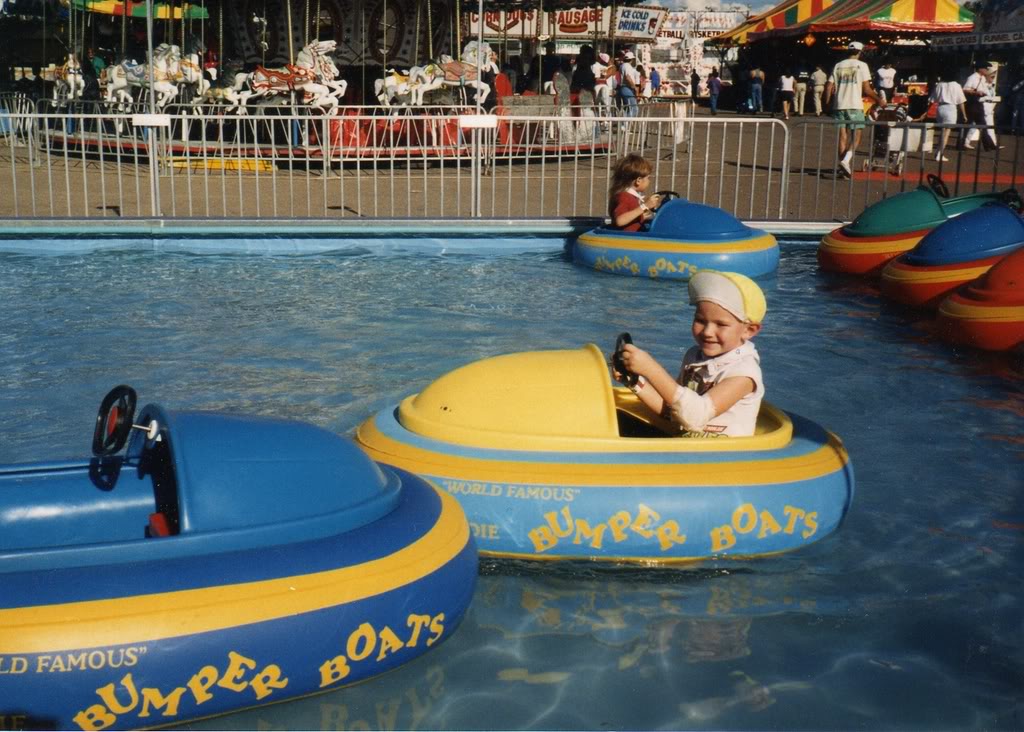
bumperboats.jpg

"Can't" sounds pretty permanent. We were careful not to say, in our kids' hearing "Marty can't read." We would cheerfully say, "Marty doesn't read yet" (or Kirby, or Holly). With that, every time it was discussed we were clearly indicating that we thought the child WOULD read before long, and it was not a concern. They were certainly learning in many other ways, as anyone close enough to discuss their reading could see!

SandraDodd.com/r/persephonics
photo by Sandra Dodd

Wednesday, January 4, 2023

Gradually learning; seeing clearly

Unschooling is not easy to understand. Even people who are ready and really want it will take years.

Read a little, try a little, wait a while and watch. There is no other way to learn about unschooling than gradually. There is no other way to learn to see clearly how it works than by trying it a bit at a time and seeing how putting learning first changes other things—how putting peace ahead of schedules changes things.


Quotes, tweaked slightly, from Explorations
photo by Cathy Koetsier

Thursday, June 10, 2021

Clearly and maturely


Rippy D. wrote:

[The Always Learning discussion] has helped me think more clearly and maturely. It has helped me change unhelpful patterns and most of all helped me step into the *JOY* of life, connection, partnership with my children and husband. I know how scary it is to feel examined, and I think some other readers interpret examination as meanness, like I once did. I think to do unschooling well, it is a fundamental element to have an examined life. To be mindful of our choices and understand our thought processes.
—Rippy Dusseldorp

Healing Presence
photo by Ester Siroky

Saturday, June 13, 2020

Lot of choices

I used to remind my kids [that] I had a moral and legal obligation to clothe them appropriately, and I didn't have the option to ignore that. I could give them lots of choices, but within the bounds of what was appropriate to the situation and the weather and the laws.

When a family starts talking about "ultimate" freedom or total freedom, or any of that, they just haven't thought about it very clearly.


from "Always Learning," in 2011
photo by Sarah S.

Tuesday, June 6, 2017

Something extraordinary

New from Joyce Fetteroll:

It helped me think more clearly about unschooling when I realized unschooling isn’t something kids do. Unschooling is something parents do. Unschooling is *parents* creating a learning environment for kids to explore their interests in.

Unschooled kids aren’t doing anything out of the ordinary. They’re merely doing what comes naturally. They’re doing what all animals with lengthy childhoods do. They learn by doing what interests them in an environment that gives them opportunities to explore.

Unschooling is parents doing something extraordinary. It’s deliberately creating an environment where kids are supported in pursuing their interests.
—Joyce Fetteroll

Unschooling is...
photo by Chrissy Florence

Thursday, July 30, 2015

"Electric in my memory"

Karen Angstadt wrote:

I saw SO MUCH MORE learning happen because I was watching so closely. It was like a big curtain was lifted that had been preventing me from seeing clearly. When I think back today about that moment, it feels like THAT was the real beginning of unschooling for me. It still feels electric in my memory—all the connections I made that day about learning and its value to the learner within the place and time it is learned. I am so grateful for Learn Nothing Day.
—Karen Angstadt

(Longer version here.)
photo by Sandra Dodd

Tuesday, October 21, 2014

No other way

Read a little, try a little, wait a while and watch. There is no other way to learn this than gradually. There is no other way to learn to see clearly how it works than by trying it a bit at a time and seeing how putting learning first changes other things—how putting peace ahead of schedules changes things.

SandraDodd.com/readalittle
photo by Sandra Dodd

Sunday, April 21, 2013

Be careful with "can't"

About reading:

English has one word that, unfortunately, helps charge this whole subject with emotion and doom. I learned this from an exchange with Marty, when he was four. I wrote it down at the time, and have quoted it a few times since, but I've never connected it with reading until now.
Wed, Jul 28, 1993
The first thing [Marty] said after “good morning” was “Mom, if you count to infinity, is it illegal?”

I explained to him about infinity, with a million plus one and a “gadillion” plus one. He was fine with the explanation, and I said, “Who told you you can’t count to infinity?” He said I did, so I explained the difference in things that are impossible and things that are illegal (have consequences)
bumperboats.jpg

"Can't" sounds pretty permanent. We were careful not to say, in our kids' hearing "Marty can't read." We would cheerfully say, "Marty doesn't read yet" (or Kirby, or Holly). With that, every time it was discussed we were clearly indicating that we thought the child WOULD read before long, and it was not a concern. They were certainly learning in many other ways, as anyone close enough to discuss their reading could see!

SandraDodd.com/r/persephonics
photo by Sandra Dodd

Tuesday, February 26, 2013

Practice watching


Look directly at your child. Practice watching your child without expectations. Try to see what he is really doing, rather than seeing what he’s NOT doing. If you hold the template of "learning" up and squint through that, it will be harder for you to see clearly. Just look.

SandraDodd.com/deschooling#movies
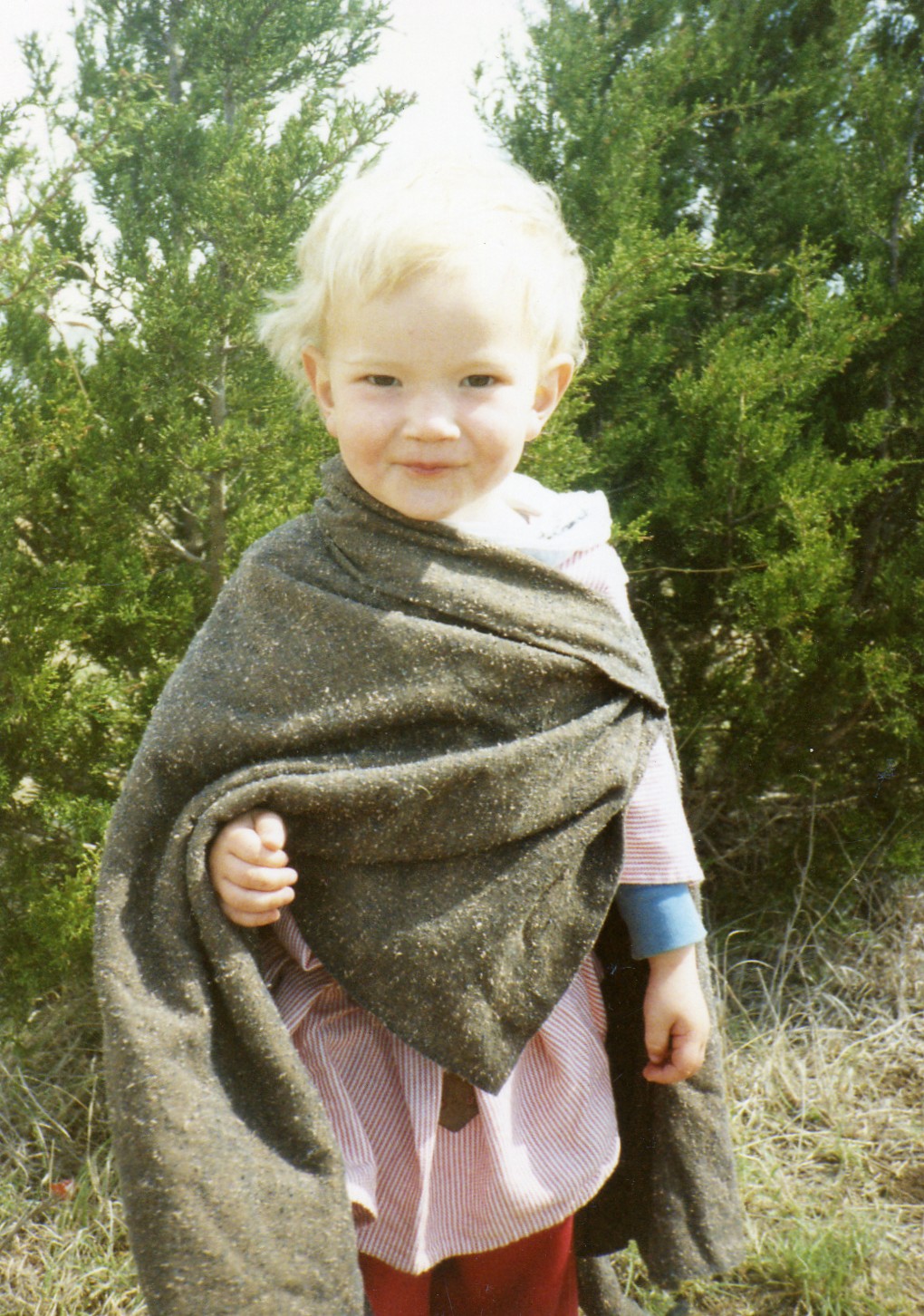
photo by Sandra Dodd, of two-year-old Marty Dodd
in medieval garb

another quote with "practice watching" in it

Saturday, September 15, 2012

Flowing clearly

Clarifying thought, it turns, out, is what unschooling is all about, for the parents. When the parents are clear, then learning can flow around them.


SandraDodd.com/clarity
photo by Sandra Dodd

Wednesday, July 11, 2012

Your relationship with learning


You can't wait until you understand it to begin. Much of your understanding will come from the changes you see in your child and in your own thinking, and in your relationship with and perception of learning itself. You can't read a touch and then go and unschool for a year and then come back and see what you did wrong; you could be a year in the wrong direction.

Read some, do some. Think. Rest. Watch your child directly and as clearly as you can...

from The Big Book of Unschooling, page 36 (or 39)
photo by Holly Dodd

Monday, May 14, 2012

Clarity magnified


Online discussions of natural learning and parenting give people a serious opportunity to practice communicating clearly and carefully. For some people, an unschooling discussion will be their first "real writing"—the first time they've written real things for real people, rather than practice things for teachers. Those who stick with it or who have a native talent for it will find themselves getting direct and immediate feedback from other parents who have taken the ideas or examples or stories and used them to change their own real children's lives, and that is bigtime.

The Big Book of Unschooling, page 235
photo by Sandra Dodd