Showing posts sorted by date for query /structure. Sort by relevance Show all posts

Monday, December 22, 2025

Structure


In 1992, someone asked:
How do I structure our days
and how do I structure our learning time?
I think it should be "Woke up, got dressed, ate, played, ate, played, etc." In other words, I don’t think there should or can be any “days off” from child-centered "education."

If this seems wrong, try this experiment: Keep your child from learning anything for a few days. Make sure that from the first waking moment there is nothing learned, no new material, no original thoughts to ponder, etc. The only problem is that you would have to keep the children from playing, talking, reading, cleaning or repairing anything, etc.

from page 1 of Moving a Puddle

see also SandraDodd.com/structure
photo by Sandra Dodd

Friday, September 19, 2025

Depth and breadth


Sink-Like-a-Stone Method:

Instead of skimming the surface of a subject or interest, drop anchor there for a while. If someone is interested in chess, mess with chess. Not just the game, but the structure and history of tournaments. How do chess clocks work? What is the history of the names and shapes of the playing pieces? What other board games are also traditional and which are older than chess? If you're near a games shop or a fancy gift shop, wander by and look at different chess sets on display. It will be like a teeny chess museum. The interest will either increase or burn out—don't push it past the child's interest.

When someone understands the depth and breadth of one subject, he will know that any other subject has breadth and depth.

From "Disposable Checklists for Unschoolers"
SandraDodd.com/checklists
scanner image by Sandra Dodd

Saturday, February 8, 2025

From the inside


Debbie Regan wrote:

From the outside, unschooling may look like no chores, no bedtimes, no education, no discipline, no structure, no limits, etc. But from the inside, it's about learning, relationships, living with real parameters, partnership, navigating turbulence, making connections, joy, curiosity, focus, enthusiasm, options, following trails, fun, growing understanding, opening doors...
—Debbie Regan

SandraDodd.com/priorities
photo by Ve Lacerda
___

Saturday, April 22, 2023

Private ideas

I love museums. Museums of any sort are special to me, and sometimes I'm thinking about the building or whose idea it was or where the funding comes from to keep the lights and heat on, and to hire people to keep it all safe and clean.

What others are thinking in a museum, even if they're with me, could never be exactly the same. An object will, without fail, remind me of a personal experience, or of when or where I first learned of such things. If it's SO NEW to me that I'm surprised, I tend to think of which friend of mine, alive or dead, I would most like to share it with, or to ask about it. Sometimes that's my dad, especially if the object is an old truck, or a metal structure.

Sometimes I've been the person one of my kids shared something with. That's sweet, and I get to know a bit about what they're connecting to and with.

Long ago, I came to see the whole world as a museum. I love that, too.

SandraDodd.com/museum
photo by Rippy Dusseldorp

Wednesday, February 2, 2022

Math without numbers

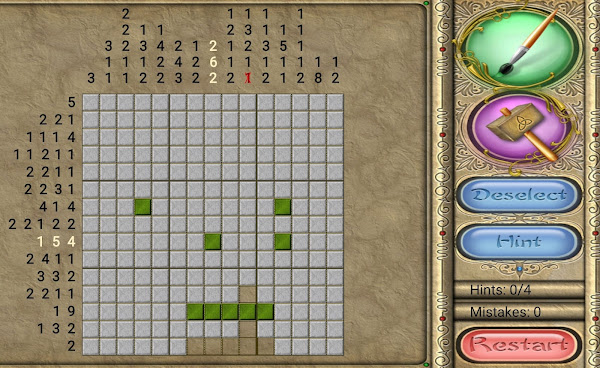
In thinking of mathematics, I operated on the assumption that our children might be more pattern-oriented than I am (spatial and logical intelligences) and that they might be more word-dependent than my husband. We provided games involving patterns–board games, video games, dice, cards, and singing games–and played them with the children. One of the most memorable games was Bazaar, a game with exchange rates and values but requiring no numbers or reading. (In Germany there is a similar game called Bierbörse.) Math was a fun part of the fabric of life. It was the structure of games and of music and of Lego and Ramagon. We talked about proportion and perspective in art and construction, but only in words, not with numbers. They found patterns; I found patterns, and we shared them without me saying "this is mathematics."
Games     /     Geography without maps
screenshot by Holly Dodd, of the game FlipPix

Sunday, September 13, 2020

Tension of the best kind

The term "tension" can bring to mind "nervous tension," or "feeling tense," but there is a bigger, better concept to envision when thinking about relationships and of living well with children for years.

Uplifting forces should be balanced by weighty, anchoring, solid foundations. Both together are what can create a solid structure within which to live a safe yet expanding life.

Tension (the useful kind)
photo by Tara Joe Farrell

Friday, June 26, 2020

From the inside...


Debbie Regan wrote:

"From the outside, unschooling may look like no chores, no bedtimes, no education, no discipline, no structure, no limits, etc. But from the inside, it's about learning, relationships, living with real parameters, partnership, navigating turbulence, making connections, joy, curiosity, focus, enthusiasm, options, following trails, fun, growing understanding, opening doors..."
—Debbie Regan


the original
photo by Kathryn Robles
__

Monday, April 27, 2020

The whole language

Because phonics treats written English as a simple code when it is not, many children are frustrated very early on.

Whole language involves language as communication, rather than separate parts (writing/reading/spelling). First language; details later.

With unschooling, children will learn from the language you use and they use, from the words they see around them, from using games and computers, from signing greeting cards or playing with words. There's no need for any school-style structure at all. For those who have worried about phonics and reading and spelling, please don't press that on your children.


Play with words
photo by Caroline Lieber

Wednesday, April 1, 2020

Finding a social spot

Humans are social animals, and learn in mixed-age groups, when they learn naturally. A family can create that natural learning environment, or can fail to create it. :-/ Being around other people, though, IF AND WHEN a child wants to learn and is encouraged by parents to learn how to be considerate and sociable, can be a good place to learn "manners"—ways to behave politely.

In school, children are still social animals with the need to identify who might help them, and what their role is within the social structure. The social structure being unnaturally 20+ kids the same age, they figure out who are the leaders and the "young" and they act in accordance with their instincts in an unnatural setting. More adults to—teens, and young adults, and middle-aged, and elderly, behaving in natural real-world ways. TV is better for that than school is. Ideally, a rich unschooled life *IN* the real world is better than either.


photo by Julie D

I can't find where I wrote that, up there, but three people shared it in 2012,
and I still think it's true. —Sandra

Thursday, October 24, 2019

Alphabetize your shoes


To someone who thought unschooling might be hard because she liked structure:

If you like structure, reorganize your spices, or make a birthday calendar and buy cards for everyone for the coming year and start putting clippings or little stickers inside the envelopes of various individuals. Alphabetize your shoes. Do something that doesn't hinder your kids, to fulfill your need for structure and organization.


That was from 2003. People are less likely now to send clippings, or birthday cards. The principle still holds true, though. 🙂

What about structure?
photo by Manessah Ellender Garcia

Wednesday, December 13, 2017

Mess with chess


Sink-Like-a-Stone Method: Instead of skimming the surface of a subject or interest, drop anchor there for a while. If someone is interested in chess, mess with chess. Not just the game, but the structure and history of tournaments. How do chess clocks work? What is the history of the names and shapes of the playing pieces? What other board games are also traditional and which are older than chess? If you're near a games shop or a fancy gift shop, wander by and look at different chess sets on display. It will be like a teeny chess museum. The interest will either increase or burn out—don't push it past the child's interest.

When someone understands the depth and breadth of one subject, he will know that any other subject has breadth and depth.

SandraDodd.com/checklists
photo by Sandra Dodd
__

Monday, July 24, 2017

Ate, played, ate, played...


I think it should be “Woke up, got dressed, ate, played, ate, played, etc.”...

If this seems wrong, try this experiment: Keep your child from learning anything for a few days. Make sure that from the first waking moment there is nothing learned, no new material, no original thoughts to ponder, etc. The only problem is that you would have to keep the children from playing, talking, reading, cleaning or repairing anything, etc.

from something I wrote in 1992, newly here: SandraDodd.com/structure
photo by Sandra Dodd

Thursday, July 13, 2017

All the way


Schuyler Waynforth wrote:

Unschooling is at its core an understanding that learning is a part of being human. It is a recognition that school undermines that by saying that learning needs to be organised, structured and handed down. School argues that certain things are so hard to learn that they must be taught. If you unschool partway you are mixing up your messages. If you unschool math and science and reading but structure nutrition and media studies you are arguing that while a rich and engaging life may make the three "r"s obvious they won't help you to deal with the difficult studies of food and televisions and video games and computers.
—Schuyler Waynforth

SandraDodd.com/unschool/marginal
photo by Davis Harte

Saturday, April 8, 2017

Inside and outside

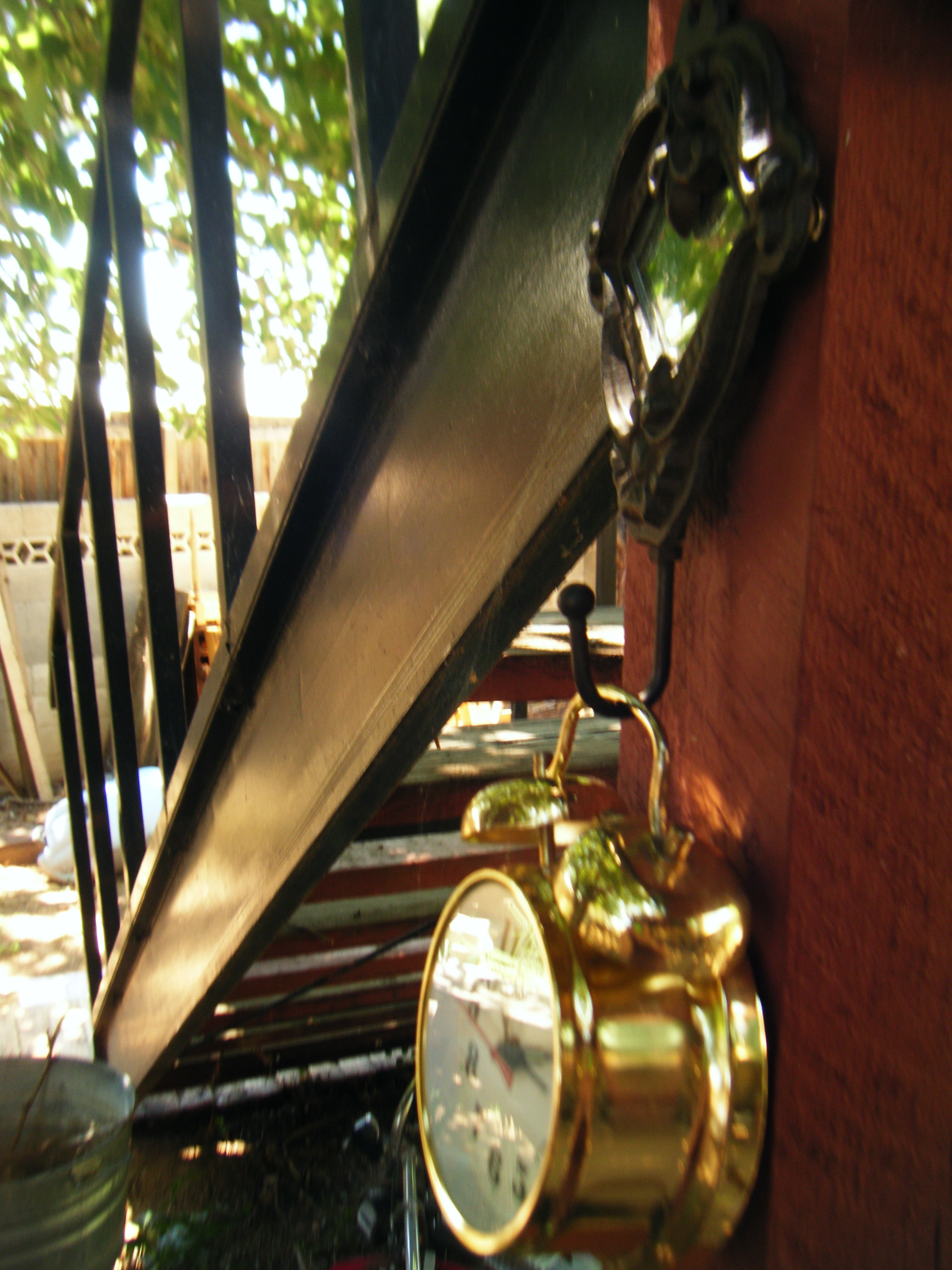
I have some good plants in my house. Outside it can be too harsh for most plants to survive, but indoors is safer.
The photo was taken far from New Mexico, but still shows some life inside, and some less-lively structure outside.

Two ideas: Sitting around watching plants grow isn't as good as some other things you could do, and don't be too prejudiced against being inside!

SandraDodd.com/t/memories
photo by Sandra Dodd

Saturday, May 14, 2016

Structure and transformation


Mathematics could use a better name. Seriously. School has gone and made that one all scary. In addition (she said mathematically), it's not called the same thing in all English-speaking places. "Math" in some places, and "maths" in others.

But it's about measuring and weighing and sharing. It's about making decisions in video games (buy the watering can? risk danger to collect coins?) and it's about how fast music goes and which ladder to use to get onto the roof. It's almost never about numbers themselves, and it's never about workbooks (except for workbook manufacture and purchase).

I went to look for a different word for "mathematics," and I didn't find one. One Old English word was "telling." For arithmetic: "cyphering," or sums. So I went looking for modern, philosophical definitions of mathematics that had nothing to do with school, and I have collected all these bits and pieces for you: Mathematics is a science dealing with the logic of quantity and shape and arrangement; structure, space, and change; logic, transformations, numbers and more general ideas which encompass these concepts.

Structure and transformations? I use those things. Shape and arrangement? That covers art, and music. Flowers in vases and books on shelves.

Unschooling is simple but not easy, and it's not easy to understand, but when math is a normal part of life then people can discover it and use it in natural ways and it becomes a part of their native intelligence.

SandraDodd.com/math
photo by Holly Dodd, 2010 or earlier

Sunday, February 7, 2016

From the inside


Debbie Regan wrote:

From the outside, unschooling may look like no chores, no bedtimes, no education, no discipline, no structure, no limits, etc. But from the inside, it's about learning, relationships, living with real parameters, partnership, navigating turbulence, making connections, joy, curiosity, focus, enthusiasm, options, following trails, fun, growing understanding, opening doors...
—Debbie Regan

SandraDodd.com/priorities
photo by Ve Lacerda

Friday, July 10, 2015

Bases and basics

"Base" means foundational—the heavy, bottom part of a structure. The basis of an idea is its underlying solidity. These ideas are literally basic.


Base your life in basic things. "Cover your bases." Don't let fantasy or "what if" pull you off base.

Accept and admire beauty if you can, instead of dismissing things as "just..." Just a stump. Just a dandelion. Can you see the beauty in the stump? It might be a safe place to stand after a rain. To a child you love, it might be a chair or a mountain. Dandelions are flowers that make puff-toys for children to blow on. They grow without our help. They might be the only colorful flower you'll see, some days. If a child loves them, can you follow?

SandraDodd.com/wonder
photo by Sandra Dodd, of unimportant things, in Tiguex Park
__

Wednesday, April 15, 2015

The language they hear and see


With unschooling, children will learn from the language you use and they use, from the words they see around them, from using games and computers, from signing greeting cards or playing with words. There's no need for any school-style structure at all. For those who have wondered about phonics and reading and spelling, please don't press that on your children.

SandraDodd.com/phonics
photo by Sandra Dodd, of a ghost sign in Texas

Sunday, June 1, 2014

Shockingly efficient

Julie Daniel owns a company that advises people on efficiency and productivity. I interviewed her and asked whether unschooling had seemed inefficient. Her husband works with her, and she quotes him:
When I first started to explore unschooling one of the things I found very exciting was how amazingly effective and efficient it is. My husband, James, says it is 'shockingly efficient'. There isn’t any of the wasted effort that goes along with trying to entice someone to pay attention to something that they don’t care about. We notice what Adam is interested in and we think about what else he might find interesting and we provide opportunities to explore those things.

Mostly when people think about being 'organised' they think about structure and predictability. For me the point of being organised is to achieve a particular objective. I actually really like that I don’t need to have a lot of structure to achieve the goals of exploring cool things, learning about the world and having fun. Of course some of the basic organisational skills that I have learned do come in handy, like knowing where to find things that I’ve saved and keeping track of our calendar so we know where to be and when. But in terms of Adam’s learning I don’t feel the need for structure and predictability because I can see how incredibly efficient his natural learning process is.

—Julie Daniel
The Efficiency of Unschooling (interview)
photo by Julie Daniel

Sunday, March 16, 2014

Years or an hour

medieval market cross structure with 18th century clock up top, Chichester

"Gauge how much to do and when by your child’s reactions. Let her say no thanks. Let her choose. Let her interest set the pace. If it takes years, let it take years. If it lasts an hour, let it last an hour."
—Joyce Fetteroll

Five Steps to Unschooling
photo by Sandra Dodd