Showing posts sorted by date for query /look. Sort by relevance Show all posts

Thursday, April 16, 2026

Crazy-large vocabulary

Some languages are simpler than English in that the letters and sounds match pretty consistently. French and Spanish come to mind. German. But because of something that happened in 1066, and because of the history of The British Isles, and because of the isolation of some English speakers and the migration of many others, English has complexities and a crazy-large vocabulary. Our basic grammar and language are Germanic. The majority of our vocabulary is from French (look up 1066 if you don't remember what happened) and Latin, though the everyday words we use are from Anglo Saxon, which had borrowings from half a dozen Germanic dialects.

If that was a painful paragraph to read, never mind it. If that paragraph was fun for you, then you can help your children spell by looking up what language a word is from and figuring out why it looks the way it does in written English.

SandraDodd.com/phonics
(Phonics, thoughts, trivia)
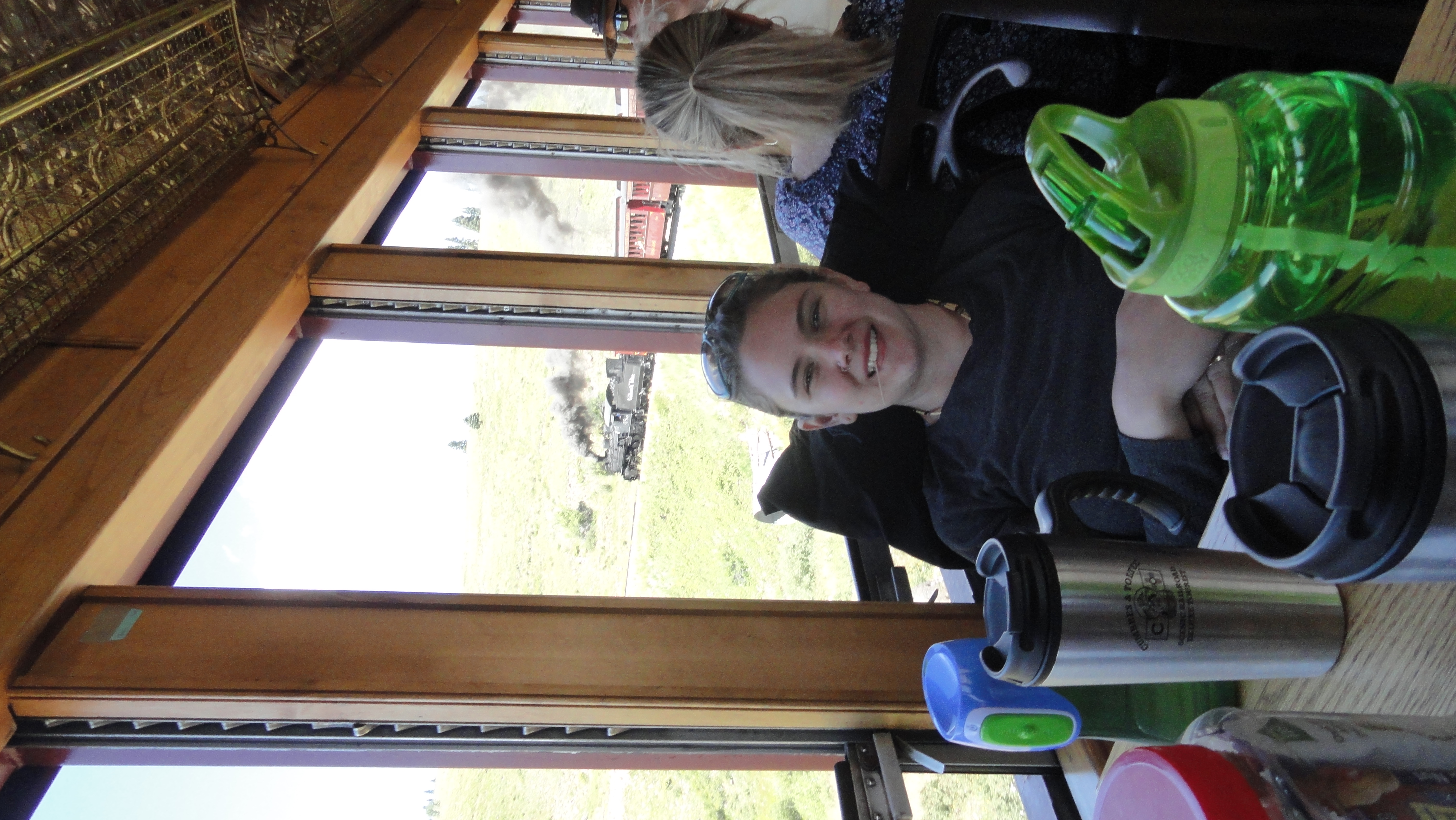
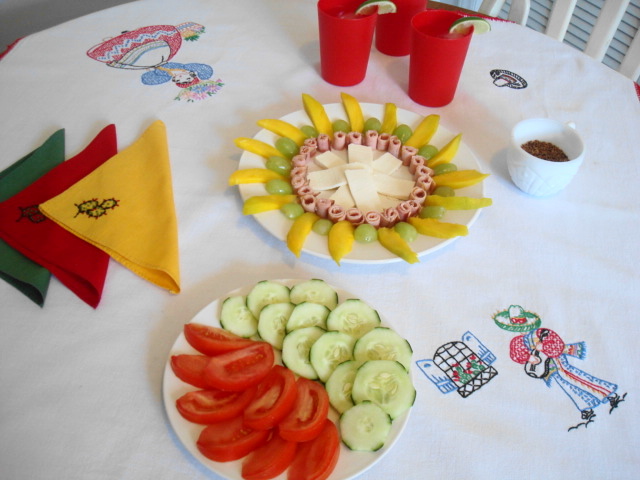
photo by Roya Dedeaux

Monday, April 6, 2026

Quiet antiques


Look around you for simple bits of older art, technology and history. See and appreciate these quiet antiques.

SandraDodd.com/curiosity
photo by Holly Dodd
of a wrought-iron gate
in India

Thursday, March 12, 2026

What is liked and appreciated

A child is older every moment, and moments cannot be reclaimed and polished up and made happy later.

Don't be apathetic. Don't be negative. See what your kids like and appreciate that you have live, curious, able children. Many people would like to, but don't. Many people would like another opportunity to be gentle, supportive parents, but the chance was wasted long ago.

SandraDodd.com/look
photo by Cátia Maciel

Wednesday, March 11, 2026

Passing through the space between

Sandy Lubert wrote:

This place between schooling and unschooling, this place that we often refer to as deschooling, it really is a wonderful place to grow and learn. It’s the place where change occurs, where we unburden ourselves. It’s where we look at old definitions with new eyes and say, perhaps for the first time, “That definition just doesn’t work for me and my family.” ....

...I was privileged enough to watch my son, who is an artist, rediscover his passion. He had become seriously depressed at school and had completely stopped drawing, something he had previously done for hours at a time. As he grew more and more accustomed to the unfettered feeling of NOT being at school, NOT being told what should be important to him…as he began to heal, he started to draw again. His art had been gone from our lives for nearly a year, and I had no idea how badly I’d missed it, until it came back. So, in that place between schooling and unschooling, one of the many gifts I received was the return of my son’s imagination.
—Sandy Lubert

from "Unschooling and deschooling, and changes"
SandraDodd.com/sandylubert.html
photo by Karen James

Monday, March 9, 2026

Normal reactions

It turns out that much of what is considered "normal teen behavior" is a normal reaction to many years of school, and to being controlled and treated as children and school kids and students rather than as full, thoughtful human beings.


I wrote that, but the source is missing.
I also wrote what's below, and its parent page is linked.


I didn’t know that our relationships could stay so good even when they were teenagers.

My original expectation was that when they were teens they would be frustrated and rebellious and wild, because I thought that was hormonally inevitable.

A side benefit of having been partners rather than adversaries was that the “normal teen behavior” turned out not to have been “natural,” and in contrast to what I was seeing in unschooled teens, it started to look like very sensible reactions to a barrage of arbitrary rules and limitations. The communications and trust continued to build within our family, rather than to erode over the years.

Unexpected Benefits of Unschooling
SandraDodd.com/unexpectedarticle
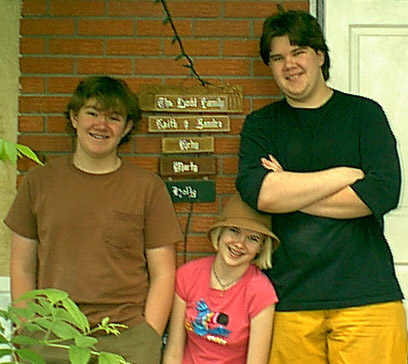
photo by Sandra Dodd
of Marty, Holly and Kirby
when they were still at home

Saturday, March 7, 2026

Questions

Why does...?
           Because...

Who will...?
          I think...

When did...?
          Let's ask...

Where are...?
          We can look...

What is...?
          As far as I know...

Do you...?
          Sometimes.

Can I...?
          Yes.

Treasure your child's questions and offer loving answers.
Relationships are built of these things.

SandraDodd.com/conversation
photo by Zann Carter

Thursday, February 26, 2026

See your child

Seeing a child where he is, and as he is, leads to love.

Seeing a child in comparison to an ideal, imaginary child can lead to heartbreak all the way around.

SandraDodd.com/look
photo by Tara Joe Farrell

Wednesday, February 25, 2026

Learn and be an example

Colleen Prieto wrote:

Realize your unschooling life and someone else’s unschooling life won’t look exactly just the same, and that’s because your kids and their kids, your partner and their partner, your house and their house, your interests and their interests… they’re not the same either. But still read, talk, and think about what you are doing, and listen to what others are doing. Learn from the example of people who have been there/done that, and be an example for those who will come after you on the unschooling path.
—Colleen Prieto

From Colleen's writings at the bottom here: SandraDodd.com/video/doright
photo by Sandra Dodd

Monday, February 23, 2026

Seeing what learning is

When a newcomer was very confused, Meredith Novak wrote:

The basis of unschooling comes from seeing learning as a substantial human drive and seeing that learning depends absolutely on the perceptions of the learner. The second part is what makes everything tricky - you can't control what someone else learns. At best you can work on seeing the world from another person's perspective and try to create an environment which helps that person learn.

It can help a lot to think about how people learn via their hobbies. In a way, that's what real life unschooling looks like: people learning through hobbies. It usually involves a lot of playing around - and the playing around parts are just as important to learning as the parts where you need to go look something up, or network with another hobbyist, or take a class or workshop to improve a skill.

One of the common parenting/educational myths is that it's possible to imbue children with "good habits" by making them do certain things over and over. It Seems like it Should work... but when you look at adults there's no evidence it does. The results are pretty random. It's not a strategy that helps people learn about the world.
—Meredith Meredith
July 2012

SandraDodd.com/meredithnovak
photo by Carolyn Vandenbusch Neves

Tuesday, February 3, 2026

Kids first, positively

In a social group, if a mom gets comfortable, she can spend years just chatting with those other moms without paying much attention to her own children other than keeping them fed, clothed and safe. If they're in school, that's not so bad.

If they're unschooled, though, the bulk of her time and energy should be with, on, about THEM, and the family, and the relationships. Unschooling should be better than school; if it's not, the kids would be better off in school.

Any unschooler who wants to do just the bare minimum of what she "has to do" to be considered (by whom!?) an unschooler is NOT unschooling well or right. It needs energy, activity, interactivity, flow, sparkle, joy.

People who come [to a discussion group] with ANY amount of Eeyore attitude, and those who defend that, are dragging people under and I don't want to condone that or provide a forum for anyone to drag potentially joyful people into a hole, justifying complaints, collecting negativity.


Please don't try to turn your unschooling into social groups. Don't look for "a tribe." Don't put your loyalty toward an unschooling group, or a conference. When that group becomes complacent, or negative, then you will, too.

Find a way to unschool confidently, even if all your other friends buy a curriculum or put their kids in school.

SandraDodd.com/positivity
photo by Annie Regan

(source, on facebook)

Saturday, January 31, 2026

Bright and shiny things

Schuyler Waynforth wrote:

Often if I'm stuck not being able to see the positive in something, I need to quit looking at it. I need to look at other things. I need to find something to move forward to instead of whirling and twirling around the angsty thing. Make the angry thing small and insignificant, turn away from it, look for bright and shiny things to distract you, look at tiny things that give you pleasure, look at large things that you didn't appreciate fully the first time around. Turning toward joy will definitely make it harder to feel stymied in the negative.
—Schuyler Waynforth

SandraDodd.com/distraction
photo by Vlad Gurdiga

Monday, January 19, 2026

Real, present, thinking children

Sandra Dodd, 2014, commentary on criticism:

How parents can ignore their own real, present, thinking children in favor of vague negativity and scare stories is a mystery.

Unschooling is not synonymous with anything. There are people who "unschool" except for…", and who "unschool mostly," but if their priorities are learning and peace, then arbitrary rules and decisions made on fear are less likely to seem like good ideas.

If an 11 year old is bummed, it might be worth really looking at his side of things. Being a child's partner in exploring the world is valuable in more ways than people can imagine, if they haven't done it. If the parent sees the child as an adversary who should be limited and made to wait until he's grown even to spend his own money, there will be more problems than they can imagine.

SandraDodd.com/partners/child


I've added that to the page Look Directly at your Child

The full text with background and discussion is here on Always Learning.

photo by Lydia Koltai

Sunday, January 11, 2026

Touch


A mom once wrote, of babies:
Not only have they never seen, touched or experienced anything in our world—they also have no way of communicating thoughts, feelings or desires with anything more than frustrated cries, screams and babbling.
I responded:
There is touch. There is gaze. Have you never just looked into the eyes of your child, communicating? Have you not touched them soothingly, and felt them touch you back sometimes? They can tell the difference between an angry look and a gentle look.

Parents who didn't know touch was a real way to communicate could practice on babies, and then use it with older children, and partners.

For children to learn language, they need opportunities to hear words, and for people to pay attention to the sounds they make. Mimicry is good, with babies. Even before they can articulate consonants, they can probably copy your voice going up or down, and you could copy them back. Singing little made up two-note songs can be a good tool for communicating with babies. Copying touch is good, too. (Don't return rough touch with rough, though.)

SandraDodd.com/babies

Monday, January 5, 2026

Clear and free


There is quiet beauty somewhere near you. If it's hard to find, close your eyes and imagine some. Look at art, listen to music. Breathe a little more deeply, a little more slowly, and you'll be better for yourself and for those around you.

SandraDodd.com/breathing
photo by Irene Adams

Saturday, December 20, 2025

Lighten up

Holidays can be stressful, and often involve hard work. Look for joy and sparkles out of the corner of your eye. Spot beauty and look twice.

Be as magical as you can be.

SandraDodd.com/positivity
photo (click it) by Sandra Dodd

Thursday, December 18, 2025

A warm welcome


Deb Lewis wrote:

If you could not have both or if it was rare to have both, consider which would be more important, having your daughter’s help with housework or having a warm and loving relationship with her. Which will serve her better? Children who do not have a loving connection with parents *will* look for one elsewhere. They may find it with people who don’t have their best interest at heart.
French translation

SandraDodd.com/nest
photo by Sandra Dodd

Saturday, December 6, 2025

Like Riding a Bicycle

Vickie Bergman, some of her nice analogy about unschooling being like riding bikes:

Your own bicycle is powered by your own legs, steered by your own hands. It stops when you stop, goes where you want to go. But it's not that you are always responsible for your own movement. You are not just left to figure it out for yourself. When you prefer to have some level of assistance getting where you want to go, you also have tandem bicycles and bike trailers available to you. You get to choose if you want help and what kind and how much. And your parents are ready to help whenever and however you want them to.

No matter which kind of bicycle you are on, there is no separation between you and the outside world. No window to look out. You can smell the real world, hear the real world, stop and touch the real world. You are part of the real world. There are paths to follow if you want to, but your rides are not limited to the paths.

. . . .

That is unschooling. It is not a model of education, but a way of life. It is recognizing that people learn from living, and there is no need to separate learning from living. Unschooling lets a family live together, learn together. It is built on trust among family members, and trust in human nature. Trust that children have a strong desire to learn about things, even if those things may not be on the short list of school subjects. Trust that, with your acceptance and support, your child will follow his own path, leading exactly where he wants to go.
—Vickie Bergman

More at: SandraDodd.com/bicycle
photo by Vickie Bergman

Friday, December 5, 2025

A bigger payoff

Pam Sorooshian wrote:

Think about what is REALLY important and keep that always in the forefront of your interactions with your children. What values do you hope to pass on to them? You can't "pass on" something you don't exemplify yourself.

Treat them the way you want them to treat others. Do you want respect? Be respectful.

Do you want responsibility from them? Be responsible. Think of how you look to them, from their perspective. Do you order them around? Is that respectful? Do you say, "I'll be just a minute" and then take 20 more minutes talking to a friend while the children wait? Is that responsible?

Focus more on your own behavior than on theirs. It'll pay off bigger.
—Pam Sorooshian

SandraDodd.com/pam/howto
photo by Sandra Dodd

Monday, November 24, 2025

Heat and light

If I have a big woodpile, I don't have a fire. Even if I have a fireplace and matches and bellows and kindling and firestarters and a fire extinguisher and the chimney was just cleaned and inspected and I have a paper saying "good to go," I don't have a fire. Would wrought-iron fire tools on a cool rack help? What about a stained-glass fireplace screen, so no sparks can get out on the floor? I could subscribe to magazines for fireplace owners. I could join a yahoo group and a facebook page to talk about fires. I could be receiving catalogs with all kinds of fancy flameproof rugs and indoor wood racks and really cool slings for carrying wood in, and Ooh! What about a beautiful mantle?

Still no fire.


Meanwhile, the neighbors might have built a real, operating fire, in a little hole they dug and lined with scrap bricks or rocks, with wood they found in a vacant lot, and kindled it with old receipts and fast-food wrappers they found blown into the alley. Their fire has heat, their fire has light, if they're sitting around it talking and laughing, they have the benefit of the fire.

Some people want to look like they're interested and that they intend to hone their skills, but they don't actually want to do it, if it's going to involve any real combustion or change in them.


A Story of NOT Changing
photo by Sandra Dodd, of a fire in our own back yard,
not in a hole, but quite make-shift, 2012

Tuesday, November 11, 2025

Happiness, harmony and joy

Nicole Kenyon wrote:

When I first talked to Jo Isaac I was like "that sounds nuts" but some of the things she said made me realise that my perception or ideas were copied and not mine. It made me stop and look at things from different angles.

I changed, became softer and let go of a belief system that wasn't mine while observing my son and our family. Are we happy? Do we live in harmony? What can I do to bring more joy?
—Nicole Kenyon

Not so crazy after all
SandraDodd.com/crazy

photo by Nicole Kenyon