Saturday, March 21, 2026

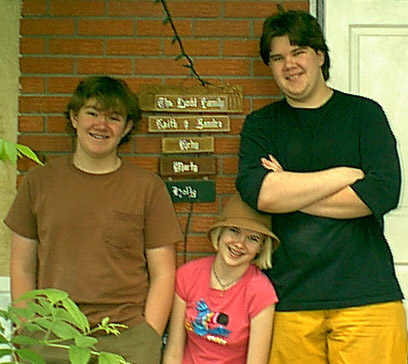
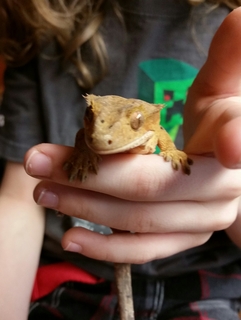
Positive, abundant gratitude

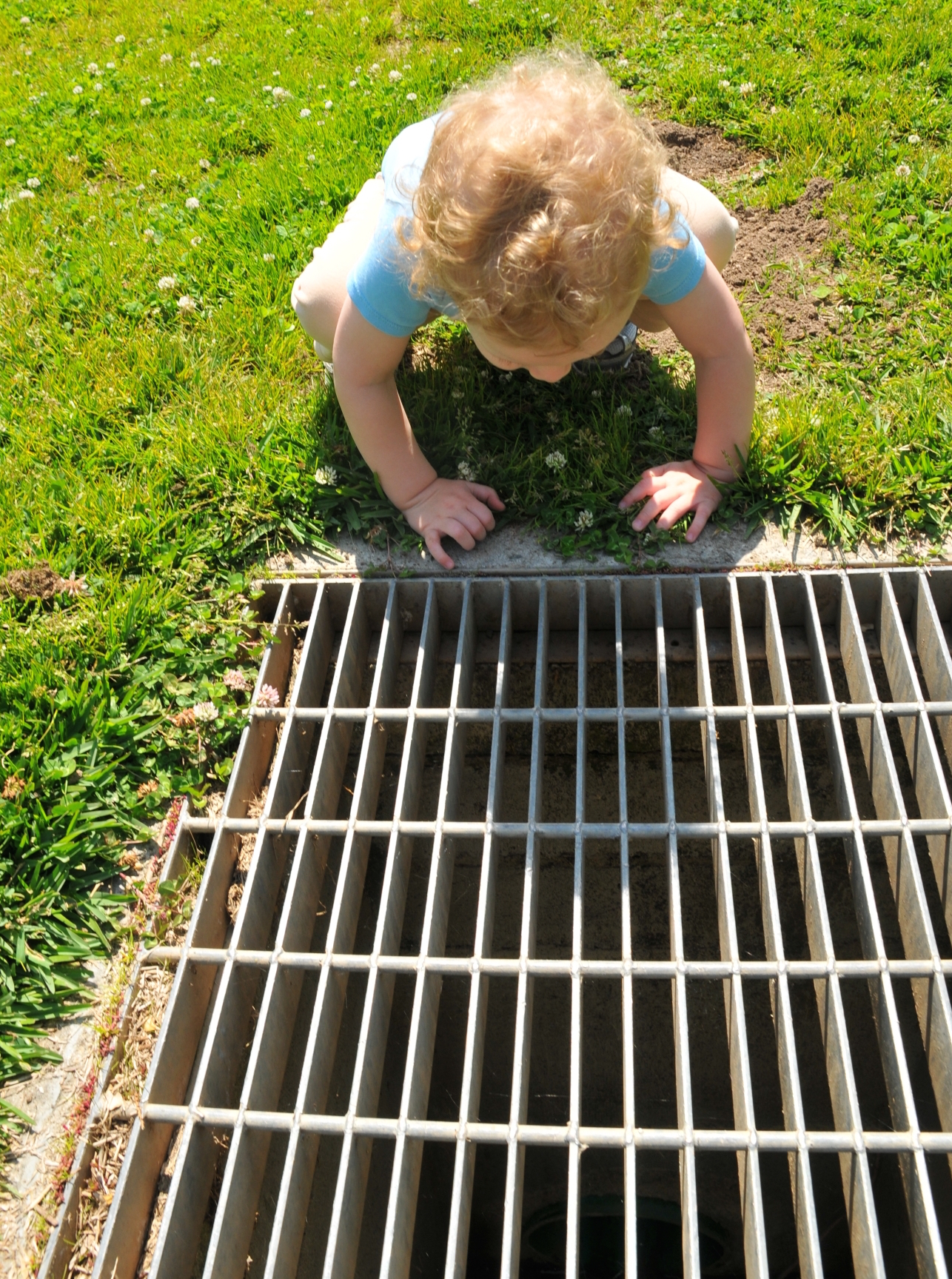
Finding the positive, finding abundance, finding gratitude, will take a person in an entirely new direction, and many of the other problems fall away effortlessly.

SandraDodd.com/understanding
photo by Chrissy Florence

Friday, March 20, 2026

Bit by bit

Joyce Fetteroll wrote:
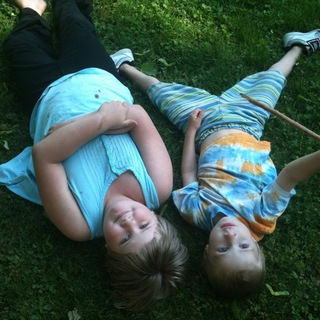
We all have issues about something. They go deep and are tangled up around other stuff but working at them bit by bit can make them better.
—Joyce Fetteroll
SandraDodd.com/issues
photo by Cátia Maciel

Thursday, March 19, 2026

Facilitator and companion

I’ve been credited with the description below, but it was written by Joyce Fetteroll and tweaked by Pam Sorooshian and me before it was published at the UnschoolingDiscussion site, on googlegroups:

Although unschooling is often described as a homeschooling style, it is, in fact, much more than just another homeschool teaching method. Unschooling is both a philosophy of natural learning and the lifestyle that results from living according to the principles of that philosophy.

The most basic principle of unschooling is that children are born with an intrinsic urge to explore — for a moment or a lifetime – what intrigues them, as they seek to join the adult world in a personally satisfying way. Because of that urge, an unschooling child is free to choose the what, when, where and how of his/her own learning from mud puddles to video games and SpongeBob Squarepants to Shakespeare! And an unschooling parent sees his/her role, not as a teacher, but as a facilitator and companion in a child’s exploration of the world.

Unschooling is a mindful lifestyle which encompasses, at its core, an atmosphere of trust, freedom, joy and deep respect for who the child is. This cannot be lived on a part-time basis. Unschooling sometimes seems so intuitive that people feel they’ve been doing it all along, not realizing it has a name. Unschooling sometimes seems so counterintuitive that people struggle to understand it, and it can take years to fully accept its worth.
—Joyce Fetteroll, aided by
Pam Sorooshian
and Sandra Dodd

SandraDodd.com/unschooling
photo by Clare Kirkpatrick

Wednesday, March 18, 2026

Not just for kids!

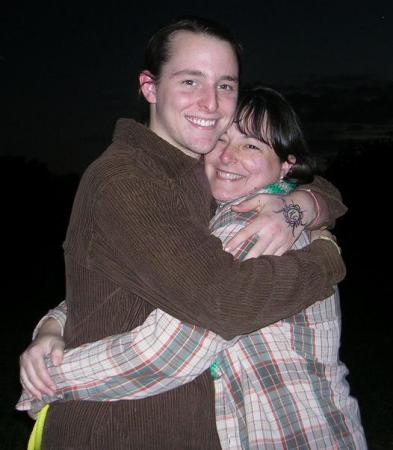
The way adults tend to learn things is the way people best learn—by asking questions, looking things up, trying things out, and getting help when it's needed. That's the way pre-school kids learn too (maybe minus the looking things up), and it is the way "school-age" kids can/should learn as well. Learning is internal. Teachers are lovely assistants at best, and detrimental at worst. "Teaching" is just presentation of material. It doesn't create learning. Artificial divisions of what is "educational" from what is considered NOT educational, and things which are "for kids" from things which are NOT for kids don't benefit kids or adults. Finding learning in play is like the sun coming out on a dank, dark day.

SandraDodd.com/unschooling
photo (and words) by Sandra Dodd

Tuesday, March 17, 2026

Point of view

Joyce Fetteroll wrote:

Being mindful won't prevent kids from getting frustrated but it will be a huge step in the right direction. Seeing the world from kids' point of view will help you understand why they are reacting to the world as they are."


SandraDodd.com/mindfulparenting
photo by Nancy Machaj

Monday, March 16, 2026

Open portals

When books are an obsession, it's considered a virtue. When mathematics is an obsession it's considered genius. When history is an obsession, that's scholarly.

When rock and roll is an obsession or folk art, or dance… maybe not as easily impressive to the outside world. But as all things are connected, let your child see the world from the portals that open to him, and don't press him to get in line at an entryway that doesn't sparkle and beckon.


from page 189 (or 218) of The Big Book, which links to SandraDodd.com/obsessions/feedpassions
photo by Lynda Raina

Sunday, March 15, 2026

All those people

To my children, I'm someone who's getting old who could hold them back (in a way). To me, though, I have all the stages my children have ever been. I still remember the babies, toddlers, "big kids" who could put their own shoes on. Big kids who learned to read and visited places without me, and big kids who went to jobs, and moved away.

The house is empty, but my heart is full of all those people.

A Series of Selves
photo by Isabelle Lent

Saturday, March 14, 2026

Access to information


Little by little, years ago, I started to see that each little idea that had changed my own family had the potential, if I could explain it clearly enough, to change another family. Just a little was enough. As more and more families shared their successes and joys, the world changed. As more information was gathered and put where others could find it, the rate of change increased.

When I was first unschooling, we waited two months for a new issues of Growing Without Schooling. There was no internet discussion at all. When that began, a few years later, it was user groups, not even e-mail or webpages yet. Today someone can get more information about unschooling in one day than existed in the whole world when my oldest was five. I'm glad to have been part of honing, polishing, clarifying and gathering those ideas, stories and examples, and keeping them where others have quick access to them.

Interview with Sandra Dodd, Natural Parenting, 2010 (Section #5)
photo by Sandra Dodd


in French

Friday, March 13, 2026

Casually more attentive

Pam Sorooshian wrote:

You can casually be more attentive without forcing yourself on him. Do it in a thousand different ways by thinking of him throughout the day and doing some little thing for him. I just went to my daughter's room and got a pillow off her bed and put it under her head (she's on the couch nearby). She smiled sleepily at me and said, "I love you, Mommy." She's 18.

Maybe just take him a soda into his room - or a monkey platter of little things he likes. Show him by your little actions throughout the day that you love him.
—Pam Sorooshian

SandraDodd.com/peace/becoming
photo by Cátia Maciel

Thursday, March 12, 2026

What is liked and appreciated

A child is older every moment, and moments cannot be reclaimed and polished up and made happy later.

Don't be apathetic. Don't be negative. See what your kids like and appreciate that you have live, curious, able children. Many people would like to, but don't. Many people would like another opportunity to be gentle, supportive parents, but the chance was wasted long ago.

SandraDodd.com/look
photo by Cátia Maciel

Wednesday, March 11, 2026

Passing through the space between

Sandy Lubert wrote:

This place between schooling and unschooling, this place that we often refer to as deschooling, it really is a wonderful place to grow and learn. It’s the place where change occurs, where we unburden ourselves. It’s where we look at old definitions with new eyes and say, perhaps for the first time, “That definition just doesn’t work for me and my family.” ....

...I was privileged enough to watch my son, who is an artist, rediscover his passion. He had become seriously depressed at school and had completely stopped drawing, something he had previously done for hours at a time. As he grew more and more accustomed to the unfettered feeling of NOT being at school, NOT being told what should be important to him…as he began to heal, he started to draw again. His art had been gone from our lives for nearly a year, and I had no idea how badly I’d missed it, until it came back. So, in that place between schooling and unschooling, one of the many gifts I received was the return of my son’s imagination.
—Sandy Lubert

from "Unschooling and deschooling, and changes"
SandraDodd.com/sandylubert.html
photo by Karen James

Tuesday, March 10, 2026

Late stage, looking back

Kelly Lovejoy wrote, in "The Three Stages of Unschooling," 2004:

My son Cameron (16) and I recently started sitting in on a college Sociology class. He asked for and received electric guitar lessons for his birthday. Mondays he goes to a nearby school and takes African drumming lessons. He's taking a weekly film class starting in March, and we'll be sending him to a weeklong film school in Maine in May. Duncan (almost 8) just started karate lessons. Ben (my husband) has just finished a class (with tests and all) that's required before he can put on Lt Col (Air National Guard) and is now in NJ for three weeks of "rah-rah" and classroom training and tests for the two new drugs he will be selling. I'm going to a one-day intensive "Bee School" to learn to take care of my Christmas present: two beehives.

Cameron said the other day, "For Unschoolers, we sure are taking a lot of schooly classes!"

That got me thinking...especially since we are one of those families that discovered unschooling after years and years of schooling.

I think that there are three "Stages of Unschooling."

continued here:
SandraDodd.com/kellylovejoy/stages

SandraDodd.com/stages
photo of Cameron and Kelly Lovejoy, the year after the article
(photographer credit lost; sorry)

Monday, March 9, 2026

Normal reactions

It turns out that much of what is considered "normal teen behavior" is a normal reaction to many years of school, and to being controlled and treated as children and school kids and students rather than as full, thoughtful human beings.


I wrote that, but the source is missing.
I also wrote what's below, and its parent page is linked.


I didn’t know that our relationships could stay so good even when they were teenagers.

My original expectation was that when they were teens they would be frustrated and rebellious and wild, because I thought that was hormonally inevitable.

A side benefit of having been partners rather than adversaries was that the “normal teen behavior” turned out not to have been “natural,” and in contrast to what I was seeing in unschooled teens, it started to look like very sensible reactions to a barrage of arbitrary rules and limitations. The communications and trust continued to build within our family, rather than to erode over the years.

Unexpected Benefits of Unschooling
SandraDodd.com/unexpectedarticle
photo by Sandra Dodd
of Marty, Holly and Kirby
when they were still at home

Sunday, March 8, 2026

Attention, more and less

The mother of a four year old can't do as much as a childless mother; that can't be avoided. Every year he'll need less direct attention. The more you give him now, though, the less he'll probably need later. There's a graph here that's a bit of humor, but also entirely true.
SandraDodd.com/musicroom
graph by Sandra Dodd, with a pencil, ruler, and Sharpie
from Precisely How to Unschool

Saturday, March 7, 2026

Questions

Why does...?
           Because...

Who will...?
          I think...

When did...?
          Let's ask...

Where are...?
          We can look...

What is...?
          As far as I know...

Do you...?
          Sometimes.

Can I...?
          Yes.

Treasure your child's questions and offer loving answers.
Relationships are built of these things.

SandraDodd.com/conversation
photo by Zann Carter

Friday, March 6, 2026

Word tree


SandraDodd.com/words
Image by an engineering student in the UK whose Fiverr name was Spartali, in 2014

Thursday, March 5, 2026

A bigger big world

It is strangely possible to learn from the whole wide world without participating in its pervasive school aspects. It's a little like polarized glass—where you change the angle a little and it all looks CLEAR!! Tilt it back and it all looks dark.

It's a big world and school does not own it.

And the big world is not just right now, as is. It's all its history, all its future, all its imaginings and myths and fantasies and alternate endings. School presents a little package of one version of history, a little package of one summary of science, etc., and leaves all else out.

the whole wide world and what schooling isn't
photo by Sobia Itwaru

Wednesday, March 4, 2026

Choosing food

The idea that one can learn to feel and know one's own body and choose foods accordingly is shocking to most people. I wouldn't have thought it sensible or possible, when I was younger, but having given my three children the option to turn down any food, and to try any food, to choose their own quantities of food has shown me a whole different aspect of human learning and instinct.

It should make sense. Early people wouldn't have continued to eat what wasn't good for them if they weren't starving. If they had options, they would have chosen the things that seemed (for whatever range of reasons they might be choosing) good. There are food taboos and preferences all over the world. Some are credited to religion or superstition. Some are medicinal. All were, originally, local.

In a situation in which there is an abundance of food shipped and traded all over the world, then how does one choose? This is what is coming to be called "a first-world problem." In terms of learning, though, in the context of the life of a family choosing unschooling and mindful parenting, the question is answered every time food is bought, presented, consumed or considered.

SandraDodd.com/eating/choices
photo by Sandra Dodd

Tuesday, March 3, 2026

That was all!?

AJ wrote:

I'm amazed at how easily some things are learned. My five year old is learning to read. He was playing a computer game that had him putting together words to make compound words (sand + box gives you sandbox, etc.). He wasn't sure of a word, so I told him what it was and explained about how words ending in "e" work. Pointed out one or two more examples as they came out and presto! He understands Silent E.

Then I stood there not sure what to do. That's it? That was all it took to learn about Silent E?? But, but...it was a huge deal when I learned to read in school! There were many lessons. Drills. That song on the Electric Company. How could all of that fuss have been needed for something that took Mikey about 30 seconds to grasp? Ah, the wonders of learning something when you are ready and not before!
—aj (mamaaj2000)

SandraDodd.com/learning

"that song on the Electric Company"
photo by Karen James

Monday, March 2, 2026

Be glad

Live in the moment as well as you can and be glad of happy surprises.


Surprises

Living in moments
photo by Andrea Taylor

Sunday, March 1, 2026

Let go!

Joyce wrote:

Formal learning is being certain you can't let go of the side of the pool. Unschooling is paddling around in the deep end.
—Joyce Fetteroll

SandraDodd.com/nutshells
photo by Cátia Maciel