Showing posts sorted by relevance for query learning without reading. Sort by date Show all posts

Saturday, January 15, 2011

Learning without Reading

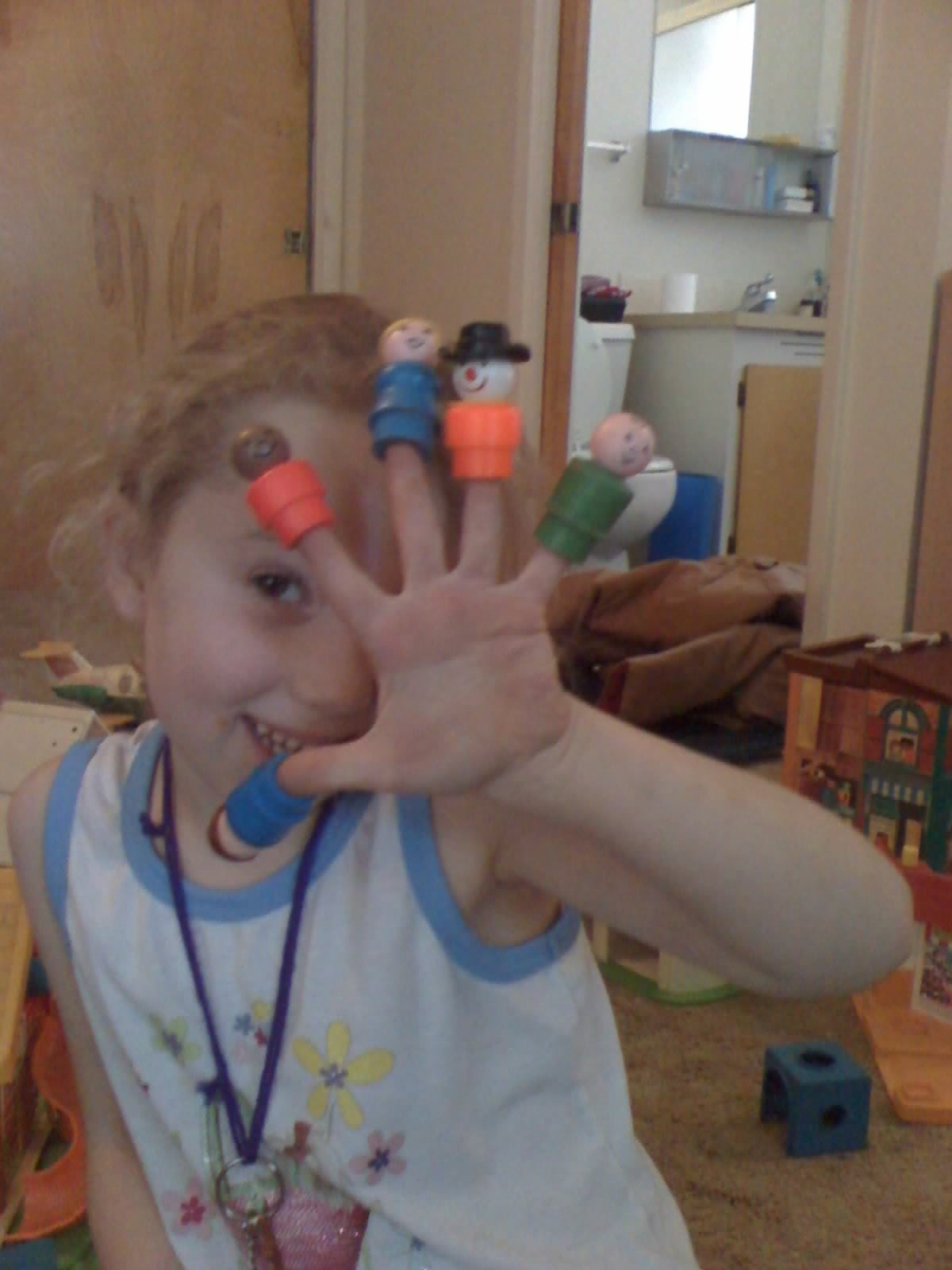
I didn't know how much children could learn without reading, until I immersed myself in unschooling and my children's lives.

As their reading ability unfolded and grew, I learned things I never knew as a teacher, and that I wouldn't have learned as an unschooling mom had they happened to have read “early.” Reading isn't a prerequisite for learning. Maps can be read without knowing many words. Movies, music, museums and TV can fill a person with visions, knowledge, experiences and connections regardless of whether the person reads. Animals respond to people the same way whether the person can read or not. People can draw and paint whether they can read or not. Non-readers can recite poetry, act in plays, learn lyrics, rhyme, play with words, and talk about any topic in the world at length.

The second paragraph above is on the page
"Unforeseen Benefits of Unschooling," SandraDodd.com/unexpected
photo by Holly Dodd

Monday, July 7, 2025

Purely learning

Facebook Memories showed me that someone on another continent had quoted me, years ago:
Learning does not teach us, but from learning we learn.
I still haven't found her source, but in looking I found its "wordier" cousin posted here in 2011:

Mastering ideas about learning
As some of my articles are being translated (now into Japanese, French and Italian) I see how much of my writing and thinking is about language itself, and so some of these ideas won't translate. But sometimes, that fact is very good. Some of our confusion about teaching and students and study and learning, in English, has to do with the words we use, and if the problems don't exist in other languages, that's wonderful for them.

In Romance language (Italian, French, Spanish and so on) our "teacher" translates to something along the lines of "maestro," a word we have too in regards to music direction. And we have the English cognate "master" which is more currently left in "master of arts" and other college-degree titles. Once that meant a person was qualified to teach at the university level. That meaning is gone in the U.S., pretty much.

Considering the word family from which "maestro" comes (and not knowing all its connotations in other languages), the English verb "to master" means to learn. It means to become accomplished in the doing of something. Whether mastering horseback riding or blacksmithing or knowing and controlling one's own emotions, it's not something someone else does to you or for you.

So for any translators or bilinguals reading here, have sympathy for English speakers who can't get to natural learning without disentangling all the graspy words and ideas about teaching and education and their implications that learning is passive and teaching must be done to a person.

SandraDodd.com/wordswordsother
photo by Sandra Dodd

Monday, May 4, 2015

Visions and knowledge


I didn't know how much children could learn without reading, until I immersed myself in unschooling and my children's lives.

As their reading ability unfolded and grew, I learned things I never knew as a teacher, and that I wouldn't have learned as an unschooling mom had they happened to have read “early.” Reading isn't a prerequisite for learning. Maps can be read without knowing many words. Movies, music, museums and TV can fill a person with visions, knowledge, experiences and connections regardless of whether the person reads. Animals respond to people the same way whether the person can read or not. People can draw and paint whether they can read or not. Non-readers can recite poetry, act in plays, learn lyrics, rhyme, play with words, and talk about any topic in the world at length.

SandraDodd.com/unexpected
photo by Holly Dodd, from inside an auto-rickshaw

Thursday, March 26, 2020

Visions and knowledge


I didn't know how much children could learn without reading, until I immersed myself in unschooling and my children's lives.

As their reading ability unfolded and grew, I learned things I never knew as a teacher, and that I wouldn't have learned as an unschooling mom had they happened to have read “early.” Reading isn't a prerequisite for learning. Maps can be read without knowing many words. Movies, music, museums and TV can fill a person with visions, knowledge, experiences and connections regardless of whether the person reads. Animals respond to people the same way whether the person can read or not. People can draw and paint whether they can read or not. Non-readers can recite poetry, act in plays, learn lyrics, rhyme, play with words, and talk about any topic in the world at length.

SandraDodd.com/unexpected
photo by Holly Dodd, from inside an auto-rickshaw

Saturday, December 7, 2019

Learning without lessons


I wrote this in 1997; I added the ages in 2019

My kids have learned to read on their own. Kirby (11) is fluent and uses reading for all kinds of things. Marty (8) is irritatingly phonetic, but will become fluid with more practice.

First of all, Pam Sorooshian and such folk would probably be able to point out or draw out dozens of things I did with/to/for my kids that helped them learn to read, but I didn't "teach" them to read, any more than I taught them to play Nintendo (although I did buy them a Nintendo, let them rent games, and bought some game guides and magazines).

I didn't teach them to do tricks on the swing set, but we did put the swing set up and maintain it and keep it clean and available. I didn't teach them to ride bikes, but I did make sure they had bikes and opportunities to ride places other than just right in front of the house. I didn't teach them to sing, but I did sing to and with them a lot, take them places to hear others sing, play videos and recordings of different kinds of singing, etc.

They read.
They know that something as hard as reading can be learned without formal lessons.

That's a heck of a thing for kids their age to know.
There are adults who don't know it.

Life in progress
photo (fuzzy, but Marty) by Sandra Dodd

Thursday, October 14, 2010

Confidence grows


Any child who has learned to read without "being taught" (and I have three of them) cannot doubt that he can learn other things without finding a teacher and following a prescribed course.

If a child is past this point when unschooling begins for that family, there might be another skill instead of reading that will fill the need to see natural learning. For those whose children are younger, parents and children together can learn things in ways that don't involve reading. Parents can learn to recognize learning in its natural habitat (outside of books), while children develop confidence in their own ability to decode and decipher systems and situations large and small.

Confidence in children grows from looking back at what they've learned. Parental confidence grows from seeing in their own children what they've only read about, or heard, of others' children.

Top quote from: The Deeper Effect of a Child Learning to Read: Confidence (SandraDodd.com/r/deeper)

photo of Sophie, by Holly

Tuesday, November 28, 2023

From pictures alone

Cally Brown wrote, in 2012:

Back in the olden days when #1 son was 6, homeschoolers used to be 'inspected' in New Zealand. The inspector asked Greg to show him his favourite book and Greg ran off and returned with a large volume of a 20-something-volume encyclopaedia. The inspector looked amazed and said, "Goodness! You can read that?" and Greg replied, "Of course not! I'm only six! I just love looking at all the pictures," and proceeded to show the man all sorts of interesting things, clearly displaying an amazing amount of knowledge he had garnered from pictures alone.
—Cally Brown

Learning without Reading
photo by Rosie Moon

Tuesday, April 26, 2011

Mastering ideas about learning

As some of my articles are being translated (now into Japanese, French and Italian) I see how much of my writing and thinking is about language itself, and so some of these ideas won't translate. But sometimes, that fact is very good. Some of our confusion about teaching and students and study and learning, in English, has to do with the words we use, and if the problems don't exist in other languages, that's wonderful for them.

In Romance language (Italian, French, Spanish and so on) our "teacher" translates to something along the lines of "maestro," a word we have too in regards to music direction. And we have the English cognate "master" which is more currently left in "master of arts" and other college-degree titles. Once that meant a person was qualified to teach at the university level. That meaning is gone in the U.S., pretty much.

Considering the word family from which "maestro" comes (and not knowing all its connotations in other languages), the English verb "to master" means to learn. It means to become accomplished in the doing of something. Whether mastering horseback riding or blacksmithing or knowing and controlling one's own emotions, it's not something someone else does to you or for you.

So for any translators or bilinguals reading here, have sympathy for English speakers who can't get to natural learning without disentangling all the graspy words and ideas about teaching and education and their implications that learning is passive and teaching must be done to a person.

SandraDodd.com/wordswordsother
photo by Sandra Dodd

Wednesday, February 20, 2019

Like nothing else


If a parent can learn how to "facilitate learning"—to help a child get what he needs or wants—rather than to direct or try to own it, all of unschooling goes better. And if a child learns to read without "reading instruction," that can open the world up like nothing else can.

SandraDodd.com/r/deeper
photo by Alicia Gonzalez-Lopez

Friday, February 20, 2026

Like nothing else


If a parent can learn how to "facilitate learning"—to help a child get what he needs or wants—rather than to direct or try to own it, all of unschooling goes better. And if a child learns to read without "reading instruction," that can open the world up like nothing else can.

SandraDodd.com/r/deeper
photo by Alicia Gonzalez-Lopez

Thursday, December 29, 2011

High, low or average... (Don't ask.)


Of all the things I believe strongly, one that has changed my life as profoundly as any one other belief is my personal knowledge that test scores can and do (can't fail to) affect the treatment a child receives at his parents' hands. High scores, low scores, average scores—no matter. Parents cease to treat the child as his original, known self and color him soul deep with that number.

My life would have been different. My husband's life would have been different, without those 5th and 8th grade ITBS scores. I venture to say without even knowing who is reading this that your life would have been different, and specifically I believe your life would have been better, had not you been branded with a number on your "permanent record" (there's a big mean scary joke, the "permanence" and important parts) as a young innocent ten or thirteen year old full of potential, at some unknown point on a learning curve that might soon be at its settled-out level, or might just be beginning.

SandraDodd.com/testing/tests
photo by Sandra Dodd

Saturday, September 16, 2017

Experience and confidence

Don't rob your children of the experience and of the knowledge that they can learn to read without help. If someone can learn to read, surely he can learn other things. I don't mean to say that after he learns to read he can learn other things by reading. I mean that reading is complex, moreso in English than some other languages, and if your child knows that he learned to read, he will have great confidence in his ability to learn. (So will his parents.)

The Deeper Effect of a Child Learning to Read: Confidence
(the quote is from page 86 (or 95) of The Big Book of Unschooling)
photo by Sarah Wassinger

Monday, November 12, 2012

Great confidence


Don't rob your children of the experience and of the knowledge that they can learn to read without help. If someone can learn to read, surely he can learn other things. I don't mean to say that after he learns to read he can learn other things by reading. I mean that reading is complex, moreso in English than some other languages, and if your child knows that he learned to read, he will have great confidence in his ability to learn. (So will his parents.)

The Deeper Effect of a Child Learning to Read: Confidence
(the quote is from page 86 of The Big Book of Unschooling)
photo by Sandra Dodd

Thursday, August 16, 2018

High, low or average... (Don't ask.)

Of all the things I believe strongly, one that has changed my life as profoundly as any one other belief is my personal knowledge that test scores can and do (can't fail to) affect the treatment a child receives at his parents' hands. High scores, low scores, average scores—no matter.
Parents cease to treat the child as his original, known self and color him soul deep with that number.

My life would have been different. My husband's life would have been different, without those 5th and 8th grade ITBS scores. I venture to say without even knowing who is reading this that your life would have been different, and specifically I believe your life would have been better, had not you been branded with a number on your "permanent record" (there's a big mean scary joke, the "permanence" and important parts) as a young innocent ten or thirteen year old full of potential, at some unknown point on a learning curve that might soon be at its settled-out level, or might just be beginning.

SandraDodd.com/testing/tests
photo by Sandra Dodd

Thursday, June 11, 2026

Fear of media, and of newness

Yesterday I sent an extra post by accident. The one about TV wasn't ready, but it still works. I had planned to make a webpage with photos of more poster boards with people's notes about what they had learned from different shows. When I've done that, someday, I'll post it again.

It's hard for people to conceive of how fearful people were of television viewing, or of video games, just two or three decades ago. I myself missed out on the days when reading novels had been considered a trashy activity. I knew, somewhat, about adults' fear of comic books, when I was a kid; teachers would confiscate comics and not give them back, sometimes.

Time has passed and these days the scary edge of unfamiliar technology is AI, such as Chat GPT and Claude. Alexa is getting in there more. Google's AI has recently started having longer exchanges if you ask questions. I hope Google AI will get better; that one I don't trust as much.

My experience with Chat GPT is that if you ask a philosophical question, or tell a story, or start a conversation, you might have a lot of fun. Start with something you know and care about.

If you use one of these links, it will open at the end of the exchange. Scroll up if you want the beginning. Some of the questions I've asked have beenMostly I like to explore musical topics, but I asked about why my front-yard apple tree has so many apples though it didn't last year; cooking questions and ideas; which kinds of intelligences are best served by exchanges with AI; mysteries about a new medication I'm taking that's to be mixed with juice—about which juices weren't working well, one way or another (settled on tangerine juice); various details about the UK series "Shetland"; taxidermy and the series "Vera"... I've gotten feedback and ideas on traditional ballads (I used to collect and sing them in my teens and 20s), and fairytales/archetypes/psychology of identity. It's a way for me to bounce ideas around and get input on trivial topics, usually, and the discussions are fun.

If the thought of that scares or offends you, think about why. Consider asking Chat GPT or Claude why. Google's AI probably doesn't know.

It's a tool and a toy and you'll still be safe at home. Be brave, about learning.

If you wonder something, and you don't have friends who know, or who would let you roll the question around until you were tired of it, consider AI like a Magic 8 Ball, or a Ouija Board, if those are less scary. It's way better than either.

Fear itself
photo by Catherine Forest
of Watersprite Lake

Tuesday, December 27, 2011

*Sorry!*

I'm sorry I sent out a post that wasn't edited well and had an unrelated link instead of a photo.

Joyce Fetteroll is at my house!! We had people over to play games last night. I thought the post was finished on Sunday and didn't check.

If that problem is going to arise again, it's likely to be in the next few days, because of the Always Learning Live unschooling symposium. It officially starts tomorrow, but more people are arriving in town every day.

Thank you for reading Just Add Light and Stir! I'll try to be more careful, and I hope you'll forgive my excitable lapses.


The post that arrived without a picture is repaired now:
Ratchet up your quality of life

Happy New Year!

Sandra