Thursday, October 22, 2020

A better moment


"What I know for sure is that a sad or angry moment turned into a happy and playful one will always be better."
—Jenny Cyphers

SandraDodd.com/bonding
photo by Sandra Dodd

Wednesday, October 21, 2020

Learning to listen

Kids can't figure out anything if there's someone hovering and saying "Ooooh, good!" and "yuck, horrible."
If they're not allowed to decide which foods appeal to them, and what then those foods do to their body, then those children don't learn to listen to their own bodies. And it's likely that at some point they will learn NOT to listen to their moms. Then they will be eating things the mom disapproves of, and those might be things they never would even have chosen if their mom hadn't been sorting food into sin and virtue, poison and health, in extreme and sometimes arbitrary, faddish or political ways.

Though I left a few phrases out, the original is here:
food control (problems with that)
photo by Gail Higgins

Tuesday, October 20, 2020

Learning much more

Joyce Fetteroll wrote:

Sometimes you will understand what your kids *could* be learning from something. Always they'll be learning much more, making connections with ideas that seems to have no relation to what they're doing, learning thousands of little bits about peripheral things like music, social interactions, history, math, who they are, who you are and so much much more.

—Joyce Fetteroll


Please read the whole post at Reassurance, on Always Learning
photo by Janine Davies

Monday, October 19, 2020

Hear this

"I found early on
     the less I talked
          the more I was heard."
—Karen James
SandraDodd.com/peace
photo by Colleen Prieto

Sunday, October 18, 2020

Something worth listening to

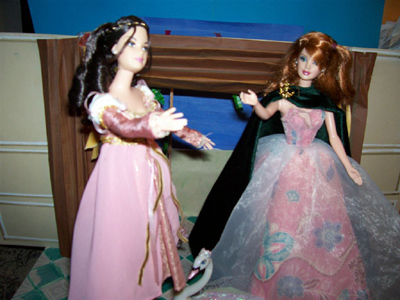
Robyn Coburn shared this story in 2006. That was fourteen years ago. Jayn turned 21 this week.


Recently I annoyed someone (stranger at a kid's birthday party) whose first question on hearing that we homeschool was "How do you get her to listen to you?" by instantly replying "I try to say something worth listening to."

I thought she meant listen in general. She got this look of utter irritation on her face and started on about what a discipline problem her 7yo son was and how much more difficult it would be to have to keep his attention on school subjects and make him work at home. What she was really asking was "How do you make your daughter do her work?"

The paradigms we live under are so broadly apart from the mainstream that even the language doesn't cross over—we use the same words and have different meanings.

Yet of all the children at the birthday party Jayn was the one who came up to me a couple of times just to give me a quick kiss and say what fun she was having.


You can read more by Robyn here: Robyn Coburn
and see some of the Barbie tableaux that Jayn was making in the days mentioned at Barbie in Romeo and Juliet

photo by Jayn Coburn, years ago

Saturday, October 17, 2020

Antiquery

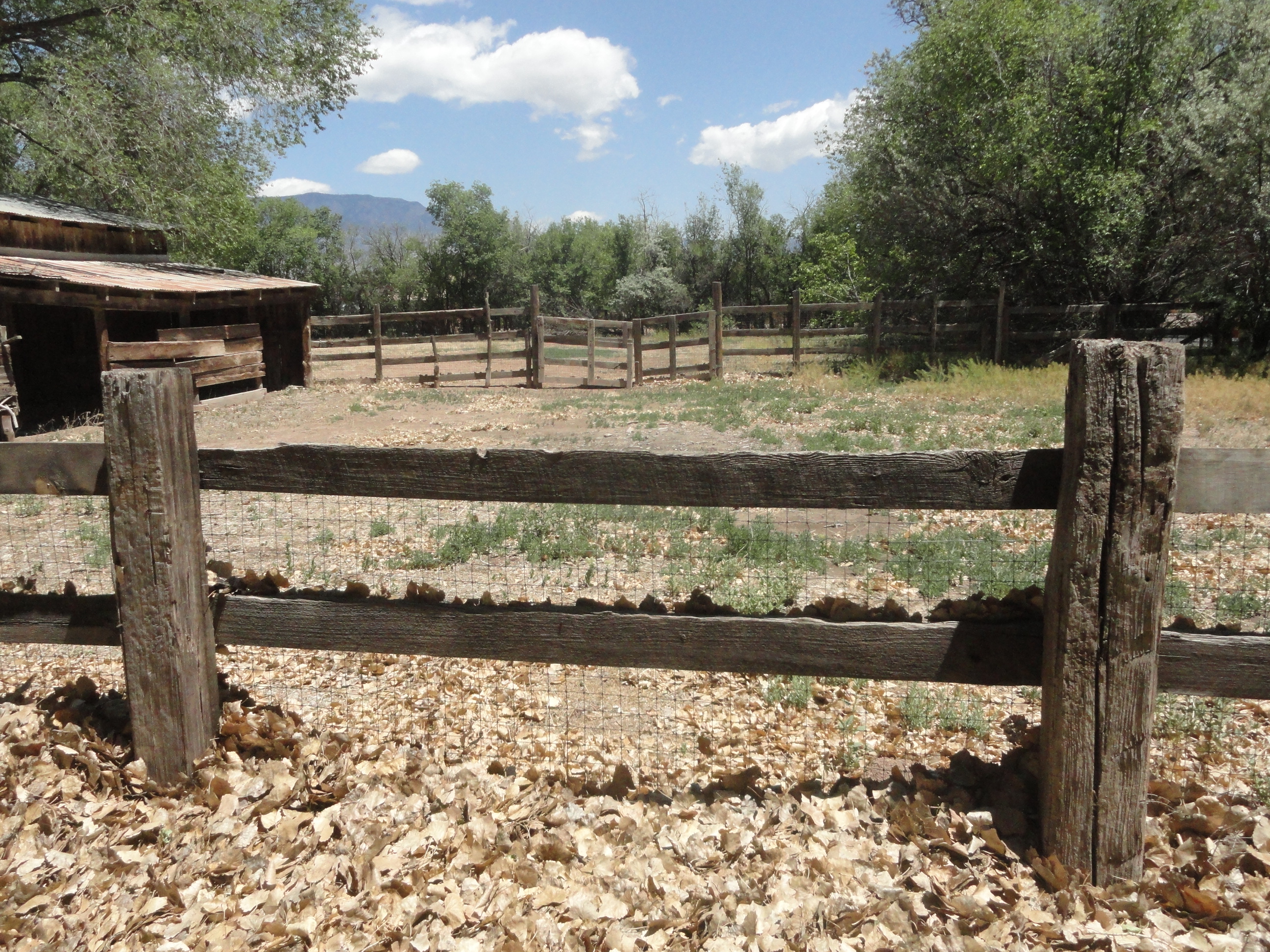
old barn, corral and bathtub for a trough, northern New Mexico

Some antiques are never in a store or a museum. What others show you as old and valuable might be wonderful, but be on the lookout for other elderly objects, minding their own business without being fancy.

History lives in all of that.

SandraDodd.com/history
photo by Sandra Dodd
(click for another angle, with mountains but no trough)

Friday, October 16, 2020

Angels

Music is so divine that people like to think of angels making it. The instrument pictured, with the cherub musicians, is named after the Greek goddess Calliope, one of the muses, a daughter of Zeus.

Two religions are involved already, in that 19th century steam-powered music machine. Also, it having been made in the late 19th century, it was an engineering situation involving the latest technologies. I couldn't decide whether to link this to Connections or to Mechanical Music, so here are both links. The green and flowery French Calliope down on that page is a video I made, and I went around the back to show the punch card that plays the particular song. The one pictured above works that way, too.

You can go exploring from home!

photo by Sandra Dodd

Thursday, October 15, 2020

The motion of their own spheres

Looking out at our offspring, they are aligned in a certain way from our perspective, but they're not paused and gazing back. They are in the full motion of their own harmonic and intersecting spheres, spinning ever further away from us, and we marvel to see the celestial show.

SandraDodd.com/magicwindow
photo by Heather Booth, who wrote "My holiday window dream come true."

Wednesday, October 14, 2020

Frosty

frost on grasses with a log fence and mountains behind

Life produces some fragile, fleeting things.

Cass Kotrba photographed frost so beautifully that you can see the individual ice crystals that formed on the grass, in northern Colorado.

Some people live where this doesn't happen.


You can click it for a larger image you can zoom in on better.
some other fleeting things
photo by Cass Kotrba

Tuesday, October 13, 2020

I do believe...

Here's a fairy door. That is clearly what it is.
Are fairies real? We all know that word, and there's that door.

"What aspect of some particular subject involves objective truth? What is folklore or mythology? What literature or fantasy has come about based on that subject or item? Consider dragons, or India, or snakes, or rainbows. Checklist Abe Lincoln, the discovery of fire, or the depths of Lake Superior. Plot WWII, Japan, electric guitars, or Egypt."

Disposable Checklists for Unschoolers
photo by Rosie Todd

Monday, October 12, 2020

Restricting knowledge

Joyce Fetteroll wrote:

Many parents think they know their children. But the more they restrict, the less they know their children and the more they know how their children are under restrictions. Restrictions say I don't trust you. Restrictions say that thing is more powerful than you are. Restrictions give children reasons not to be trusted.
—Joyce Fetteroll

(the topic was video games)
photo by Lydia Koltai

Sunday, October 11, 2020

Your eyes can't see everything.

I think it helps to see it through the child's eyes to find out what they're enjoying about it rather than viewing it through our own eyes.
—Joyce Fetteroll

(the topic was video games)
photo by Sandra Dodd, of a roadrunner in the front yard

Saturday, October 10, 2020

Proud

Sometimes I "feel proud" of something my child has done, but it's too much ownership and I back down.

If I think of it as happy relief that I didn't prevent that success or achievement, then I can be a little proud of myself, and impressed with my offspring.

Maybe the best way I've found is to feel it as gratitude that I lived long enough to be able to see successes in my now-grown children. Gratitude is good. Joy is good.

SandraDodd.com/gratitude
photo by Sandra Dodd

Friday, October 9, 2020

Let life entertain you

Joyce Fetteroll wrote:

It's not that unschoolers ignore the difference between entertainment and education. It's that we come to see that it's a false division.

For educators, entertainment is a sugar coating that can be put on the important stuff to make it easier to get it in.

For unschoolers, that division doesn't make sense. For unschoolers the division is interested in and not (yet) interested in.

Engagement, joy, interest, fascination are all indications a child is making connections between ideas. Unschoolers come to realize that the connections are not just the important part of learning but the only real learning.

Reassurance, on Always Learning
photo by Elaine Santana

Thursday, October 8, 2020

A thousand times; better

Saying yes a thousand little times is better for everyone than one big confusing "Yes forever, don't care, OH WAIT! Take it back."

SandraDodd.com/cairns
photo by Chelsea Thurman Artisan

Wednesday, October 7, 2020

First, become confident

suspension bridge, from point of view of passenger

Confidence in unschooling can't come from other people's accounts. It can only come from seeing one's own children relaxing into learning effortlessly through play, conversations, observations, a rich life.

"Facing fears" sounds scary, intimidating and negative. Stepping toward learning is much more positive. Being with children is easy; they're already right there. Move toward them, instead of milling around with fears and vulnerability.

Sandra's response to someone asking about confidence
photo by Tara Joe Farrell

Tuesday, October 6, 2020

Unschooling is living and seeing

Unschooling is living a rich life and letting learning drop into your lap and into your ears and mind while you laugh and listen to music and play games. Unschooling is seeing the magic in every day, and the joy in yourself and the people around you.

That's some 20th century writing, here:
Unschooling and other Marvels, by Sandra Dodd
photo by Caroline Lieber

Monday, October 5, 2020

Attentively, solidly, and well

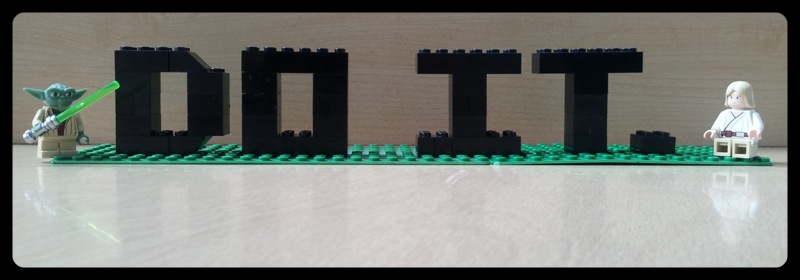
DO IT. Do it attentively, solidly, and do it well. THEN you can relax. If you relax at the beginning and don't really become an unschooling parents of a thriving unschooling child, it can amount to confusion, frustration and neglect.

SandraDodd.com/doit
art by Robert and Robbie Prieto; photo by some Prieto or another

Sunday, October 4, 2020

Favorite things

My Favorite things about Unschooling
  • You can do it at home!
  • Your kids are there!
  • It makes all of life a peaceful learning lab.
girls decorating a cake, view from above
from a webpage older than SandraDodd.com
photo by Elise Lauterbach

Saturday, October 3, 2020

Finding patterns

Look up. Trees? Clouds? Arches or ceiling joists? Textured ceiling?

Look down. Snow? Sand? Grass? Dirt? Concrete, tile or wood? Water, maybe, or carpet. (Both at once would be bad.)

Pretend to see your thoughts. Slow? Calm? Racing? Repetitive?

Different days are different ways. In a moment, it might be different. Find good patterns.

Patterns and Connections
photo by Sandra Dodd
__

Friday, October 2, 2020

Smiling about Smiling

Find something to smile about.

Beginners, aim for once per day—one extra smile.

More experienced unschoolers, raise that to several a day, and then once per hour.

Before long, you'll be smiling easily and more often than you could count.

You'll know you're significantly happier when just the thought of counting smiles will make you smile.
Sparkly Unschooling
photo by Karen James
__

Thursday, October 1, 2020

In their own natural ways


Pam Sorooshian wrote:

It is natural for people to learn—each in their own way. It is natural for children to want to understand the world around them. They also want to join the adult world and become competent and capable adults themselves. They'll strive for this in their own natural ways. Unschooling parents work on creating a home environment that supports their children's natural desire to learn and grow.

Each child is unique and experiences the world in a different way than any other person and expresses themselves in ways that are different from every other person.
—Pam Sorooshian

I LIVE THEREFORE I LEARN: Living an Unschooling Life
photo by Colleen Prieto

Tuesday, September 29, 2020

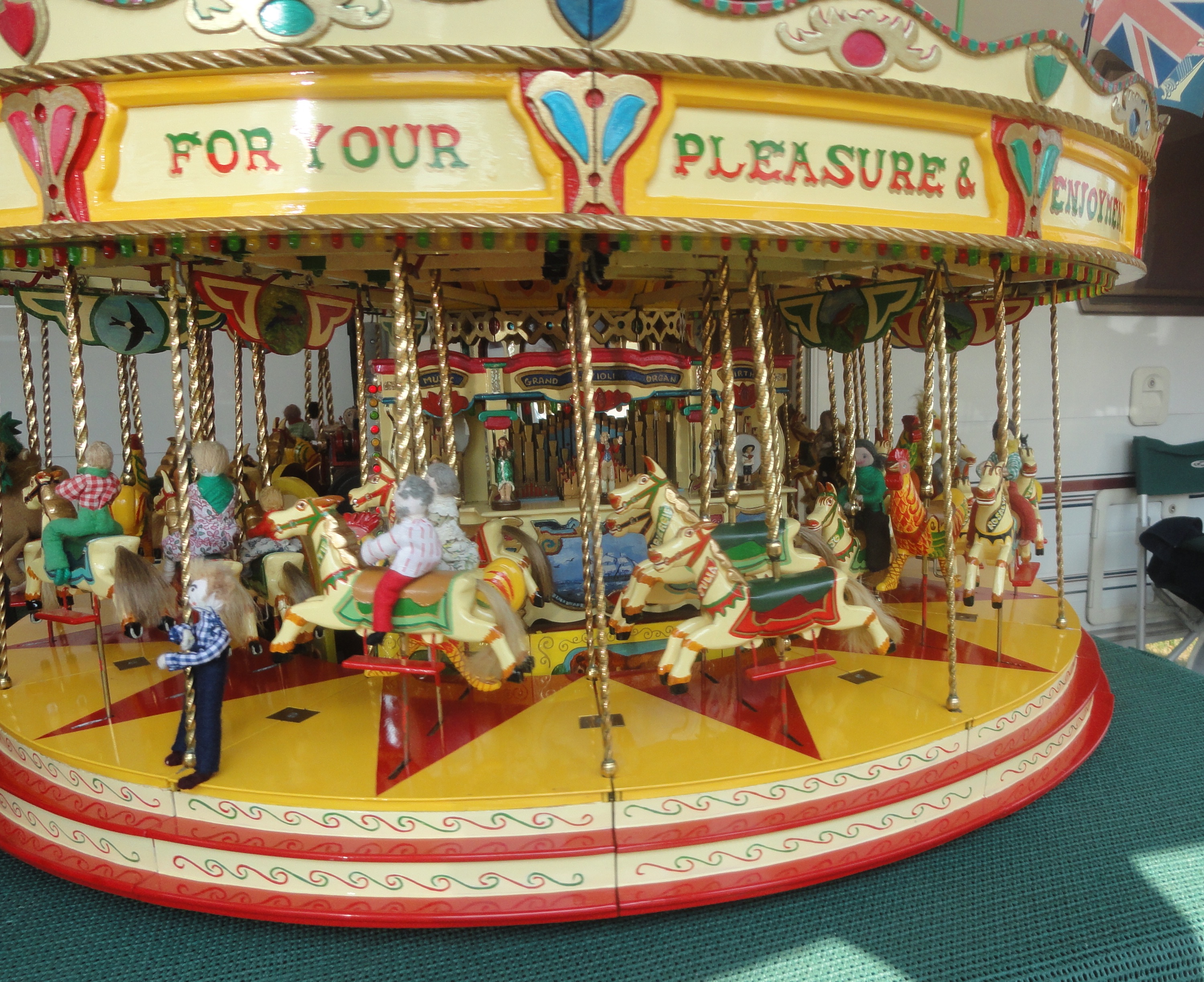
Models and miniatures


In Santa Fe, New Mexico, there is a chapel. It once belonged to a Catholic girls' school. It was built as a half model of another chapel in France, but after it was being built, they realized a half-sized stairway wouldn't work. Mystery and adventure ensued.

There is much history, physics, artistry and varied purposes in such things.

Toy soldiers were quite the rage in England at one time. That led to kids who knew military tactics as well as some kids know their favorite video games now. That led to lead, though—lead based paints on lead figurines, and there's some biochemistry involved that they didn't know about yet in those days. (Some were tin, and now they're other metals, or plastic.)

Follow those trails, and things you didn't know were even out there will connect to things that are already in your own knowledge and experience.
Connections
photo by Sandra Dodd, of a detailed miniature carousel


If you click the image above, you can see my other photos from my visit to Hollycombe Steam Collection, on their music box day, in 2013. There were collectors of mechanical music devices, and of miniature fair rides.

This is a first run of a trick Vlad Gurdiga has arranged for my site to do—a tool for using folders as slide shows. Vlad's pretty great. For me, the photos loaded quickly on my MacBook, semi-quickly on an iPad, and a subset of them loaded, after a while, on my iPhone.

The first photos are pub lunch in Liphook, animals on the property near the car park, some of Hollycombe's collection of wagons that travelling-fair workers used to live in, and of various things inside the park.

Monday, September 28, 2020

Expansive Connectness

circus poster taped inside glass door in Capitan, New Mexico
When I was sixteen, I was in a humanities class taught by Sam Jamison, my chorus teacher. I remember how it felt when I realized that science, art and history were all the same "subject," and that it included people and language and music. It was a feeling of expansiveness, of blossoming. I remember exactly where I was sitting. Whatever he had said, or whatever connection I had just made from something I read or saw in that textbook changed my life right then and there.

When I was an English teacher, I always tried to include connections and references to other subjects, hoping to induce that awakening in my students, or at least to give them the parts they needed to assemble that during an idle moment sometime in their future.

Subject Areas and Unschooling
photo by Sandra Dodd

Sunday, September 27, 2020

Work at playing

Usually it looks like we're just playing around. When it doesn't look like we're playing, I work on it. Unschooling works best when we're playing around.

Jubilation and Triangulation
photo by Sandra Dodd
__

Saturday, September 26, 2020

Perspective and math

a brick wall viewed through the fork of a tree
Two responses to a newcomer's question: "How do you approach math?"

I wrote:
The real answer is not to "approach math," but to learn how to see all of the patterns, measuring, relationships, weights, game play, sports stats, poker hands that are math in its natural environment.
Jo Isaac wrote:
The question you really want to ask is how do you deschool enough that you know you don't need to 'approach math' at all.


The longer answers are on facebook here.
photo by Sandra Dodd

Friday, September 25, 2020

Pre-electric recordings

Before electricity, and even before wind-up/crank record players, there were music boxes, calliopes and player pianos. Music met engineering centuries ago, in many different places.

What is pictured here is a steam-powered calliope, in England. It has wooden pipes, that sound like loud flutes (because of the notch cut in them, and their sizes), and air passes through holes in a heavy card-stock board, fastened to the next and next. They are fed through, and refold themselves fan-style on the other side.

The history of science, the history of technology, and in this case art and music, too, can help fill in a lot of connections and timelines.


Today's link goes into the wilds: Some history of music boxes, with links
and info on Calliopes
photo by Sandra Dodd

Thursday, September 24, 2020

Three-phase appreciation

Sometimes sunlight seems to do a magic trick.

I suppose it always involves something between us and the sun, or the angle from where we're viewing it in a certain moment. It's more fun for me to think the sun is showing off, for fun.
Ta-daaa!

First I need to notice it, though.

Second, I try to pause to think gratefully of what I am seeing.

Third, maybe I can share it by pointing it out, photographing it, reporting it, painting it...

Maybe one form of sharing is to remind my own self to look more often.

SandraDodd.com/light
photo by Karen James
__

Wednesday, September 23, 2020

Service as a gift

Schuyler Waynforth wrote:

It's amazing to see doing for others as a gift. It takes the whole angst about servitude away

There isn't any servitude in it when it's a gift.

—Schuyler Waynforth
SandraDodd.com/service
photo by Amber Ivey

Tuesday, September 22, 2020

The day it was picked

Sometimes people get the chance to eat food that was just picked that day. Those doing the picking might get to taste things right in the garden!

Life allows us to eat food all year that wouldn't have been available without trucks, trains, and ships. There's an upside and a downside.

I live in such a dry place that without import and transport, I would never even have seen most of the foods I can buy. I'm grateful for both—fresh local, for those things New Mexico can produce, and for those foods that needed different climates and seasons.

Live lightly and sweetly around food.

Joy / Live Lightly
photo by Belinda Dutch, in Brighton, England

Monday, September 21, 2020

Organizational skills

Most skills take more than one intelligence. The organization of tools and supplies probably requires nature intelligence (knowing which things are similar, in various ways), and spatial (seeing patterns and relationships in how things can fit, and be accessed).

People survive without being as organized as Tara Joe's kitchen, but it's good to appreciate the artistry of organizational ability.

If you see someone's desk, or sock drawer, or tools, or fruit bowl nicely arranged, maybe mention that you noticed.

Intelligences
photo by Tara Joe Farrell

Sunday, September 20, 2020

Threads

"Connection translates to trying to find more things that might tie into something that she might have liked before. Connection could translate to being excited about a bug or a thread or a cartoon."
—Pushpa Ramachandran,
part of Being means being


Thread literally is a tiny cord, but thread figuratively is a series of connections, and so it comes full circle.

Interwoven
photo by Nina Kvitka
__

Friday, September 18, 2020

Over, under, in between

Where we are in relationship to others changes all the time, with physical realities of space, place, size and age, mood, waking and sleeping. We move; they move.

Pam Sorooshian wrote:

"Unschooling is more like a dance between partners who are so perfectly in synch with each other that it is hard to tell who is leading. The partners are sensitive to each others' little indications, little movements, slight shifts and they respond. Sometimes one leads and sometimes the other."

—Pam Sorooshian

Being your child's PARTNER, not his adversary
photo by Jo Isaac

Thursday, September 17, 2020

All kinds of doors

Sometimes doors are open, and sometimes they're not. Sometimes it costs money to go through a door, or it's private, or it is so locked or sealed that it's just part of the wall.

Real doors open up to mysteries, beauty, food, something scary, or boring. All kinds of things have doors.

Metaphorical or figurative doors, ditto!

Sometimes the door is interesting even if it's not open to everyone.

Hidden secret rooms and magic doors
and
zombies
photo by Ester Siroky

Wednesday, September 16, 2020

Stillness

Beautiful moments of stillness and calm are around us all the time. Sometimes we notice.


Look Quietly
photo by Annie Regan, who wrote "Possibly my favourite spot in the whole world.
Cradle Mountain, Tasmania, just on sunrise in this photo"

__

Tuesday, September 15, 2020

Same old appreciation

Same old sink, same old dishes. Same house, day after day.

But look how, randomly, the spoon and fork handles all pointed in different directions. Look how the light hits things. The sky reflected down into my sink!

I am grateful to have that sink and those dishes. My house keeps us safer, cooler in summer, warmer in winter, day after day.

A dirty pot means we had food, and a stove to cook it over. Dirty bowls mean people ate. That is something to be happy about.

SandraDodd.com/dishes
photo by Sandra Dodd