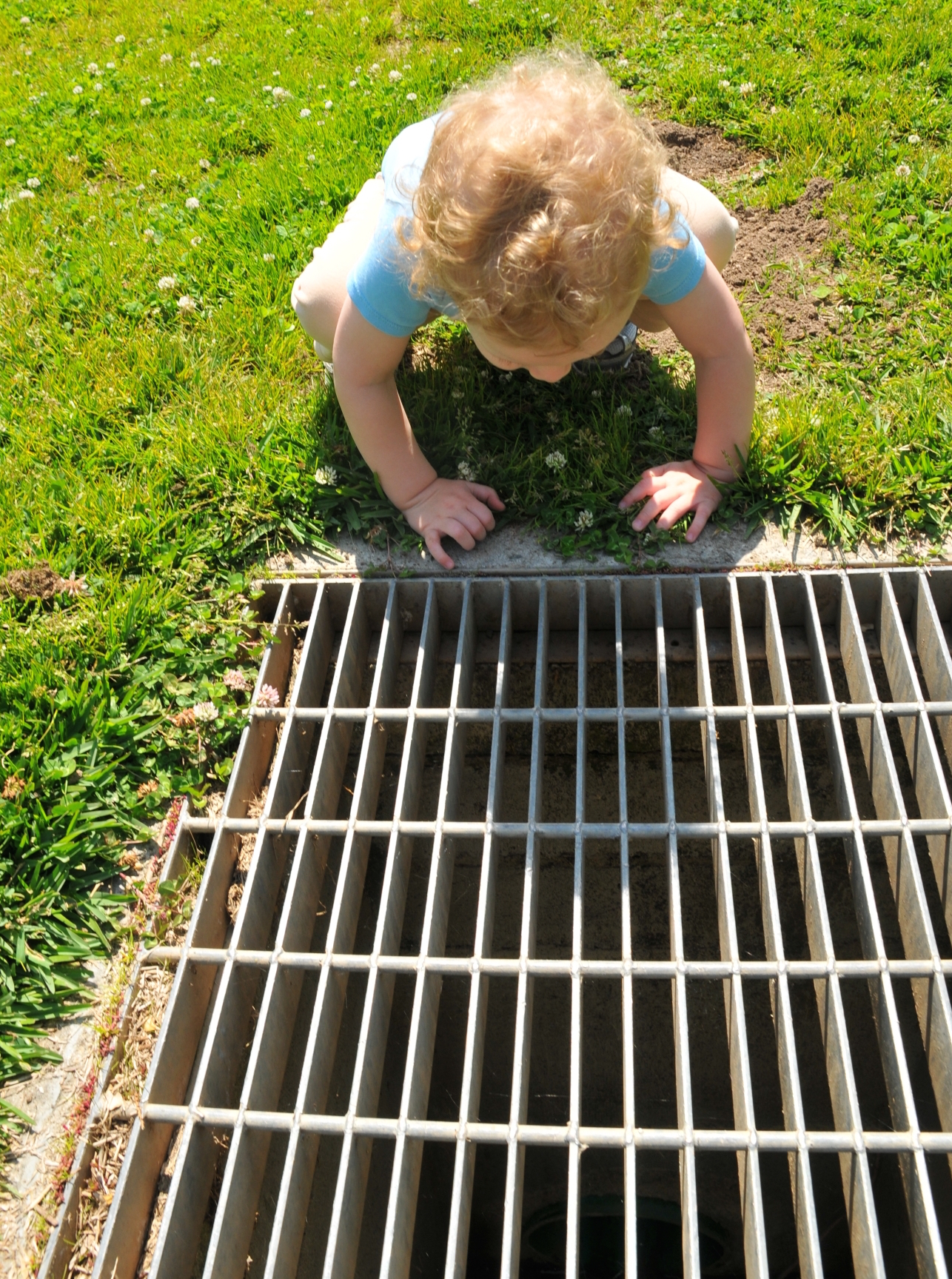
Maybe LOVE the mess.
See it as evidence of health and joy and learning, and then it's not "mess," it's proof.
photo by Julie Markovitz


trusting natural curiosity to draw your child to what they need to learn when. (Math is fascinating. Kids only get turned off to it by the boring way school approaches it.)
trusting a child's natural schedule rather than the school imposed one (eg, that the child will read eventually even if they aren't doing so at 7 because reading is always a pleasurable activity not an imposed tedious one, they will multiply even if they aren't doing it at 9)
trusting that it's okay for kids to learn things out of order! It doesn't bother kids at all to pick up interesting tidbits about Thomas Jefferson, knightly armor, Egyptian mummies, WW2 combat planes. They make their own connections as they get more and more things in place. (Later, an orderly approach will be fascinating to them as they can make even more connections.)
seeing real learning that is right there all around you, for example, the things that need sorted, the cookies to divide, the planning for a party that are all real live math. And it's especially tough to trust that those few minutes of real engaged figuring are worth 20 pages of worksheet practice.—Joyce Fetteroll
SandraDodd.com/unschool/moredefinitions
photo by Sandra Dodd, in Liverpool
Joyce and I got to visit Liverpool in 2013, thanks to Julie and Adam Daniel.

Those quotes are from a collection of just a few of the unschooling epiphanies reported over the years. Not one of them is anything akin to "Yeah, I read that, but..." They're not about reading at all. They're about seeing, about realizing, about having acted in a new way after months or years of the percolation of ideas through a mind and heart open to learning.
Ah-HA!
I recently saw how far I've come.
I knew that. Now I *know* that.
I am pretty sure I understand now!


Learning is defined not just as sucking in information about something the child is interested in. Learning is also figuring out the big picture and how things connect. Figuring out how stuff works, figuring out how people work, making connections, seeing patterns. This is a mechanical, biological process. It's how humans—all learning animals really—naturally learn, how kids are born learning.
Natural learning is like a doorway. We can't change the doorway but we can change the outside world so kids can more easily reach what intrigues them.

Some people see experienced unschoolers ("experienced" meaning in this context people who have done it well and effortlessly for years, who aren't afraid anymore, who have seen inspiring results) mention classes, and they think "Ah, well if the experienced unschoolers' kids take classes, then classes are good/necessary/no problem."
But if beginners don't go through a phase in which they REALLY focus on seeing learning outside of academic formalities, they will not be able to see around academics. If you turn away from the academics and truly, really, calmly and fully believe that there is a world that doesn't revolve around or even require or even benefit from academic traditions, *then* after a while you can see academics (research into education, or classes, or college) from another perspective.