Showing posts sorted by date for query reading. Sort by relevance Show all posts

Thursday, June 11, 2026

Fear of media, and of newness

Yesterday I sent an extra post by accident. The one about TV wasn't ready, but it still works. I had planned to make a webpage with photos of more poster boards with people's notes about what they had learned from different shows. When I've done that, someday, I'll post it again.

It's hard for people to conceive of how fearful people were of television viewing, or of video games, just two or three decades ago. I myself missed out on the days when reading novels had been considered a trashy activity. I knew, somewhat, about adults' fear of comic books, when I was a kid; teachers would confiscate comics and not give them back, sometimes.

Time has passed and these days the scary edge of unfamiliar technology is AI, such as Chat GPT and Claude. Alexa is getting in there more. Google's AI has recently started having longer exchanges if you ask questions. I hope Google AI will get better; that one I don't trust as much.

My experience with Chat GPT is that if you ask a philosophical question, or tell a story, or start a conversation, you might have a lot of fun. Start with something you know and care about.

If you use one of these links, it will open at the end of the exchange. Scroll up if you want the beginning. Some of the questions I've asked have beenMostly I like to explore musical topics, but I asked about why my front-yard apple tree has so many apples though it didn't last year; cooking questions and ideas; which kinds of intelligences are best served by exchanges with AI; mysteries about a new medication I'm taking that's to be mixed with juice—about which juices weren't working well, one way or another (settled on tangerine juice); various details about the UK series "Shetland"; taxidermy and the series "Vera"... I've gotten feedback and ideas on traditional ballads (I used to collect and sing them in my teens and 20s), and fairytales/archetypes/psychology of identity. It's a way for me to bounce ideas around and get input on trivial topics, usually, and the discussions are fun.

If the thought of that scares or offends you, think about why. Consider asking Chat GPT or Claude why. Google's AI probably doesn't know.

It's a tool and a toy and you'll still be safe at home. Be brave, about learning.

If you wonder something, and you don't have friends who know, or who would let you roll the question around until you were tired of it, consider AI like a Magic 8 Ball, or a Ouija Board, if those are less scary. It's way better than either.

Fear itself
photo by Catherine Forest
of Watersprite Lake

Saturday, May 16, 2026

Choosing, many times

Note from a discussion in February 2012:
"I totally understand the idea behind radical unschooling, that children will self regulate...."
It surprises me every time someone assures others that they COMPLETELY and absolutely understand that... and then make a statement that came from somewhere else. "Self-regulate" means "eventually do what the mom wanted, spontaneously," sometimes, and other times means that the child will begin to have "self control" and tell himself no. A lot.

It's much clearer to think of a child having choices, and making what seems like the best one, many times a day; many times an hour, sometimes. A kid surrounded by cows and mesquite might not want to go out there, again, just to go. A kid who lives in a cornfield isn't likely to run excitedly out to see that... again.

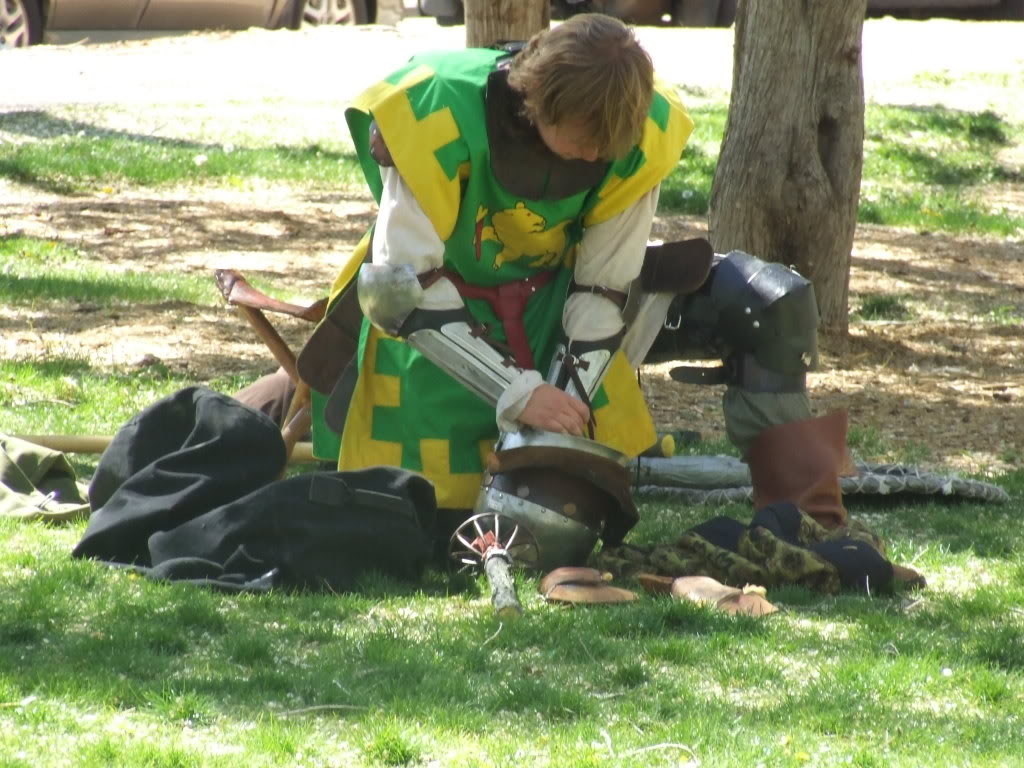
Marty's off at a park in armor, where he's gone most Sundays for five or six years (and half the Sundays of his life before that). Holly was out and about most of yesterday. They chose to be out. They weren't out because their mom told them it was better than a Wii.
—Sandra Dodd

SandraDodd.com/self-regulation
photo by Sandra Dodd, of Bardolf (Marty)

The red belt in the photo meant he was a squire. Now his belt is white (for knighthood), and he has been Baron of al-Barran, King of the Outlands, and Prince of Oertha. That will mean something or nothing, depending who's reading; that's fine.

Monday, May 11, 2026

More careful than "authentic"

Once upon a time in 2007, I was responding to a mom who was being dismissive (of her children) and defensive (of the discussion):

She:

I think that because of the tool we are using here to communicate that something is lost in translation.

I:

Don't try to use a saw as a hammer.

The tool we're using here can be used very well, but it takes thought and practice. No one is preventing reflection and proofreading. It's fine (and would be good) for you to hold a post and edit it carefully. Those who choose not to shouldn't complain about reactions.


She:

As powerful as words can be, the right attitude and heart behind the mistake can change how the words were perceived.

I:

Words can harm children forever. You're very unlikely to traumatize any of the moms reading here, but we can help you learn not to traumatize your children, and to think and write more clearly, if you want.


She:

Sandra also said, "Watch your thoughts, because without doing that you can't really learn to choose better reactions."
I agree with this in part.

I:

IN PART?


SandraDodd.com/authentic
photo by Rosie Moon

Wednesday, May 6, 2026

Experiences and conversations

Pam Sorooshian wrote:

Unschooling is not leaving kids to their own devices until they show an interest in learning a given subject.

Unschoolers do not expect interests to arise out of nothing.

As an unschooling parent I offer ideas, information, activities, starting points, and material to my children as opportune moments arise, not out of nothing, but out of the experiences that are created by mindful living in the world—walking in the woods, visiting museums, watching movies, reading books, going to the theater, swimming in the ocean. Every moment in life offers opportunities for learning and investigation.

We went to the Rose Parade and my 12 yo daughter wondered aloud why it doesn't smell like roses even when you're right up close to the floats. There was a great opportunity to talk about plants being grown for various purposes—and how that is done—tomatoes raised for transportability rather than taste, flowers for longlastingness rather than aroma.
—Pam Sorooshian

SandraDodd.com/pam/learningworld
photo by Catherine Forest

Monday, April 13, 2026

Comfort and support

I was planning to borrow an older post for today's post. Intending to see whether I had already repeated it, I accidentally put it into Google instead of Just Add Light and Stir's search bar.

The quote was this:
Taking food to someone who is reading or playing a game or watching a movie and just putting it where he or she can reach it without any instructions, warnings or reminders is a great gift. It is a simple gesture, and a profound service.
Those were my words, and they went with this photo, by Hinano:


The mistake triggered Google's AI to expand on the quote for me, and it was quite good:

This statement highlights a profound act of service: offering sustenance without disrupting someone's flow. By delivering food silently and without demands, you show care, respect their focus, and nurture them, turning a simple, quiet gesture into a meaningful gift of comfort and support.

Key Aspects of This Gesture:

  • Respects Autonomy: It allows the person to consume the food at their own pace without interruption.

  • Reduces Cognitive Load: It eliminates the need for conversation, instructions, or decisions.

  • Provides Comfort: It demonstrates thoughtfulness and care for their physical well-being while they are engaged in an activity.

  • Simple yet Profound: It shows that serving someone doesn't need to be elaborate to be deeply appreciated.


Original, 2016:
Small things are big
photo by Hinano

Sunday, March 29, 2026

Trusting and seeing

Joyce Fetteroll wrote:

Unschooling is trusting in a child's natural curiosity to teach them what they need to know. The parent is there to answer questions, talk, infect the kids by their own curiosity about life! (though curious about what you're interested rather in what you think would be good for the kids to be interested in!), bring in cool resources (that the kids can feel free to ignore if it just isn't the right moment for their interest to ignite).

The hard parts are:
trusting natural curiosity to draw your child to what they need to learn when. (Math is fascinating. Kids only get turned off to it by the boring way school approaches it.)

trusting a child's natural schedule rather than the school imposed one (eg, that the child will read eventually even if they aren't doing so at 7 because reading is always a pleasurable activity not an imposed tedious one, they will multiply even if they aren't doing it at 9)

trusting that it's okay for kids to learn things out of order! It doesn't bother kids at all to pick up interesting tidbits about Thomas Jefferson, knightly armor, Egyptian mummies, WW2 combat planes. They make their own connections as they get more and more things in place. (Later, an orderly approach will be fascinating to them as they can make even more connections.)

seeing real learning that is right there all around you, for example, the things that need sorted, the cookies to divide, the planning for a party that are all real live math. And it's especially tough to trust that those few minutes of real engaged figuring are worth 20 pages of worksheet practice.
—Joyce Fetteroll

SandraDodd.com/unschool/moredefinitions
photo by Sandra Dodd, in Liverpool


Joyce and I got to visit Liverpool in 2013, thanks to Julie and Adam Daniel.

Friday, February 20, 2026

Like nothing else


If a parent can learn how to "facilitate learning"—to help a child get what he needs or wants—rather than to direct or try to own it, all of unschooling goes better. And if a child learns to read without "reading instruction," that can open the world up like nothing else can.

SandraDodd.com/r/deeper
photo by Alicia Gonzalez-Lopez

Monday, January 26, 2026

Actually doing it


Reading about unschooling without doing it is like reading a cookbook without making any food, or reading woodworking project books without owning a saw.

Do it!


Help for getting it
photo by Cara Jones

Sunday, January 18, 2026

In fun ways for real reasons

From a 2003 article, "Some Thoughts on Homeschooling," by Sandra Dodd

My children learned to read without phonics lessons, without programmed readers, and without pressure. Kirby had two and a half lessons, and that cured me of doubt. I had taught reading, years before, and laying those two experiences side by side made me aware of the damage that whole mindset does. So I read to him, played word games with him, sang with him, watched movies with him, bought him video games and magazines to go with them, and from Nintendo gaming guides and magazines, he learned to read fluently when he was nine.

My other two read at ten and eleven. I was more relaxed, and though I was surprised that Holly read "late" (for a girl, I thought, unfairly), a year ago she wasn't reading and now she reads very well. It comes almost suddenly, once they "get it," and I'm convinced that it comes suddenly at school too, but teachers who want job security and paychecks disguise the process with years of exercises and read-alouds and worksheets until those loom large and the child is lost within. At some point a child either reads fluently or has given up trying.

Because my children learned to read without having been taught, they have no doubt whatsoever that they could learn anything else. Few things are as important or as complex as reading, yet they figured it out and enjoyed doing it. If I thought I had taught them, they too would think I taught them, and they would be waiting for me to teach them something else.

They have never been criticized for "not showing their work" when they do calculations in their heads. Mathematics, too, they have learned in fun ways for real reasons.
—Sandra Dodd, 2003
(Holly has read well for over 20 years)

SandraDodd.com/thoughts
photo by Denaire Nixon

Friday, January 16, 2026

Epiphanies


Ah-HA!

I recently saw how far I've come.

I knew that. Now I *know* that.

I am pretty sure I understand now!
Those quotes are from a collection of just a few of the unschooling epiphanies reported over the years. Not one of them is anything akin to "Yeah, I read that, but..." They're not about reading at all. They're about seeing, about realizing, about having acted in a new way after months or years of the percolation of ideas through a mind and heart open to learning.

SandraDodd.com/gettingit
photo by Sandra Dodd

Monday, December 22, 2025

Structure


In 1992, someone asked:
How do I structure our days
and how do I structure our learning time?
I think it should be "Woke up, got dressed, ate, played, ate, played, etc." In other words, I don’t think there should or can be any “days off” from child-centered "education."

If this seems wrong, try this experiment: Keep your child from learning anything for a few days. Make sure that from the first waking moment there is nothing learned, no new material, no original thoughts to ponder, etc. The only problem is that you would have to keep the children from playing, talking, reading, cleaning or repairing anything, etc.

from page 1 of Moving a Puddle

see also SandraDodd.com/structure
photo by Sandra Dodd

Friday, November 21, 2025

Real learning is bigger

Pam Sorooshian wrote:

The idea that learning to read is learning to sound out or recognize words, that learning to write is learning to draw the letters correctly, that learning math is learning to carry out algorithms by rote—such ridiculously low goals. As if that is what kids are capable of. Those are not real reading, writing, or math.
—Pam Sorooshian

What Teaching Can Never Be (chat transcript)
photo by Cátia Maciel

Saturday, November 15, 2025

They will do it

Q: How will you know if they can read?
How did you know they could ride a bike?
How do parents know when a baby can walk? Talk?
MANY families' reading stories,
and gathered stats by Jo Isaac, PhD


Quote from SandraDodd.com/faq
photo by Michelle Tovaas Huelle

Sunday, October 5, 2025

Aversion and motivation

Bob Collier wrote:

After Pat quit school, he refused to read a book. He hates them. Thank you school for teaching my son to hate reading books. My son has never read a book since school and that was five years ago. He's had not even one minute of a reading lesson since school. Yet his reading is excellent. He developed his reading skills from reading videogame manuals and web pages of cheats and walkthroughs and from videogames themselves, some of which have an enormous amount of text in the gameplay that you need to be able to read to play at all.

Pat's motivation for developing his reading skills came not from being told it was something he needed but from his own understanding of how it would help him get what he wanted.

There's no more powerful form of motivation, probably.
—Bob Collier
(whose son left school at seven)

SandraDodd.com/game/reading
photo by Gail Higgins

Thursday, September 4, 2025

Making it work well

A mom named Angela wrote a long e-mail to all of her relatives, in 2003, and here is part of it:

My job in the capacity of homeschooling and parenting in general is to provide a loving, rich, nurturing environment and lots of guidance. Lots of exposure to important and interesting things about our world and the past. Setting good examples for reading, researching, and finding out new things every day. Imparting a sense of discovery and fascination about so many things about our existence in this life. Paying a lot of attention and noticing when my kids need something, or want to learn more about something without pushing them into my own agenda. With my tendency to be dramatic about such things, these goals are actually accomplished rather simply and beautifully.
—Angela

SandraDodd.com/relatives/responding
photo by Nicole Kenyon

Wednesday, July 30, 2025

Appreciating, or enjoying

Pam Sorooshian:
What do I regret? EVERY minute that I spent worrying over whether the house was clean. That would be my biggest regret. THAT was wasted worry. And there were bad times between myself and the kids over it. I'd get angry that they weren't helping enough. I wish I'd learned earlier about how to enjoy taking care of household stuff and let it go when it didn't get done.

The other day a 15 year old girl wrote on her facebook that she was miserably doing dishes because that was her chore this week. I am going to talk to her about dishes. Because I have learned to LOVE doing the dishes. I don't DO them without enjoying it. I either enjoy it or don't do it. Appreciate or enjoy or at least feel pleasant - I don't have to be deliriously happy . So - sometimes they don't get done. But usually they do. And nobody in my house ever has bad feelings about dishes anymore.
Sandra Dodd:
So if I were a hostile critic of your airy-fairy lifestyle, and said "What does this have to do with unschooling," what's the quick kind of answer others here might use when it happens to them?
Pam Sorooshian:
If we believe kids are born with an innate urge to learn, that they don't need to be forced to learn, then, logically, that should not apply to just reading, 'riting, and 'rithmetic, but also to all other aspects of life.

Turns out, the more that unschoolers have expanded their understanding of how children learn, the more we've discovered that, indeed, they DO learn best without coercion.

SandraDodd.com/chats/pamsorooshian
photo by Cátia Maciel

Monday, July 7, 2025

Purely learning

Facebook Memories showed me that someone on another continent had quoted me, years ago:
Learning does not teach us, but from learning we learn.
I still haven't found her source, but in looking I found its "wordier" cousin posted here in 2011:

Mastering ideas about learning
As some of my articles are being translated (now into Japanese, French and Italian) I see how much of my writing and thinking is about language itself, and so some of these ideas won't translate. But sometimes, that fact is very good. Some of our confusion about teaching and students and study and learning, in English, has to do with the words we use, and if the problems don't exist in other languages, that's wonderful for them.

In Romance language (Italian, French, Spanish and so on) our "teacher" translates to something along the lines of "maestro," a word we have too in regards to music direction. And we have the English cognate "master" which is more currently left in "master of arts" and other college-degree titles. Once that meant a person was qualified to teach at the university level. That meaning is gone in the U.S., pretty much.

Considering the word family from which "maestro" comes (and not knowing all its connotations in other languages), the English verb "to master" means to learn. It means to become accomplished in the doing of something. Whether mastering horseback riding or blacksmithing or knowing and controlling one's own emotions, it's not something someone else does to you or for you.

So for any translators or bilinguals reading here, have sympathy for English speakers who can't get to natural learning without disentangling all the graspy words and ideas about teaching and education and their implications that learning is passive and teaching must be done to a person.

SandraDodd.com/wordswordsother
photo by Sandra Dodd

Tuesday, June 10, 2025

Sounding off

Patti Schmidt wrote:
It seems to me that "phonics" essentially serves the purpose of "teaching" a child to read before he's ready and fully grasps context and meaning. I know that I can read Spanish, which is a much more consistently phonetic language than English, complete with accent and everything, and literally not understand one bit of what I'm saying.
I remember being tested separately for "reading" and reading comprehension. If one can't understand the words and phrases, then isn't it just decoding with an internalized phonics decoder ring?

Turning script to sound is one trick, but the reading that people want will turn marks to meaning. The same way that musical notation (and a musician who can decipher and play or sing it) can bring music into the air, so can the written word becoming lively language again.

Patti discovered, as many unschooling parents have, that while some children appreciate phonics hints, or figure phonics out on their own, others learn to read in their own other ways.

More of Patti's story of children learning differently:
SandraDodd.com/r/patti
photo by Sandra Dodd

The photo was taken of the insde of a church door in Durham, in England. "The draught is dreadful" cannot be read easily with American phonics (or sight reading, or look-say). But it's cute, and it's alliterative, which is an ancient tradition in the English language, and in the naming of the alter-egos of comic-book super heroes.

Saturday, May 10, 2025

A learning world

Pam Sorooshian wrote:

Unschooling is not leaving kids to their own devices until they show an interest in learning a given subject.

Unschoolers do not expect interests to arise out of nothing.

As an unschooling parent I offer ideas, information, activities, starting points, and material to my children as opportune moments arise, not out of nothing, but out of the experiences that are created by mindful living in the world—walking in the woods, visiting museums, watching movies, reading books, going to the theater, swimming in the ocean. Every moment in life offers opportunities for learning and investigation.

. . . .

Unschooling families live in a learning world—no division of life into school time and not-school time.
—Pam Sorooshian

SandraDodd.com/pam/learningworld
photo by Karen James

Saturday, April 26, 2025

Changing, building, and understanding

JoyfullyRejoycing

SandraDodd.com/unschooling

Those sites exist so that people can explore unschooling, but reading those pages doesn't make anyone an unschooler. Only changing one's own thoughts and beliefs and actions and reactions, and building a relationship with one's children based on those understandings can make unschooling work in a family.

There is a "there there" tradition among women. I've referred to it as "teaparty" talk in the past, and then made a page to illustrate what I was talking about. It *sounds* like support, but it's really more like "let's all avoid real thought together!" Unschooling takes real thought, and a desire to change. Any desire to be supported in staying the same will be a problem.

SandraDodd.com/support

Less entertaining, but easier to read from a phone:
"Support" messages all in one list
photo by Jo Isaac