Showing posts sorted by date for query /store. Sort by relevance Show all posts

Tuesday, October 20, 2026

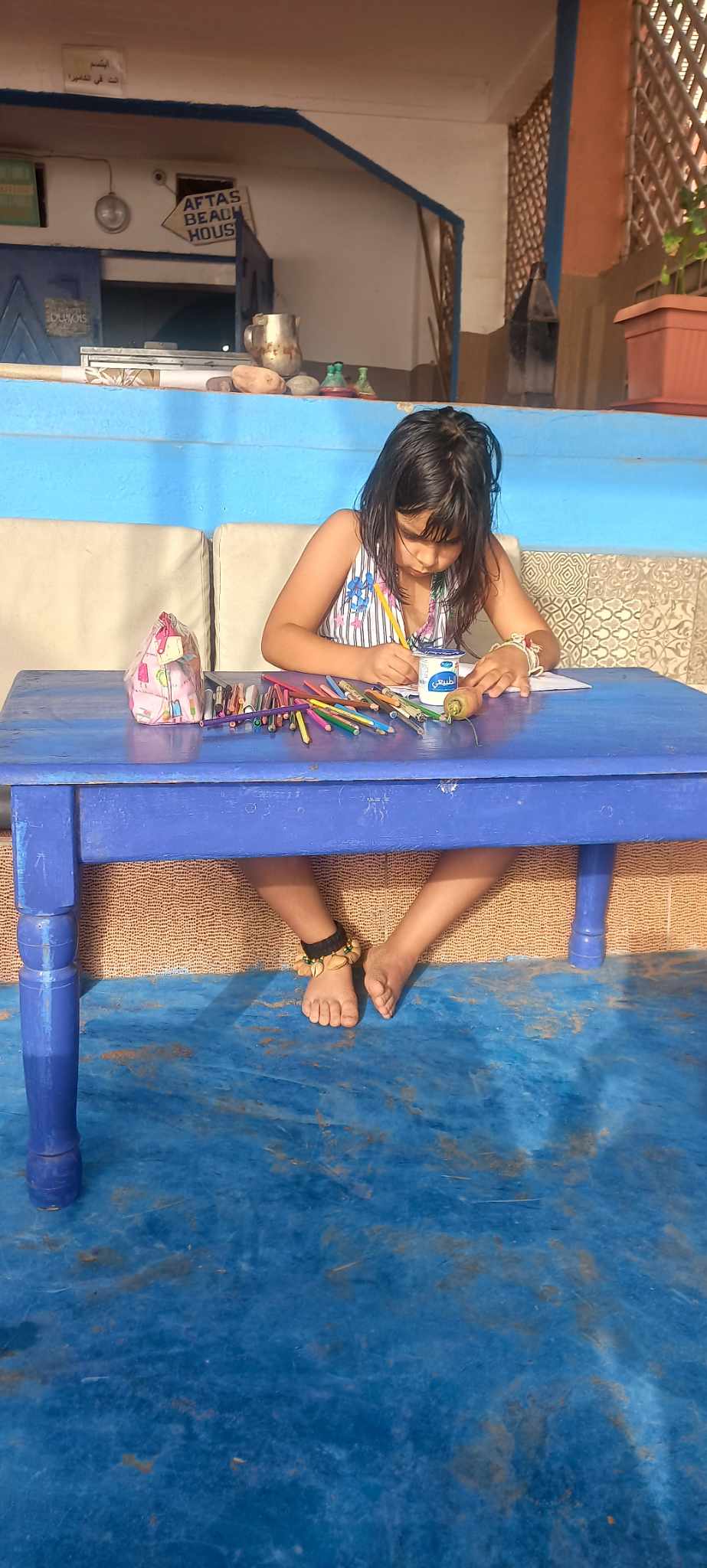
Simply beautiful moments

Karen James, on Always Learning, March 2018, about attaching her attention to things that have the potential to bring her joy:

When things were a bit more difficult (we had moved, my dad died, Doug's new job wasn't going well, my mom's health was deteriorating, I was having some minor health issues myself) I would make sure to notice the moments in each day that were easier and simply beautiful even if there were only a few. In those easier moments I would say "thank you," sometimes aloud. In the simply beautiful moments I would say something to acknowledge the beauty. "This feels so good," was something I said (still say) a lot, again, sometimes aloud as both Doug and Ethan would confirm. 😉

For example, if I was driving to the grocery store and I happened to notice how beautiful the clouds looked, I'd linger a moment longer to notice the relief I felt from simply observing that beautiful sky, and the feeling of joy that I could draw from that humble observation. It sounds kinda corny as I type this, but it was/is a really powerful tool for me. Noticing ease, noticing beauty and spending a moment to reflect on how good that can feel when I acknowledge it was/is a bit like remembering to breathe.
—Karen James
and there's more!

SandraDodd.com/happiness
photo by Theresa Larson

Saturday, October 10, 2026

Learning by leaps and bounds

From a learning standpoint, when babies are carried they see more, they hear and smell more. If they are given things to touch and taste besides just a few baby toys left in the corner of a crib or playpen, they will learn by leaps and bounds. They will spend less time crying and more time being in the real world.

The parents will know the child better, and the child will know the parents better. They will be building a partnership based on trust.

SandraDodd.com/attachment
photo by Sandra Dodd, at a fabric store

Sunday, September 20, 2026

Figuring out when and where

To a mom asking about why a store wouldn't let her kid climb on the employee's stairs, or ladder, I wrote:

Always saying no is bad.
NEVER saying no is just as bad.

Helping children figure out when and where they can do things is great.

YES children can run and should run, but ANYwhere? No.
YES children should be able to climb up and look around, but ANYwhere? No.

"Yes, somewhere else" can be a good answer, but then the parents need to find that somewhere else QUICKLY, soon, that day, not a month or a year later.

SandraDodd.com/partners/child
photo by Cathy Koetsier


see also Up

Monday, September 14, 2026

Wild math

Joyce Fetteroll wrote:

Wild math looks different than domesticated math. It looks more like conversations, using numbers to figure out something the child wants to know, video games, allowance, weighing things in the grocery store, finding the best deal among several choices—that is not as a lesson but what you would normally do—board games, figuring out "how long until?" when she asks, budgets, doing a rough estimation of the items in the grocery cart to see if you have enough money, baseball statistics, crafts, origami, wrapping presents ...

There's a list at "A Few Words About Math"

Look at the things on there that naturally come up in your life. Don't look at the ones that don't! It isn't a checklist to see how many you can complete! It's meant to show you that there's more math in life than school math lets you see.
—Joyce Fetteroll

SandraDodd.com/math/
photo by Christine Milne

Thursday, August 20, 2026

Hidden secret rooms and magic doors


When I move thru your site, I feel like a child in a candy store, or like I'm in a fantastic meandering castle with hidden secret rooms and magic doors to new realities.

I didn't keep the name of the person who wrote that, but I love the images.
SandraDodd.com/random
photo by Julie D

Thursday, July 23, 2026

"Try not to learn"

I was once asked:
Since unschooling is a lifestyle, how can a family wanting to embrace these ideals begin the process? What encouragement would you offer?

Part of my 1998 response:
Play. Joke. Sing. Instead of turning inward and looking for the answer within the family, within the self, turn it all inside out. Get out of the house. Go somewhere you've never been, even a city park you're unfamiliar with, or a construction site, or a different grocery store. Try just being calm and happy together. For some families, that's simple. For others it's a frightening thought.

Try not to learn. Don't try to learn. Those two aren't the same thing but they're close enough for beginners. If you see something *educational* don't say a word. Practice letting exciting opportunities go by, or at least letting the kids get the first word about something interesting you're all seeing.

The "Try not to learn" idea inspired Learn Nothing Day ten years afterwards (and 18 years ago, now).

SandraDodd.com/interview
photo by Holly Dodd

in French

Sunday, April 12, 2026

Slightly new is new

Change one thing: timing, route, store, choices, order, station, dishes...

One change affects other perceptions and connections.

Normal or exotic?
photo by Sandra Dodd

Friday, January 23, 2026

Never heard of such a thing

Christine Macdonald wrote that she and her daughter had walked to the grocery store once to pick up milk they needed for a recipe:
I had brought a ten-dollar bill (no wallet) I told her we'd have about six dollars left and she could get whatever she wanted with it—she wanted a pomegranate or three artichokes (neither of which we had enough money left for) I told her we could come back later with my wallet and get them or get them now skip the milk and come back later for the milk to finish our cake. She said come back later for the artichokes. When we were at the checkout I said why don't you just get a candy bar or something for the walk home she said no thanks. A mom behind me in line was shocked at the idea of a kid not wanting candy if offered said she never heard of such a thing.
—Christine Macdonald

SandraDodd.com/eating/sweets
photo by Jihong Tang

Thursday, January 22, 2026

Friendly, calm and welcoming

Sandra Dodd, May 6, 2008, from a conference follow-up question:

Won't they end up lazy?
Do they expect other people to make their life good?


We visited our oldest son, Kirby, last weekend. We met nine of his regular guys. His friends and co-workers and his roommate really, really like him. Today I helped him format a resume, to get it all on one page. Twenty-one and his resume was two pages. Here's something he wrote:


Active Imagination, Albuquerque, New Mexico
Retail floor operator, Summer 2000 — 04/11/05
Constantly advanced the sales quota while upholding a friendly, calm and welcoming atmosphere in the store.


He did! He's good at creating and maintaining a friendly, calm and welcoming atmosphere. No one who knew him when he was five or younger would ever have predicted that.

More at SandraDodd.com/hena08/lazy
photo by Holly Dodd

Thursday, July 31, 2025

Helping teens

Written when Holly Dodd was 18 (2009), of when she was in her mid-teens:

Holly has had a few jobs. One was working at a skateboard and clothing store in a mall a few miles away. One was working at a flower shop just a few hundred yards away; she walked. But the shop had another shop on the air base, and sometimes she worked there, so she had a base pass and a key to both shops. When Holly's jobs require driving, we let her use a car. Some of her school-attending friends are told they can't get a job unless they buy a car first. It seems to be a way for the parents to say no and then blame the kids for it.

Some mainstream families press their teenaged children to get jobs, and shame them if they fail, while putting conditions on when and where they can work. The result is that getting a job was just one more "do what the parents make you do" situation, and the jobs aren't fun; they're an extension of school and of parental control.

When teens or young adults have chosen to have a job without desperation for money, and when they are accustomed to learning all the time and living joyfully, they are a different sort of employee.

SandraDodd.com/jobs/bigbook
photo by Cathy Koetsier

Sunday, April 13, 2025

A grid over which to lay other things


If someone knew almost nothing in the world but trivia relating to popular music for the past 100 years, that would make a HELL of a good grid over which to lay other things. And I don't think a thorough knowledge of pop music (in any culture or language) over this particular past hundred years, which saw the proliferation of recorded music available in homes, the advent of radio broadcasts, movies with music, television variety shows, transistor radios, cassette players in cars, CDs, iPods and cell phones that store a ton of music could help but create a timeline of the culture. Wouldn't songs from Marx Brothers or Fred Astaire movies remind people of The Great Depression? Can anyone hear big-band swing music and not also think of the hairdos and costumes? Does "Boogie-Woogie Bugle Boy" not remind anyone of WWII? Knowing some of the context of Gene Autrey and Roy Rogers brings up LOTS of stories about where those songs were first heard.

The lyrics of some of the songs make specific mention of historical events, and that could help dating things, too, if a person were trying to figure out what came first.

Any hobby delved into deeply becomes another portal to the whole world—real and imagined; past, present and future.

"Trivial" connections are real
video from Young Frankenstein, 1974
Directed by Mel Brooks
Written (in part) by, and starring, Gene Wilder

Thursday, March 27, 2025

Not the same choices

Happy, supported, trusted kids don't make the same choices as unhappy, controlled kids.
—Joyce Fetteroll
small cheese balls shaped like pumpkins, in a store display
SandraDodd.com/eating/sugar
photo by Sandra Dodd

Wednesday, February 19, 2025

Conversations and interactions

The middle of a longer article:

They grew up with exposure, context, experiences and knowledge of those things mathematics is designed to describe. Our oldest son, Kirby, worked in a games store from the time he was fourteen, and was running tournaments for Pokemon, Magic the Gathering and other such structured strategy games, in the store and at hotels in town for several years. The knowledge required to play those games and even more to organize, judge and score tournaments, is huge.

When Kirby was 18 he took his first math class, at the community college. Like a musician who can't read music, he was baffled at first, but once he understood the notation, he soared, and had the highest test score in the class.

To some people reading this, it might seem there was no "higher math," but what we have done is create a home in which algebraic thinking is a standard part of conversations. Our interactions are analytical and involve factors and projections. They see the concepts and they use them.

SandraDodd.com/math/unerzogen
(There's a link there to the published German version.)
photo by Belinda Dutch

Tuesday, January 14, 2025

Mix life up

Can you get out of the house more? Go do different grocery stores? I've suggested this ten times over the years and some people perk up and get it immediately, and some think I'm a small-minded dope. People learn from stimulation. Seeing things they haven't seen before that are not entirely unlike what they have seen will help them build brain trails and patterns. If you go to the same grocery store and walk the aisles in the same order every time, the kids won't learn anything but that pattern. They won't learn the range of what stores have, how differently it can be arranged, and how to shop by looking at labels and looking at what's stored near that product, instead of just heading straight to where you KNOW the soup you always use is. How will they ever see exotic new soup? How will they ever see bulk pasta if you always get the same bag of noodles of the lowest shelf near the same old same old same old stuff?

That can go for going to the post office, to the movies, to buy shoes, all KINDS of things. Mix life up. Take a new trail.

That's from a 25-year-old discussion:
Conversations With Sandra Dodd: Welcome!
photo by Sandra Dodd

Saturday, December 21, 2024

Sleep, choices, jobs

[A] common question is whether someone who grew up without a schedule and a bed time and could ever hold "a real job." The assumption, I think, is that "real jobs" require getting up very early and at the same time every day. Marty did that for over a year when he worked at the grocery store near us. He worked Monday through Friday at 6:30 a.m. He had no problem with that schedule.

Looking up through the list of jobs, I will give as many shift-starting-times as I can remember, and you might wonder if someone who had grown up with a bed time and a regular schedule could ever hold a job.

AM 6:30
8:00
9:00
10:00
11:00
PM 1:00
3:00
4:30
5:00
6:00


Since this was written, the starting-times of jobs for my kids has gone around the clock, with Kirby starting sometimes at 11:00 at night (at Blizzard, like a hospital graveyard shift), and beginning at 5:00 a.m. (one of his computer support jobs when he moved back to Albuquerque). When Marty worked stocking shelves at Target, at Christmas season, he was there at 4:00 a.m. a time or two. Probably more.

SandraDodd.com/jobs/bigbook
photo by Janine Davies

Tuesday, December 10, 2024

Be there; have time; avoid stress

Schuyler Waynforth wrote:

I make lots of food. I like cooking. I like baking. And Simon and Linnaea mostly prefer my food to store food. But, for a long time, Simon preferred store bought bread to home made. Linnaea has never liked home made macaroni and cheese. And, honestly, my baking was always a time commitment. I have much more time now that they are 15 and 12 than I had when they were little.

When they were little, getting food in easy forms that they enjoyed that were quick for when David wasn't around to tag me, that was important. That was more important than any fear I may have had about what they were eating. Being there for them. Having the time for them.

Meredith wrote, and I want to underscore:
"Don't make it stressful - because what we know about nutrition has changed and changed and will change again, but stress is bad. We know that. Don't make life one bit more stressful."
—Schuyler Waynforth
quoting Meredith Novak

What problems can come?
(a long, rough, wonderful discussion from 2013)
photo by Sandra Dodd, embellished by Holly Dodd

Monday, November 11, 2024

"It's fun."

Sandra, in 2003:

I don't use the word "unschooling" except when I'm talking to homeschoolers.

When I'm talking to relatives or people at the grocery store or whatever, I say "We homeschool." Or more often, "Our kids don't go to school."

IF they seem interested, or if they make one of those canned-conversation responses like "Oh, that must be a lot of work," or "Oh, I could never to that," I just smile and say "It's fun. We mostly just have a lot of fun." or "We don't use a curriculum, we just learn from everything around us."

So within the inside of the inside of discussions with homeschoolers, I'm definitely an unschooler, but there's no advantage I've found in using that term with people who only want a one-minute "hi, how are ya? cute kid" conversation.

SandraDodd.com/school/say
photo by Roya Dedeaux

Friday, June 21, 2024

Connecting and learning

Kelly Schultz, at the end of a longer account of learning from Barbie

Everywhere we go, we meet women who have loved their Barbies, young babysitting-age girls, grandmas with collector editions, women at the toy store commenting how they still love to get their Barbies out. Barbie-lovers are everywhere! Who knows when this shared interest will help them connect with someone down the road?

Who would have imagined - design, construction, dramatic narrative, social skills, a little bit of history mixed in - it's really a wonderful learning experience!
—Kelly Shultz

SandraDodd.com/barbielearning
photo by Karen James
___

Saturday, May 11, 2024

Portable, cheap, long-lasting


The really good thing about happiness is that it’s portable. It’s cheap. It doesn’t need a safety deposit box or an inheritance. You can give the same amount to all your kids, and they don’t have to wait until they’re 18 to claim and use it! Think about that. They can have it right now, and start using it, without taking yours away from you.

Do kids need to have their own room to store their happiness in? No. Do kids need to wait nine weeks to get a report card that says they’re doing well in happiness? No. Will working really hard now store up happiness they can use later? That’s the going theory, the one we were raised on, but I no longer believe it.

The quote is from SandraDodd.com/president

More on happiness: SandraDodd.com/happy

photo by Cátia Maciel

Friday, February 9, 2024

Being merry and light

If a single, childless person wants to spend a LOT of energy being negative about school, cataloging school's ills, revealing and reviewing school damage, then that's a hobby.

If the parent of unschooled children wants to do that, I think the energy and emotion could be better and more positively spent being merry and light with children who are not in school.

No one can have everything. You can't store up and identify with cynicism, pessimism and self-righteous ire and still pour out joy and happiness to your family.


moving away from negativity about school
photo by Nicole Kenyon