Showing posts sorted by date for query /no. Sort by relevance Show all posts

Sunday, April 5, 2026

Knowing, instead of being told

SandraDodd:
I remember when I was a kid being told repeatedly in school that humans had no instincts left. So why would it even have occurred to me that I would "know" anything like that I was full? Seriously...

But my kids won't eat a single nut more than they actually want. It's stunning, really. It still surprises me.

SandraDodd.com/chats/food

Easier to read: SandraDodd.com/instinct
photo by Cátia Maciel (in Morocco, that day)

Saturday, March 14, 2026

Access to information


Little by little, years ago, I started to see that each little idea that had changed my own family had the potential, if I could explain it clearly enough, to change another family. Just a little was enough. As more and more families shared their successes and joys, the world changed. As more information was gathered and put where others could find it, the rate of change increased.

When I was first unschooling, we waited two months for a new issues of Growing Without Schooling. There was no internet discussion at all. When that began, a few years later, it was user groups, not even e-mail or webpages yet. Today someone can get more information about unschooling in one day than existed in the whole world when my oldest was five. I'm glad to have been part of honing, polishing, clarifying and gathering those ideas, stories and examples, and keeping them where others have quick access to them.

Interview with Sandra Dodd, Natural Parenting, 2010 (Section #5)
photo by Sandra Dodd


in French

Wednesday, March 11, 2026

Passing through the space between

Sandy Lubert wrote:

This place between schooling and unschooling, this place that we often refer to as deschooling, it really is a wonderful place to grow and learn. It’s the place where change occurs, where we unburden ourselves. It’s where we look at old definitions with new eyes and say, perhaps for the first time, “That definition just doesn’t work for me and my family.” ....

...I was privileged enough to watch my son, who is an artist, rediscover his passion. He had become seriously depressed at school and had completely stopped drawing, something he had previously done for hours at a time. As he grew more and more accustomed to the unfettered feeling of NOT being at school, NOT being told what should be important to him…as he began to heal, he started to draw again. His art had been gone from our lives for nearly a year, and I had no idea how badly I’d missed it, until it came back. So, in that place between schooling and unschooling, one of the many gifts I received was the return of my son’s imagination.
—Sandy Lubert

from "Unschooling and deschooling, and changes"
SandraDodd.com/sandylubert.html
photo by Karen James

Saturday, February 28, 2026

Slipping through the cracks?

Lyle Perry wrote:

Deschooling is all about letting go. Letting go of your schoolish ideals, and even more important than that (in my opinion) is letting go of your expectations for your kids. When you expect something, it's so easy to set those expectations too high, and that can lead to feelings of failure, for both you and your child. No two kids are alike, and they should not be treated as though they are just another face in the crowd, and that is what happens in school.

There is no one-size-fits-all educational system that works, contrary to what any public school advocate will tell you. How many times have you heard about children "slipping through the cracks" at public school?

With unschooling, no child slips through the cracks, because the cracks don't exist.
—Lyle Perry

SandraDodd.com/lists/lyle
photo by Janine Davies

Monday, February 23, 2026

Seeing what learning is

When a newcomer was very confused, Meredith Novak wrote:

The basis of unschooling comes from seeing learning as a substantial human drive and seeing that learning depends absolutely on the perceptions of the learner. The second part is what makes everything tricky - you can't control what someone else learns. At best you can work on seeing the world from another person's perspective and try to create an environment which helps that person learn.

It can help a lot to think about how people learn via their hobbies. In a way, that's what real life unschooling looks like: people learning through hobbies. It usually involves a lot of playing around - and the playing around parts are just as important to learning as the parts where you need to go look something up, or network with another hobbyist, or take a class or workshop to improve a skill.

One of the common parenting/educational myths is that it's possible to imbue children with "good habits" by making them do certain things over and over. It Seems like it Should work... but when you look at adults there's no evidence it does. The results are pretty random. It's not a strategy that helps people learn about the world.
—Meredith Meredith
July 2012

SandraDodd.com/meredithnovak
photo by Carolyn Vandenbusch Neves

Sunday, February 15, 2026

Meeting needs

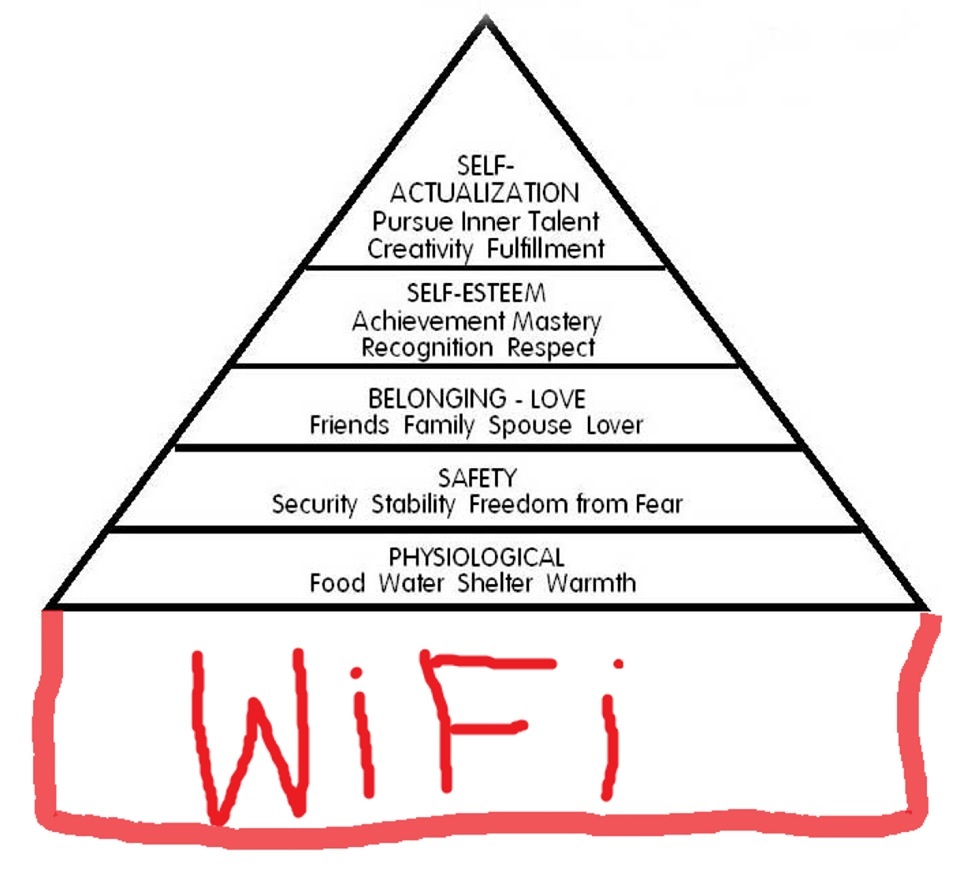
After physiological needs, Maslow says people need to feel safe and secure. Next comes the set of belonging, affection, and positive regard.

The application to unschooling is that if the child isn't hungry, tired, afraid or feeling unloved, there should be no problem with curiosity and the desire to experience other things.

SandraDodd.com/maslow
photo by Roya Dedeaux

Monday, February 2, 2026

Demons (avoidance of)

If a family thinks that "having no junk food" in the house will ensure a child's health for eight or nine decades, they are incorrect in that belief. If the mother thinks that it will absolve her of any blame in future dietary choices, she is also incorrect.

Demonizing food creates a demon. Being calm creates more calm.

SandraDodd.com/control
photo by Sandra Dodd

Friday, January 23, 2026

Never heard of such a thing

Christine Macdonald wrote that she and her daughter had walked to the grocery store once to pick up milk they needed for a recipe:
I had brought a ten-dollar bill (no wallet) I told her we'd have about six dollars left and she could get whatever she wanted with it—she wanted a pomegranate or three artichokes (neither of which we had enough money left for) I told her we could come back later with my wallet and get them or get them now skip the milk and come back later for the milk to finish our cake. She said come back later for the artichokes. When we were at the checkout I said why don't you just get a candy bar or something for the walk home she said no thanks. A mom behind me in line was shocked at the idea of a kid not wanting candy if offered said she never heard of such a thing.
—Christine Macdonald

SandraDodd.com/eating/sweets
photo by Jihong Tang

Thursday, January 22, 2026

Friendly, calm and welcoming

Sandra Dodd, May 6, 2008, from a conference follow-up question:

Won't they end up lazy?
Do they expect other people to make their life good?


We visited our oldest son, Kirby, last weekend. We met nine of his regular guys. His friends and co-workers and his roommate really, really like him. Today I helped him format a resume, to get it all on one page. Twenty-one and his resume was two pages. Here's something he wrote:


Active Imagination, Albuquerque, New Mexico
Retail floor operator, Summer 2000 — 04/11/05
Constantly advanced the sales quota while upholding a friendly, calm and welcoming atmosphere in the store.


He did! He's good at creating and maintaining a friendly, calm and welcoming atmosphere. No one who knew him when he was five or younger would ever have predicted that.

More at SandraDodd.com/hena08/lazy
photo by Holly Dodd

Sunday, January 18, 2026

In fun ways for real reasons

From a 2003 article, "Some Thoughts on Homeschooling," by Sandra Dodd

My children learned to read without phonics lessons, without programmed readers, and without pressure. Kirby had two and a half lessons, and that cured me of doubt. I had taught reading, years before, and laying those two experiences side by side made me aware of the damage that whole mindset does. So I read to him, played word games with him, sang with him, watched movies with him, bought him video games and magazines to go with them, and from Nintendo gaming guides and magazines, he learned to read fluently when he was nine.

My other two read at ten and eleven. I was more relaxed, and though I was surprised that Holly read "late" (for a girl, I thought, unfairly), a year ago she wasn't reading and now she reads very well. It comes almost suddenly, once they "get it," and I'm convinced that it comes suddenly at school too, but teachers who want job security and paychecks disguise the process with years of exercises and read-alouds and worksheets until those loom large and the child is lost within. At some point a child either reads fluently or has given up trying.

Because my children learned to read without having been taught, they have no doubt whatsoever that they could learn anything else. Few things are as important or as complex as reading, yet they figured it out and enjoyed doing it. If I thought I had taught them, they too would think I taught them, and they would be waiting for me to teach them something else.

They have never been criticized for "not showing their work" when they do calculations in their heads. Mathematics, too, they have learned in fun ways for real reasons.
—Sandra Dodd, 2003
(Holly has read well for over 20 years)

SandraDodd.com/thoughts
photo by Denaire Nixon

Thursday, January 15, 2026

Gifts without toil

Schuyler Waynforth wrote:

David and I were talking about gifts tonight as we were making dinner together. He said that he doesn't work at our marriage, none of the things he does for me are work, because those things are gifts. And if he can see them as gifts then toil is no longer a part of it. He's right. When I fold the laundry with the image of Linnaea dancing in her dress of choice it isn't labor at all. Or when I wash the dishes thinking about how much easier and more pleasant fixing the next meal will be, it is less about the toil in that moment and more about the joy in the next. But if I think about how many times I've done the dishes recently and how I don't want to do them tonight and I'm tired and why can't someone else do this and I always do them... it is all about labor.
—Schuyler Waynforth


Serving Others as a Gift
(SandraDodd.com/chores/gifts)

photo by Sandra Dodd

Sunday, January 11, 2026

Touch


A mom once wrote, of babies:
Not only have they never seen, touched or experienced anything in our world—they also have no way of communicating thoughts, feelings or desires with anything more than frustrated cries, screams and babbling.
I responded:
There is touch. There is gaze. Have you never just looked into the eyes of your child, communicating? Have you not touched them soothingly, and felt them touch you back sometimes? They can tell the difference between an angry look and a gentle look.

Parents who didn't know touch was a real way to communicate could practice on babies, and then use it with older children, and partners.

For children to learn language, they need opportunities to hear words, and for people to pay attention to the sounds they make. Mimicry is good, with babies. Even before they can articulate consonants, they can probably copy your voice going up or down, and you could copy them back. Singing little made up two-note songs can be a good tool for communicating with babies. Copying touch is good, too. (Don't return rough touch with rough, though.)

SandraDodd.com/babies

Friday, January 9, 2026

Guarantee

There are no guarantees, but we can always do a little better.
SandraDodd.com/guarantees
photo by Laurie Wolfrum

Monday, December 22, 2025

Structure


In 1992, someone asked:
How do I structure our days
and how do I structure our learning time?
I think it should be "Woke up, got dressed, ate, played, ate, played, etc." In other words, I don’t think there should or can be any “days off” from child-centered "education."

If this seems wrong, try this experiment: Keep your child from learning anything for a few days. Make sure that from the first waking moment there is nothing learned, no new material, no original thoughts to ponder, etc. The only problem is that you would have to keep the children from playing, talking, reading, cleaning or repairing anything, etc.

from page 1 of Moving a Puddle

see also SandraDodd.com/structure
photo by Sandra Dodd

Saturday, December 6, 2025

Like Riding a Bicycle

Vickie Bergman, some of her nice analogy about unschooling being like riding bikes:

Your own bicycle is powered by your own legs, steered by your own hands. It stops when you stop, goes where you want to go. But it's not that you are always responsible for your own movement. You are not just left to figure it out for yourself. When you prefer to have some level of assistance getting where you want to go, you also have tandem bicycles and bike trailers available to you. You get to choose if you want help and what kind and how much. And your parents are ready to help whenever and however you want them to.

No matter which kind of bicycle you are on, there is no separation between you and the outside world. No window to look out. You can smell the real world, hear the real world, stop and touch the real world. You are part of the real world. There are paths to follow if you want to, but your rides are not limited to the paths.

. . . .

That is unschooling. It is not a model of education, but a way of life. It is recognizing that people learn from living, and there is no need to separate learning from living. Unschooling lets a family live together, learn together. It is built on trust among family members, and trust in human nature. Trust that children have a strong desire to learn about things, even if those things may not be on the short list of school subjects. Trust that, with your acceptance and support, your child will follow his own path, leading exactly where he wants to go.
—Vickie Bergman

More at: SandraDodd.com/bicycle
photo by Vickie Bergman

Saturday, November 29, 2025

Seeing and living harmoniously

I don't really care as much about the definition of unschooling as I do about helping real individual families to unschool in a way that works, that can last, and not just be a temporary respite from school or curriculum, but that can be sustained and enlarging in and for their whole family. If learning stops where "parenting" starts, how will unschooling be "learning from life"?
. . . .

It doesn't matter if no two families decide on a definition. But when I'm asked "How did you do that?" I'm going to be honest. It's not about academics. It's about having changed how I saw the world and children, and then living harmoniously with my children in a world I *know* to be filled with all the elements they need to thrive. I suppose someone could spend a lot of volunteer time telling people how to unschool without changing their attitude or parenting. I haven't seen that, though, because I don't know of any truly happy and successful unschoolers who have clung to traditional parenting. If it can work, no one who's doing it has come out and helped others do it that way too.


From a 2004 discussion on why unschooling isn't 'just' unschooling, or something
photo by Cátia Maciel

Monday, November 24, 2025

Heat and light

If I have a big woodpile, I don't have a fire. Even if I have a fireplace and matches and bellows and kindling and firestarters and a fire extinguisher and the chimney was just cleaned and inspected and I have a paper saying "good to go," I don't have a fire. Would wrought-iron fire tools on a cool rack help? What about a stained-glass fireplace screen, so no sparks can get out on the floor? I could subscribe to magazines for fireplace owners. I could join a yahoo group and a facebook page to talk about fires. I could be receiving catalogs with all kinds of fancy flameproof rugs and indoor wood racks and really cool slings for carrying wood in, and Ooh! What about a beautiful mantle?

Still no fire.


Meanwhile, the neighbors might have built a real, operating fire, in a little hole they dug and lined with scrap bricks or rocks, with wood they found in a vacant lot, and kindled it with old receipts and fast-food wrappers they found blown into the alley. Their fire has heat, their fire has light, if they're sitting around it talking and laughing, they have the benefit of the fire.

Some people want to look like they're interested and that they intend to hone their skills, but they don't actually want to do it, if it's going to involve any real combustion or change in them.


A Story of NOT Changing
photo by Sandra Dodd, of a fire in our own back yard,
not in a hole, but quite make-shift, 2012

Thursday, November 20, 2025

Learning for fun

School and school-at-home sometimes teach people not to learn, or at least not to learn anything for fun without direction because "it won't count." I think everything counts. I think everything can be fun. When I say "I think," I very often mean "I am absolutely convinced after years of careful consideration and observation with no evidence to the contrary, and my original idea became a theory which has become a conviction."

SandraDodd.com/interview
photo by Rosie Moon

Sunday, November 16, 2025

Another benefit of unschooling

Sandra Dodd, 15 November 2017
Grateful for not having needed to help kids with homework all those years.
Jen Keefe
We were out to dinner last night and the family seated behind us were trying to collectively complete the older daughter's algebra homework. It seemed stressful, but the dad was trying to make it better by ordering bottomless rootbeer floats and fries (which I thought was so nice). Still, I looked at my husband and said "November gratitude: no homework!"
Sandra Kardaras-Flick
Until now, I hadn’t considered the whole homework thing. Wow, something else to be grateful for. So cool!

SandraDodd.com/homework
Art by Dave Coverly
Speedbump.com

Sunday, November 9, 2025

A little trust, one step

Someone had written, of unschooling:
It sounds like it takes an enormous amount of trust in everything to allow this process to happen.
I responded:
It takes a little trust, and desire, and willingness, to take one step. It gets easier as you go. No one can take all of the steps at once.


No one can, or should, have trust in everything. Try things out. Think carefully, and observe directly. Practice!

Read a little, try a little, wait a while, watch.
photo by Sarah Dickinson