Monday, February 23, 2026

Seeing what learning is

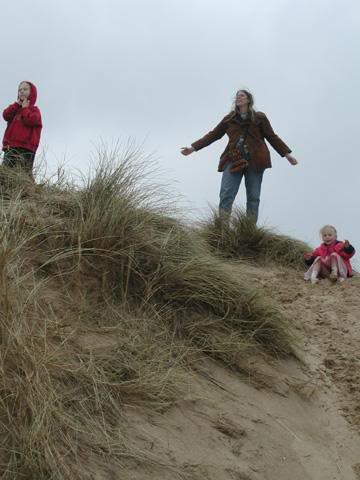
When a newcomer was very confused, Meredith Novak wrote:

The basis of unschooling comes from seeing learning as a substantial human drive and seeing that learning depends absolutely on the perceptions of the learner. The second part is what makes everything tricky - you can't control what someone else learns. At best you can work on seeing the world from another person's perspective and try to create an environment which helps that person learn.

It can help a lot to think about how people learn via their hobbies. In a way, that's what real life unschooling looks like: people learning through hobbies. It usually involves a lot of playing around - and the playing around parts are just as important to learning as the parts where you need to go look something up, or network with another hobbyist, or take a class or workshop to improve a skill.

One of the common parenting/educational myths is that it's possible to imbue children with "good habits" by making them do certain things over and over. It Seems like it Should work... but when you look at adults there's no evidence it does. The results are pretty random. It's not a strategy that helps people learn about the world.
—Meredith Meredith
July 2012

SandraDodd.com/meredithnovak
photo by Carolyn Vandenbusch Neves

Sunday, February 22, 2026

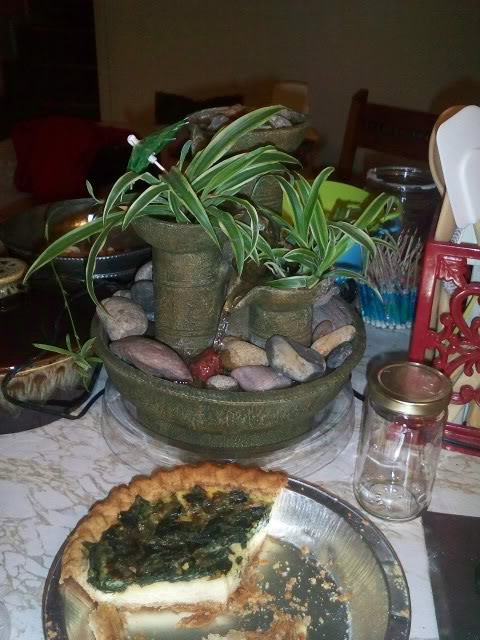
Overflow is good

Having a happy home comes from the creation and maintenance of happy conditions! Produce as much as you can. You'll fill yourself up and it will overflow, and your family might even have enough to share with friends and strangers!

SandraDodd.com/cup
photo by Janine Davies

Saturday, February 21, 2026

Brain food


Pam Sorooshian wrote:

Human brains are voracious and will feed on whatever is available. Unschoolers should be offering interesting experiences, ideas, stimulation, music, logic, conversation, images, movement, discovery, beauty, etc. Brain food in abundance. It requires effort. It requires attention to qualitative and quantitative aspects of learning. Depth and breadth—creating a lifestyle in which kids are offered the opportunity to learn a lot about some things and a little about a lot of things.
—Pam Sorooshian


SandraDodd.com/learning
Thanks to Marta Venturini Machado for finding and sharing that quote.
photo by Meghan Pawlowski

Friday, February 20, 2026

Like nothing else


If a parent can learn how to "facilitate learning"—to help a child get what he needs or wants—rather than to direct or try to own it, all of unschooling goes better. And if a child learns to read without "reading instruction," that can open the world up like nothing else can.

SandraDodd.com/r/deeper
photo by Alicia Gonzalez-Lopez

Thursday, February 19, 2026

Being mindful

Try to be a good unschooling parent, a generous freedom-nurturing parent, a parent providing a peaceful nest, a parent wanting to be each child's partner. Try to make your decisions in that light.

SandraDodd.com/mindfulness
The text above paraphrases something I wrote there.
photo by Brigita Usman (click to enlarge)

Wednesday, February 18, 2026

Variable, thoughtful lunch


Some days lunch is medicinal—one child is sickly and could use soup or juice. One is off to a sports event, and carbohydrates are a good idea. One is sad, and would like comfort food. One is bored, and her sandwich could use a face.

Be as loose as a dancer, as variable as an actor, as thoughtful as a chessplayer, when you decide what to make for lunch sometimes!

SandraDodd.com/eating/peace
photo by Hinano

The words are from Little meals make big memories

Tuesday, February 17, 2026

Clarity and Focus

Clarity and focus make things easier.

Muddly confusion make things harder.

SandraDodd.com/clarity
photo by Janine Davies